A room for people reporting
Gerrit Rietveld proposed the Press Room Chair in 1958 for journalists at UNESCO in Paris. Spectrum's account says a tight budget and limited time kept it from being made for that room. Other furniture took its place, while drawings and models survived. They became the basis for production in 2014.12
Among the material Spectrum reproduces is a sketch on the back of an envelope. It gives the chair a particularly human point of entry: a proposal carried by an ordinary piece of paper. The finished chair would arrive much later, with the relationships between its parts still available to be worked into production.1
The intended reading-table setting helps make sense of the arrangement. A seated journalist needs a place in the room and a way to face what is happening around it. The later chair combines a settled support with an upper part that can turn.
A seat that can turn
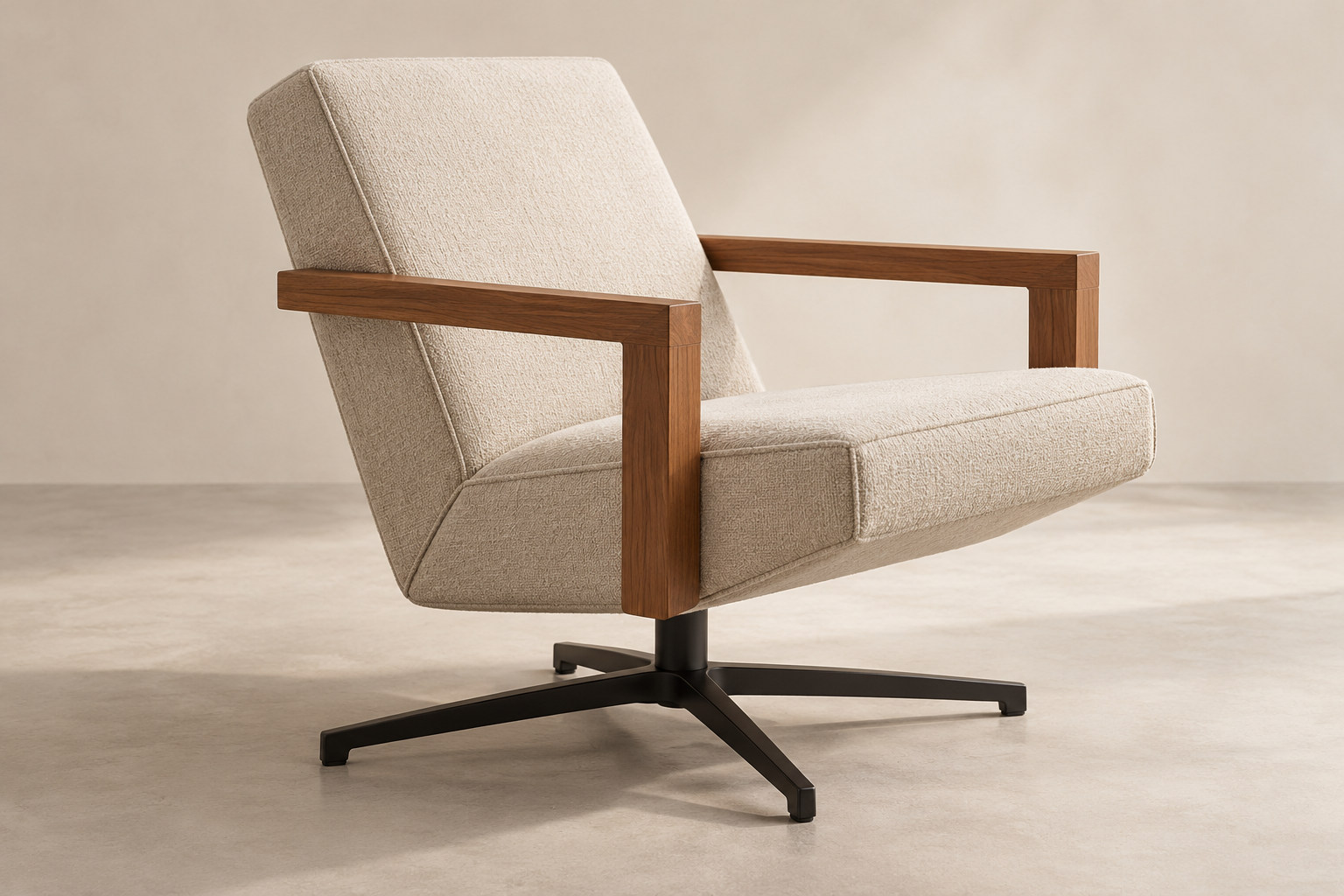
Spectrum's later product sheet describes a swivel base with a return mechanism. The seat can change orientation and return to its starting position while the support stays in place. The movement belongs to the relationship between the base and the upper chair.2
Above it, upholstered seat and back remain legible as planes. The producer describes double seams that accent their edges, with wooden armrests retaining their own outlines beside the padding. Those details make the chair's larger geometry visible through its covering.1
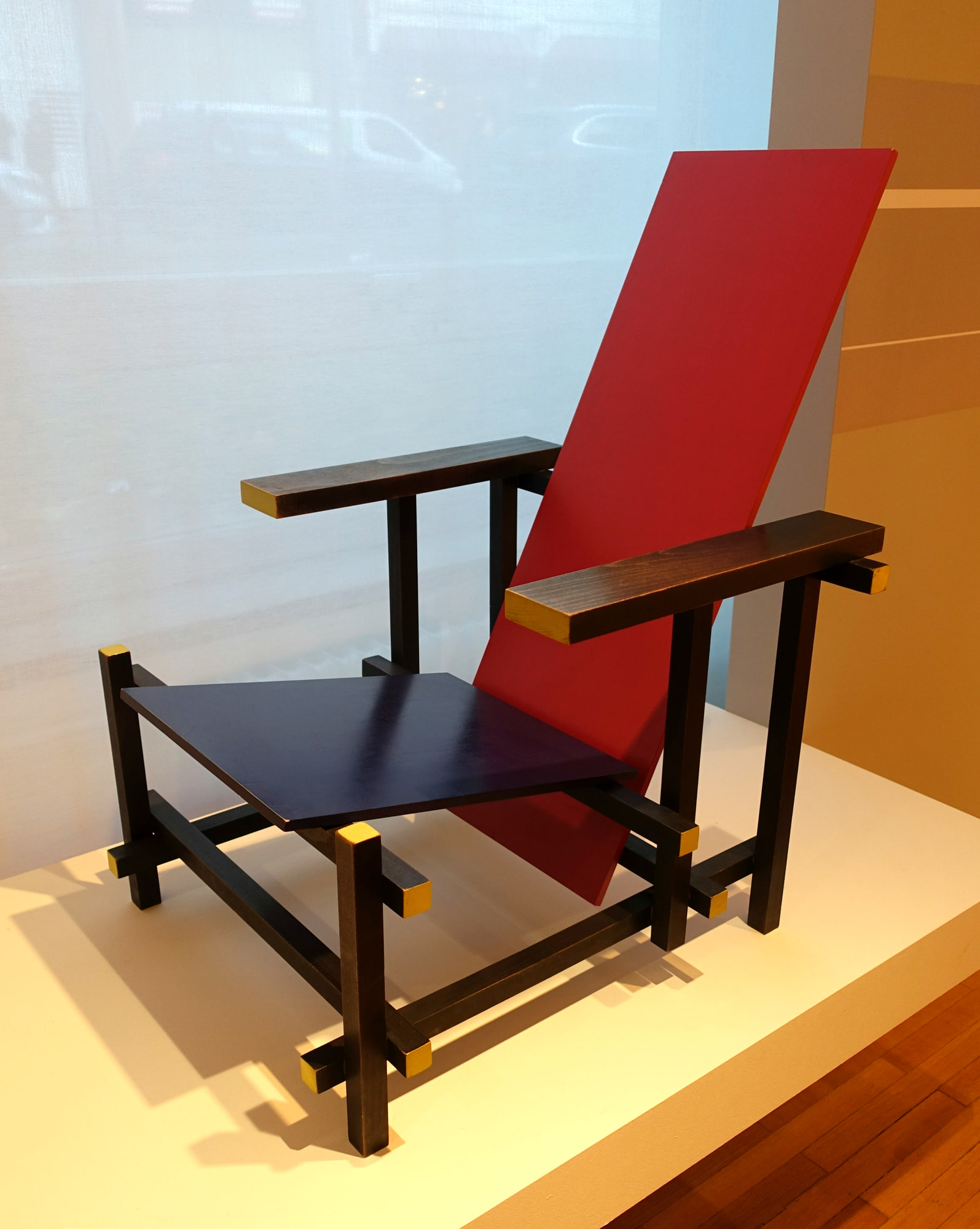
Spectrum compares the angle of seat and back, together with the high-looking arms, to Rietveld's Red-Blue Chair. The comparison offers a useful way to look: follow the relationship between the planes, then notice how upholstery and a turning support give this chair a different presence in the room.1
At the scale of a room
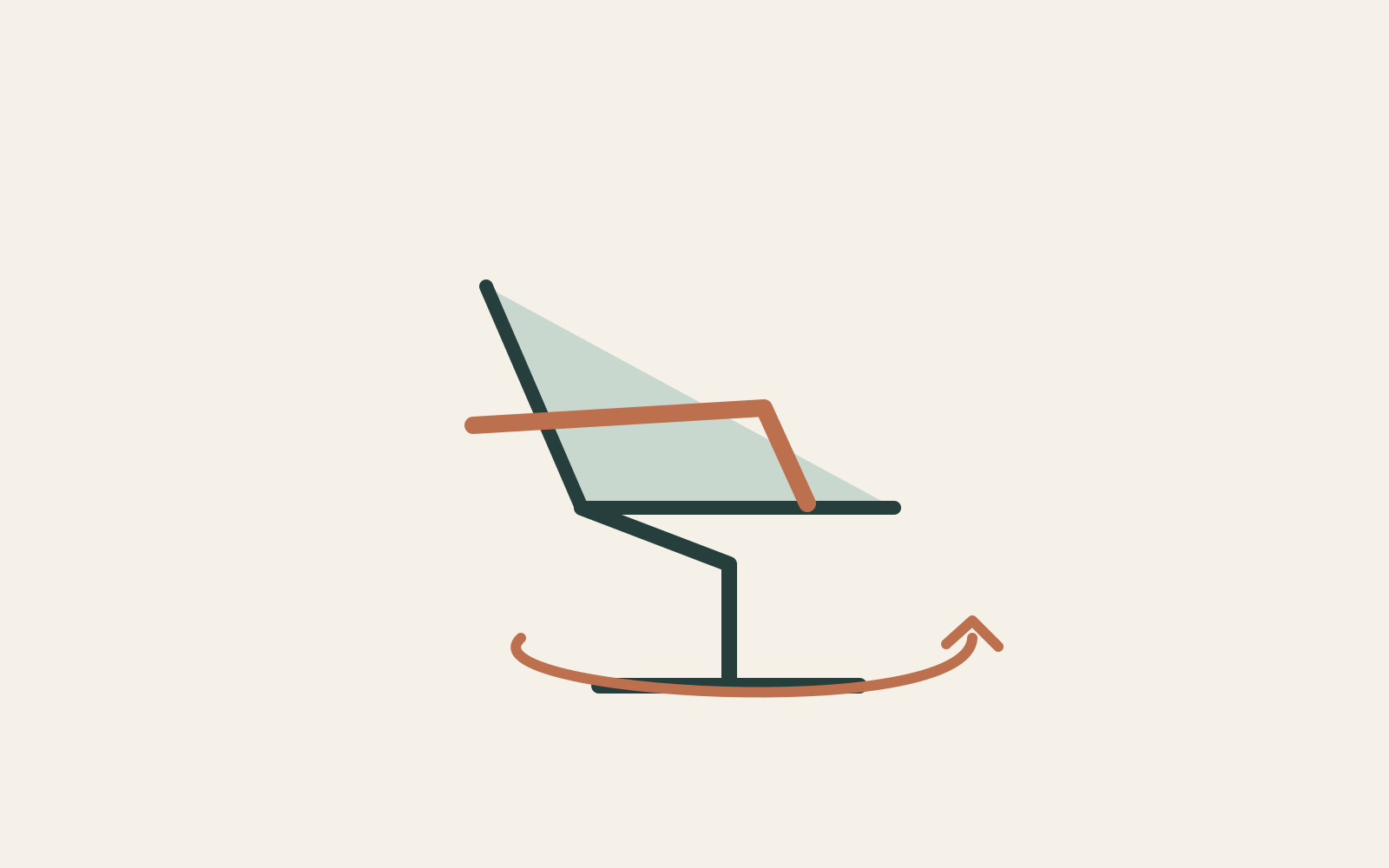
Turning connects a chair's small mechanism to the space around it. The same seat can face a table and then a neighbour. A person changes direction while the support keeps its position on the floor.
The timber arms and the seams give that movement a readable frame. Their lines remain clear as the upper chair turns, so the relationship between seated body and room can be understood through a few ordinary changes of position.
The drawing's second chance is expressed in that sequence: sit, turn towards someone, face the table again. The historical proposal becomes understandable through an action small enough to happen many times in a working day.