Used wood still needs a design
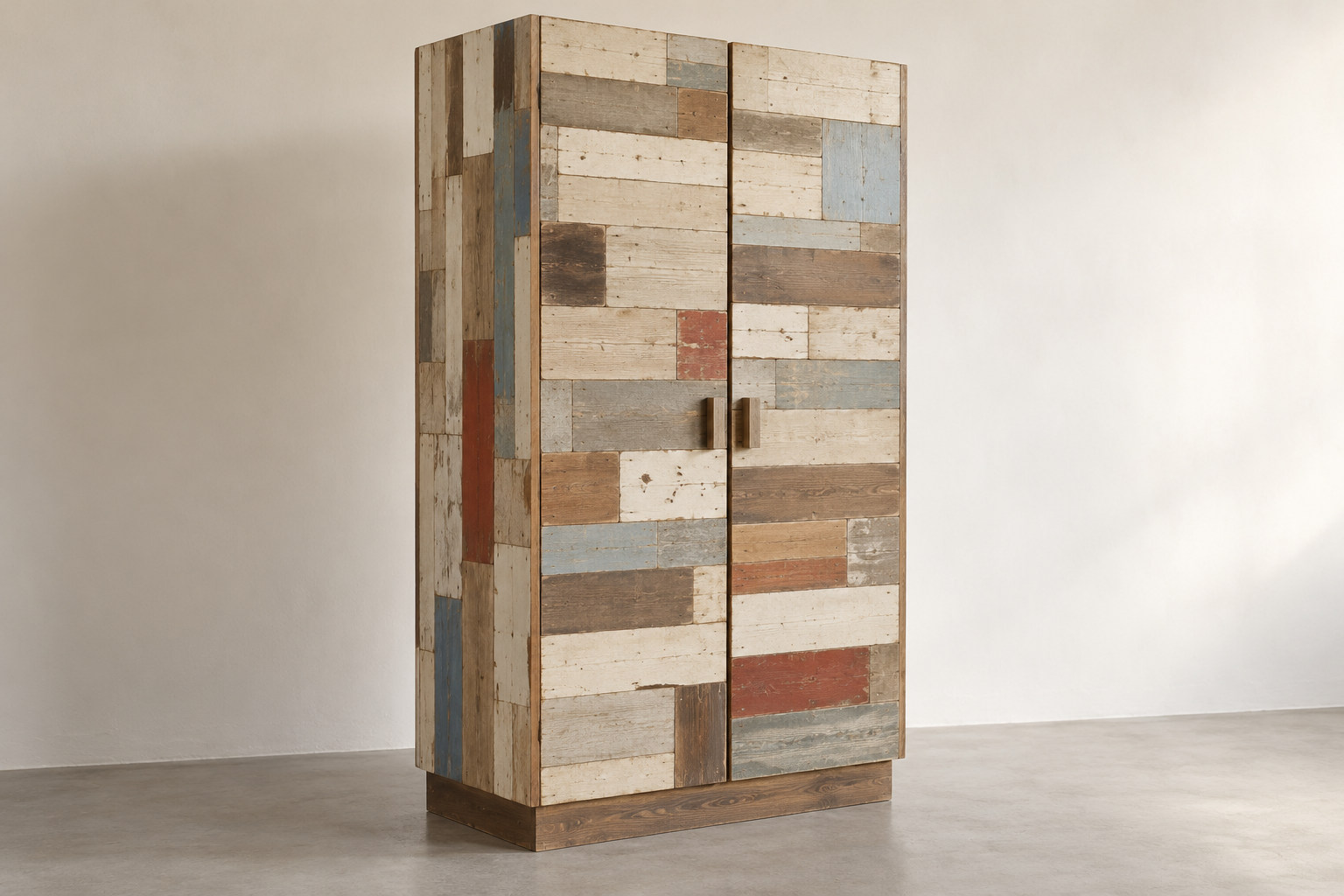
Scrap timber arrives with differences already in it: colour, wear, grain and the traces of earlier surfaces. Piet Hein Eek's cupboard makes those differences part of a composed object. The material is a beginning for the work, rather than a substitute for it.
Louis Kalff Instituut records that Eek graduated in 1990 with a scrapwood cupboard and wanted to draw attention to used materials. Its account places the object within a practice that later joined design and production.1
The surface has two kinds of order
Stand back and a cupboard has a readable body: edges, doors and the spaces where things can be stored. Move closer and its front becomes a gathering of different pieces. Large furniture-scale divisions and small material-scale differences occupy the same surface.
That makes selection consequential. A pale piece beside a dark one creates a contrast; several similar pieces can establish a quieter area. The former life of the timber supplies possibilities, but the maker still has to decide how they meet.
The visual rhythm can appear casual while depending on patient organisation. Discarded material does not make arrangement, fitting and finishing disappear.
A workshop question grows into a practice
Spectrum's account connects Eek's graduation cupboard with simple materials, production in his own workshop and a continuing interest in technique and craft. Its later collaboration with him included a tribute to Martin Visser, another designer for whom clear construction was a serious concern.2
The connection is useful because it keeps the cupboard within furniture making. Its appeal is not confined to the discovery that old wood can look interesting. It also asks what kind of work, equipment and decisions can turn the available material into a usable thing.
A family is not the graduation object
Eek's present product record offers cupboards with different combinations of doors and drawers, including high-gloss finishes. Those are later configurations in a continuing family. Their measurements do not describe the original graduation piece.3
The difference between those scales remains the most useful way to look: first the complete cabinet, then the individual pieces of timber, then the complete cabinet again. The material keeps its variety while the furniture gives it a new set of relationships. The leftovers have not finished making demands on the person who works with them.