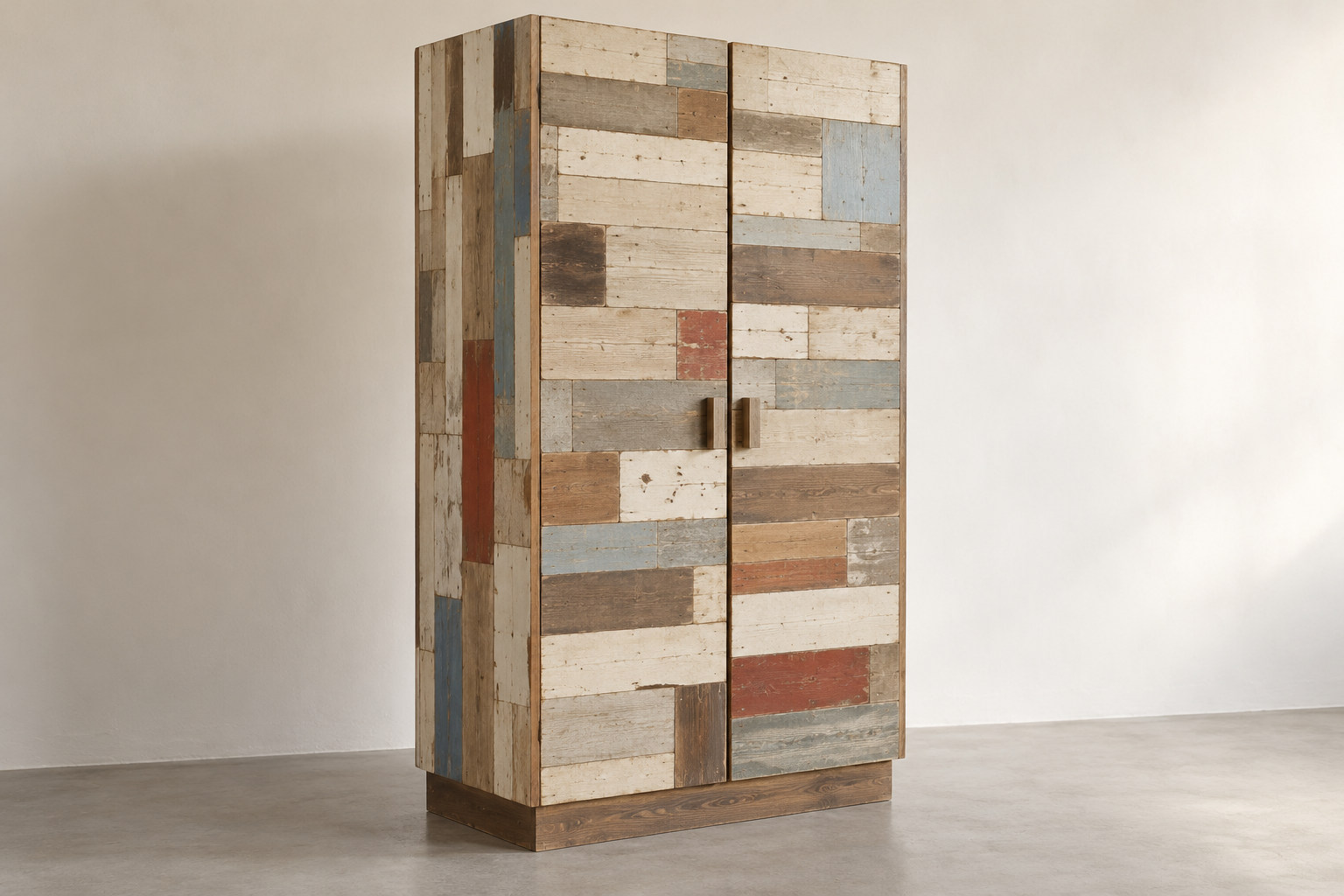
Keep making within reach
In the Louisiana Museum’s interview, Piet Hein Eek introduces his workplace in a former Philips factory in Eindhoven. The account connects discarded materials, substantial labour and a designer’s continued involvement in production.1
The useful idea is the closeness of different kinds of knowledge. A material has dimensions and a condition; a workshop has machines and people who understand them. Design can develop through those circumstances rather than being completed before they are encountered.
Let the surroundings suggest another project
The transformer-house project at the factory takes that attitude beyond a chair or cupboard. Its account describes reclaiming small former transformer rooms for an artist residence, under the architectural collaboration Eek en Dekkers.2
Here the existing space supplies both limits and possibilities. The rooms cannot simply become an abstract empty site. Their particular size and construction help determine what can happen next. It is a related way of thinking, applied at the scale of a small building.
A practice larger than one material effect
The Louis Kalff Instituut’s account places Eek within Dutch design and its material-led furniture work.3 The familiar scrapwood surface is one entrance into that practice, but it need not be its entire explanation.
The factory perspective makes another part visible: furniture is the result of decisions made among materials, tools, people and space. Bringing those things close together can make the workplace itself a source of ideas. A designer’s surroundings become something to work with, not merely the background to a finished object.