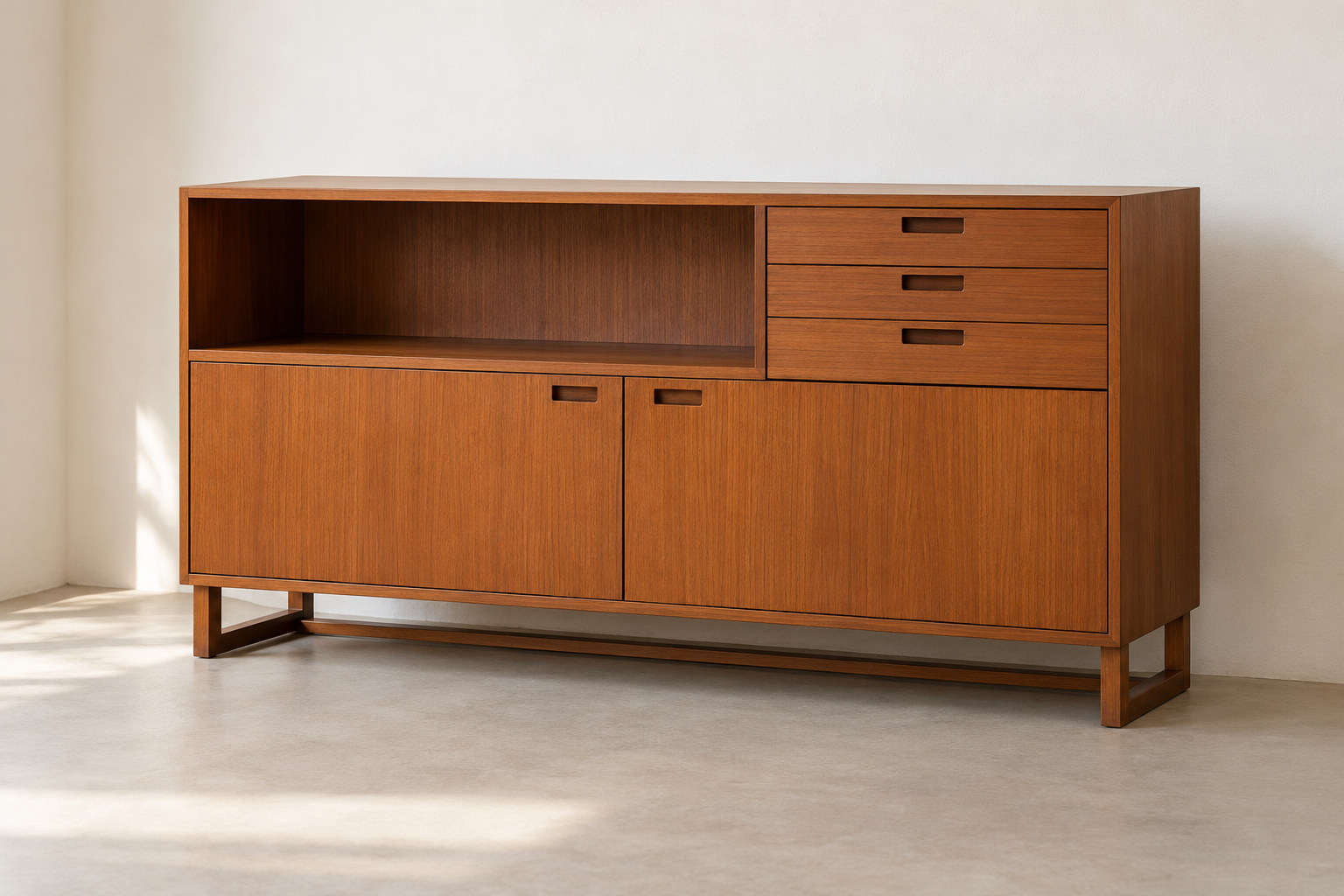
A body made of openings
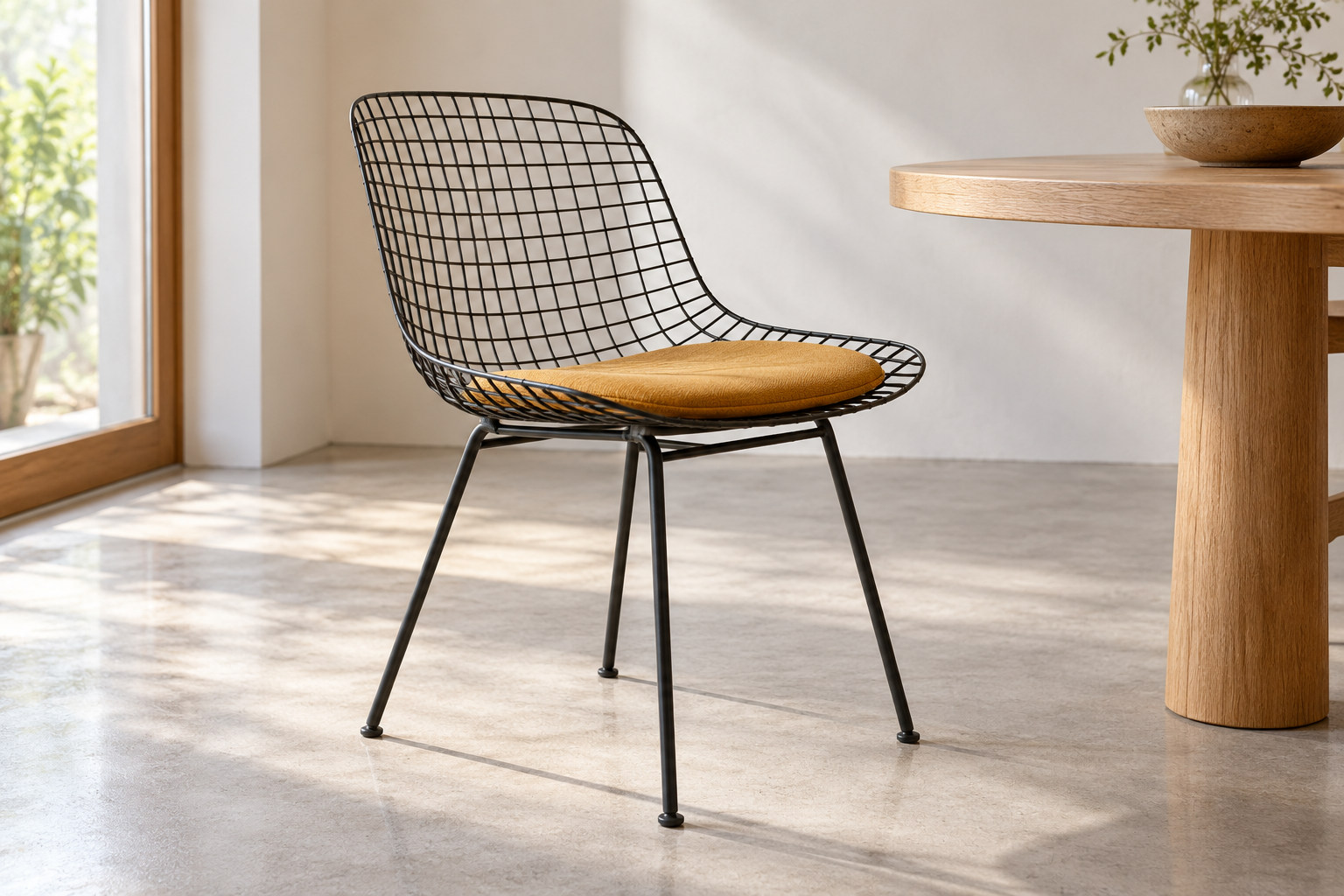
SM05 gives a chair a recognisable seating surface while letting the room remain visible through it. Wires describe the seat and back as a network. Pastoe’s historical book dates the design to 1958 and credits Cees Braakman and Adriaan Dekker together.2
The openings are as noticeable as the lines. Seen against a wall or another chair, the object does not become a single opaque silhouette. Its surface is present, but it allows other surfaces to stay in view. This is one way furniture can occupy a room without visually closing a piece of it.
A cushion changes the meeting
The current Pastoe product record shows the wire chair with a separate seat cushion.1 The cushion supplies another kind of contact without needing to wrap the entire network in upholstery. One part can be soft while another remains visually open.
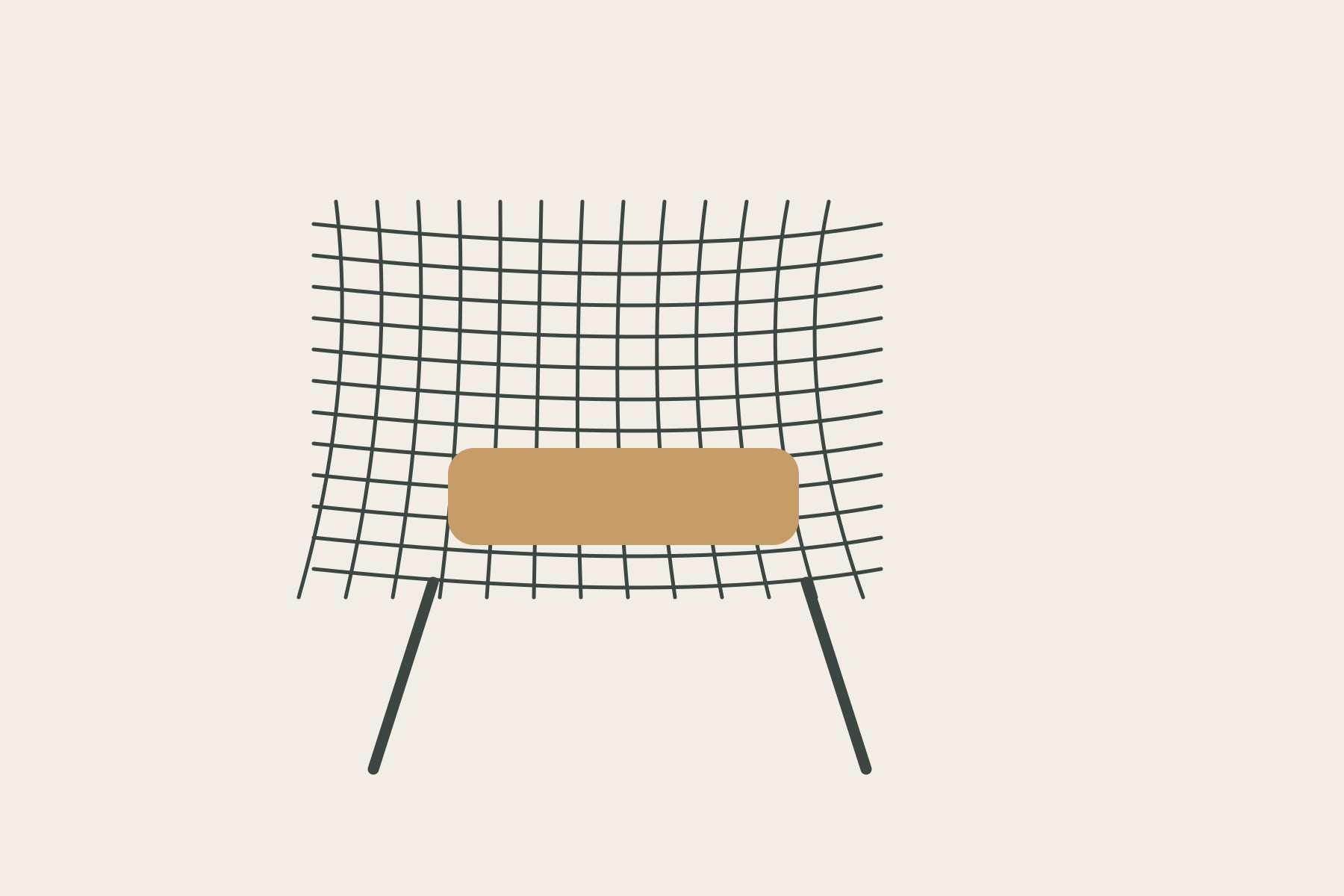
Look at where the cushion ends. Its boundary makes the change of material easy to understand: fabric provides the immediate sitting surface, while the wire continues to describe the larger body. The contrast is useful precisely because it remains visible. You can read a small negotiation between the needs of a sitter and the appearance of an open object.
Light appearance, shared authorship
Pastoe’s present product heading names Braakman, while the historical catalogue explicitly names both Braakman and Dekker. Keeping the co-credit restores part of the design’s production history without requiring a story about who invented each individual line.
Current colours, cushions and dimensions belong to particular editions. The broader idea is easier to carry between examples: a chair can be defined by a network rather than a continuous sheet. SM05 makes the empty intervals useful, both to its appearance and to the way we see the room around it.