Damage becomes part of the object
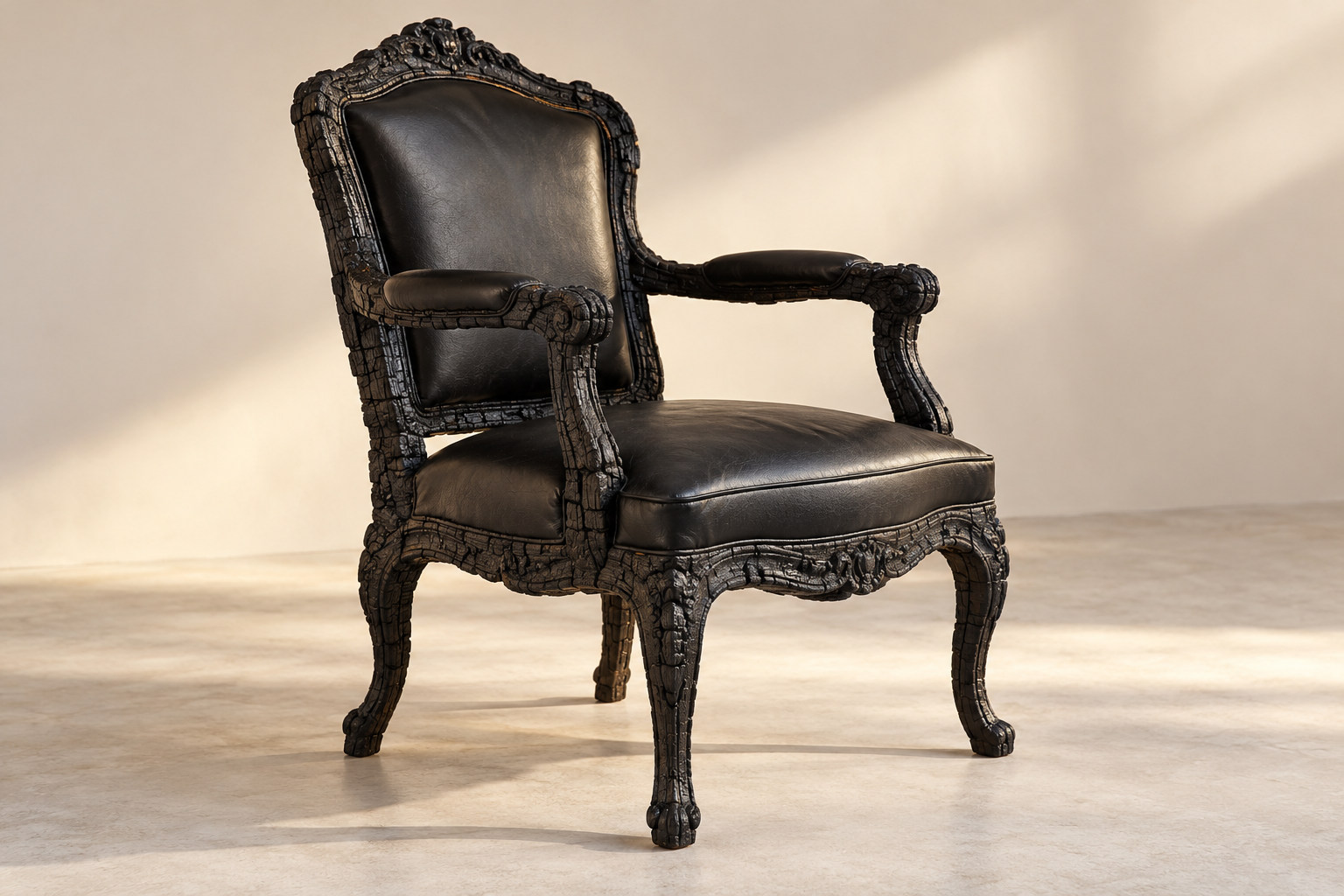
Smoke begins at a point where a furniture history might ordinarily end. Maarten Baas charred existing pieces and preserved their altered surfaces with clear epoxy resin. The damage became a visible part of a new object instead of a condition to conceal. His studio dates the first works to his graduation project in 2002.1
The outline can remain recognisable while the surface changes the way it is read. A conventional chair shape carries an irregular black skin. Familiar form and conspicuous alteration coexist, leaving the viewer to consider which part of the object's identity has survived.
A museum gave particular objects another role
Groninger Museum describes Baas working with antique furniture from its collection, including a chair subsequently upholstered in leather. Its account records the charring and the transparent resin treatment. It presents a specific intervention in specific furniture, rather than a general prescription for old objects.2
That context is essential. A chair can have a relatively anonymous life in storage and then become conspicuous through an artist's intervention. Its new visibility does not erase its previous shape. The transformation depends on having something recognisable to alter.
Recognition changes the question
The later Where There's Smoke project included established designs by other furniture designers. Baas's studio connects that series with Moss gallery in 2004. A recognised design gives the alteration another kind of force: the viewer may already know what the piece is expected to look like.3
The result invites questions about care, permanence and value. Those questions do not have to share one answer. Preserving an object can mean maintaining a surface; in this project, preservation follows the deliberate changing of that surface.
The family has more than one beginning
Smoke includes the first graduation works, later commissions and interventions in different existing furniture. They should not be collapsed into one repeatable antique model. The initial object, the intervention and the later commission each contribute a layer to the history.1
The technique described by the sources is part of professionally made work, not a procedure offered here for burning or coating furniture. The useful subject is what the altered surface asks the eye to notice. An object can remain familiar enough to recognise while becoming unfamiliar enough to make its earlier appearance worth remembering.