The textile becomes the object
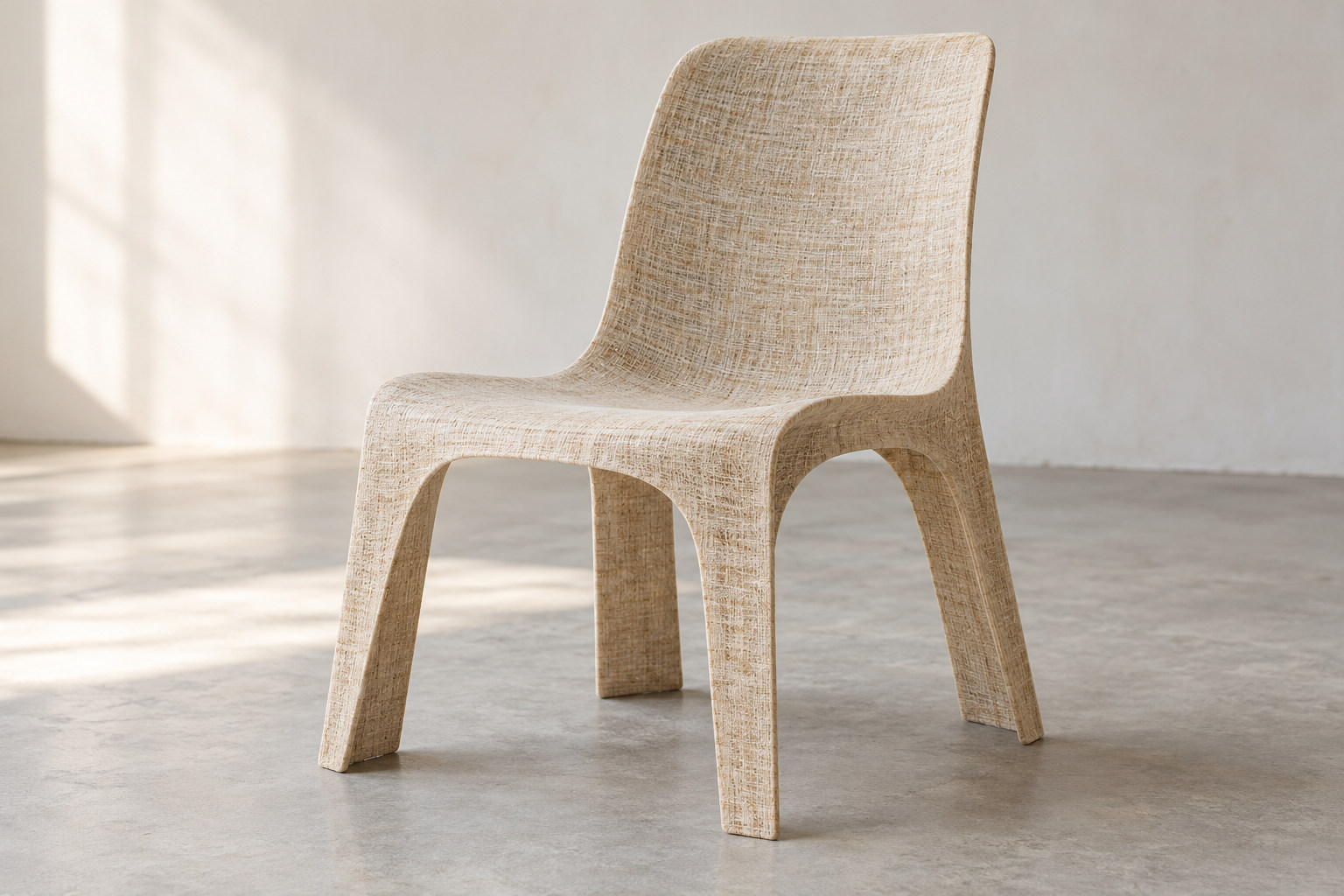
Flax is familiar as a source of linen, something we expect to drape, fold or put over furniture. Christien Meindertsma’s Flax Chair gives the fibre another role. Combined with polylactic acid, it becomes a composite from which a chair can be formed. NGV dates the design to 2015 and its own example to 2017.1
The shift is small to describe and large to imagine. The textile is no longer simply the chair’s clothing. Its fibres belong to the shaped material that makes the object. A familiar surface has moved into a different part of the furniture story.
Different layers learn to work together
Meindertsma’s project account names Enkev and Label/Breed in the development. Woven flax and felted layers work with a thermoplastic binder.2 Heat allows the PLA to soften and bind the composite; the flax fibres themselves do not melt into plastic.
MoMA’s exhibition checklist records flax and polylactic acid together in the chair.3 This is a useful distinction when looking at the finished object. A textile texture and a firm shape can belong to the same material system. The visible fibre is connected to the method of making, rather than applied as a decorative suggestion of nature.
A new use starts with several kinds of knowledge
The collaboration is part of the appeal. Understanding fibres, developing a sheet material and producing furniture are different kinds of work. Bringing them together opens a possibility that an isolated sketch could only suggest.
Flax Chair does not need to stand for every claim made about plant materials. Its specific achievement is already interesting: it asks a familiar fibre to do a different job and develops a process around that question. After looking at it, a piece of linen may seem a little less settled in its usual occupation.