Designer profile

Christien Meindertsma: following the material back home

A finished surface can conceal the people and processes behind it. Christien Meindertsma follows those connections and uses what she learns to ask a different making question.

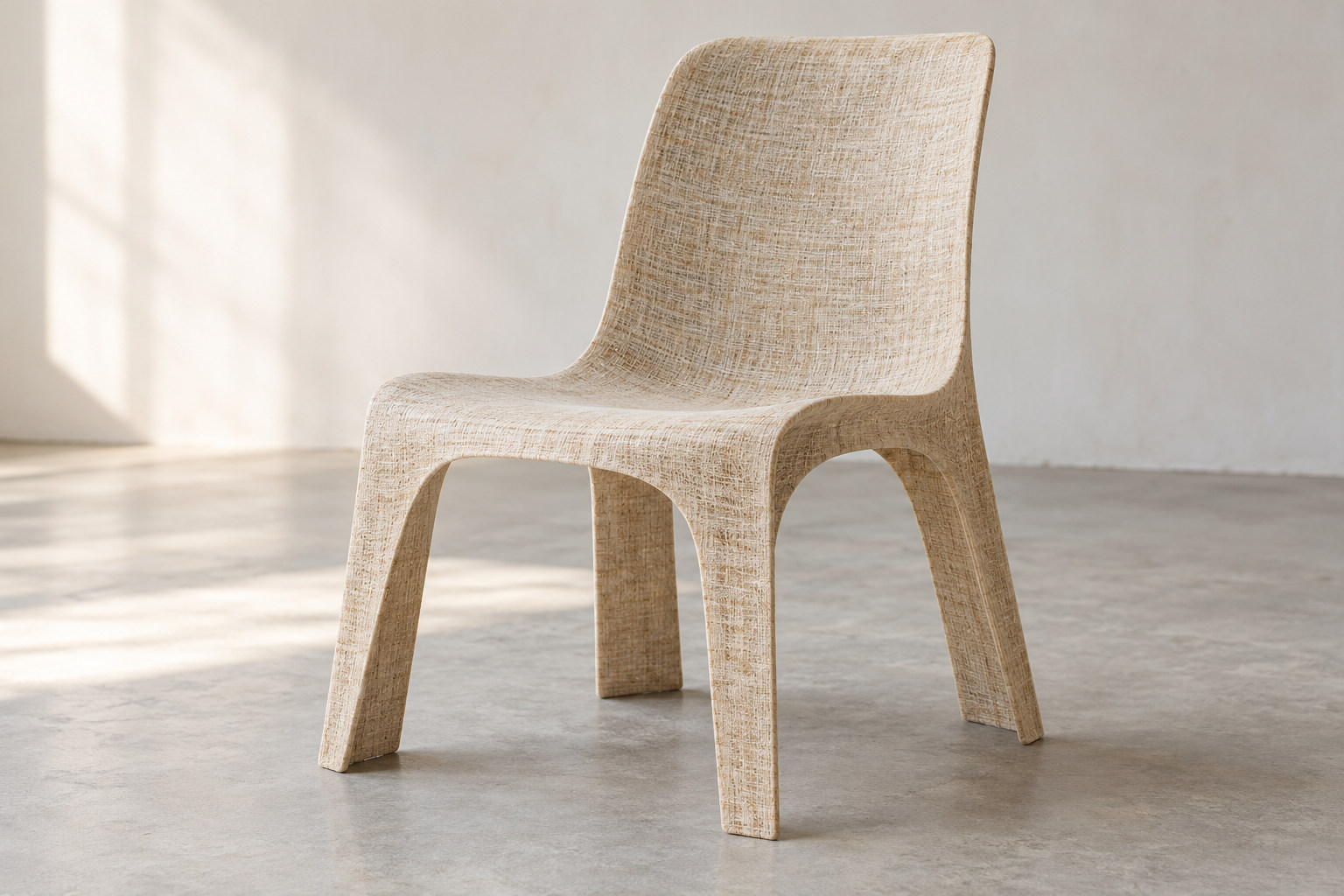
A pale fibre-composite chair with a gently formed back and visible textile texture in the material.
PatinaHall editorial reconstruction. It is not a documentary photograph. The image introduces flax texture within a shaped composite chair. It does not document the exact cutting layout, layer count, joints or manufacture of a museum example.
On this page
Key facts & takeaways

At a glance

Subject
Christien Meindertsma
Entry
Designer profile
Last reviewed
23 October 2026

Three things to remember

  1. Her work investigates materials and their production journeys.
  2. One Sheep Sweater preserves differences between individual fleeces.
  3. Flax Chair grew from collaboration around a material and its processing.

Begin before the finished surface

A piece of furniture can conceal a long journey inside an apparently simple material. Christien Meindertsma’s work follows that journey back through fibres, production and the people involved. Vitra Design Museum’s account of her practice emphasises the relationships between raw materials, objects and the systems that connect them.1

This gives the designer another place to begin. Instead of treating a surface as an anonymous option in a catalogue, she asks what it has been and how it arrived. The investigation can then influence what the material becomes next.

One fleece need not disappear into the average

For One Sheep Sweater, dated 2010, the studio describes sweaters made from individual sheep’s fleeces, using industrial yarn production and knitting.2 Differences that might disappear inside a large mixed supply become part of the project’s identity.

The useful detail is the meeting between traceability and industrial process. Individual origin does not have to mean that every stage is performed by hand. Production can be examined closely enough to keep a connection visible. A familiar garment becomes a way to notice relationships between animal, fibre, maker and wearer without pretending that all those relationships are simple.
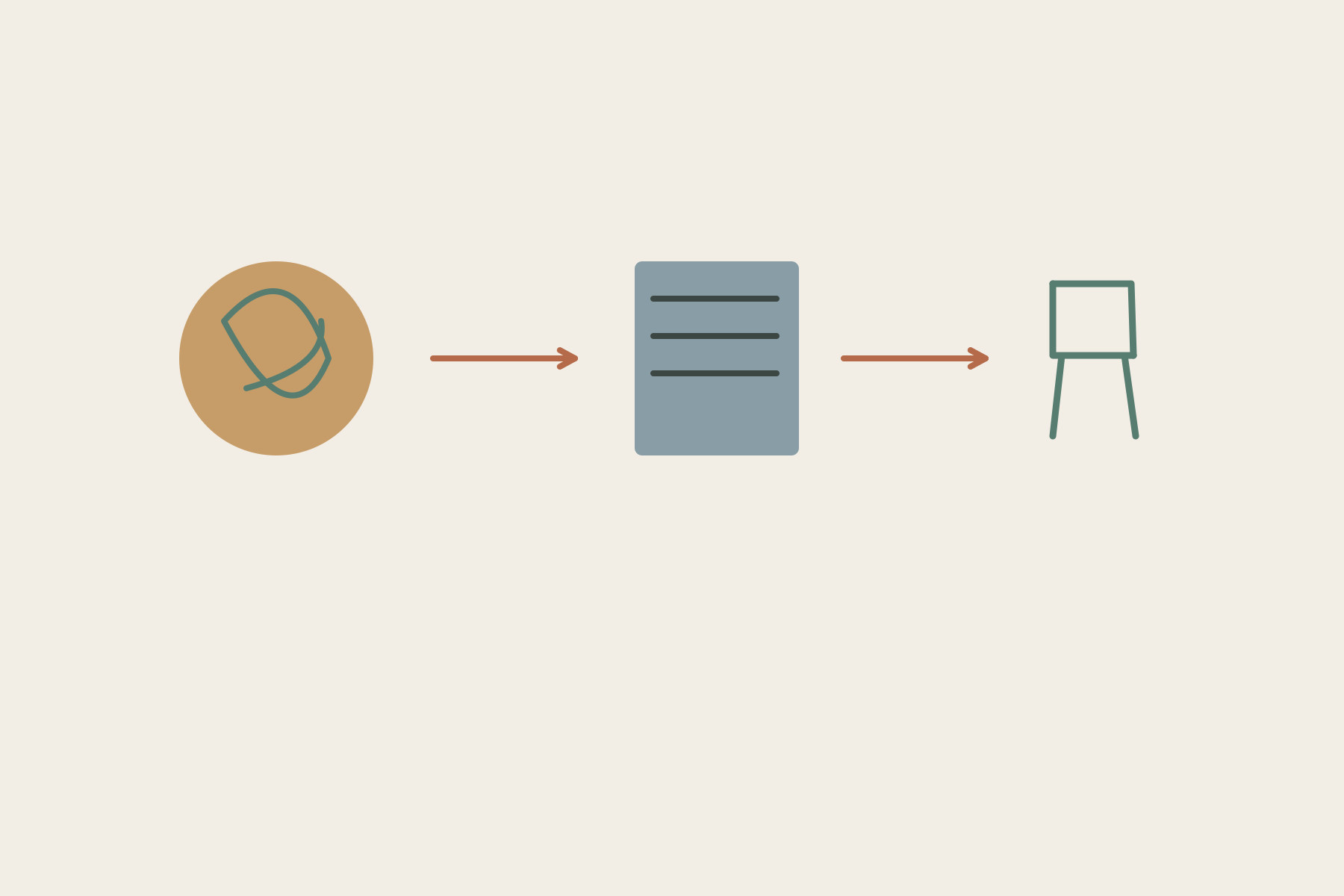
A fibre-like circle leads through a processing block towards a chair symbol.
Original PatinaHall schematic, not to scale. Origin, processing and an object are connected as a research question. The generic fibre and process symbols do not establish a complete audited supply chain or a quantified environmental benefit.

Research becomes a chair through collaboration

The Flax Chair project takes that attention towards another fibre. Meindertsma’s account names Enkev and Label/Breed in developing a flax-and-PLA material for furniture.3 Following the material is not an alternative to making an object; it can supply the knowledge needed to make a different object possible.

The profile offers a useful habit of attention rather than an environmental guarantee. Ask what sits behind the surface, and the answer may include a process, a local industry or a collaborator whose work was previously invisible. Meindertsma gives those connections a place within the finished thing.

Research notesEvidence, connections and limits

The museum interpretation and studio project accounts document research and collaboration, not an independently audited whole supply chain. The chair illustration is related work, not a portrait, and environmental claims remain scoped to their source.

Evidence map

Connected subjects and evidence

Reviewed connections

  • Christien Meindertsmacollaborated withEnkevdocumented

    The designer names Enkev in developing the Flax Chair composite, alongside Label/Breed.

    Reviewed 23 October 2026 by PatinaHall editorial.
  • Flax Chairdesigned byChristien Meindertsmadocumented

    The cited record explicitly identifies this designer for the repeatable design or coherent project family.

    Reviewed 23 October 2026 by PatinaHall editorial.
    • Source 4Flax chair, 2017.1218: designed 2015, manufactured 2017

Research trail

Sources and further reading

  1. Christien Meindertsma: Beyond the SurfaceVitra Design MuseumAccessed 23 October 2026
  2. One Sheep Sweater, 2010Christien MeindertsmaAccessed 23 October 2026
  3. Flax Chair, 2015Christien MeindertsmaAccessed 23 October 2026
  4. Flax chair, 2017.1218: designed 2015, manufactured 2017National Gallery of VictoriaAccessed 23 October 2026

Last reviewed 23 October 2026. Found an error or a stronger primary source? Contact PatinaHall.