Design story

Elling sideboard: opening up the cabinet

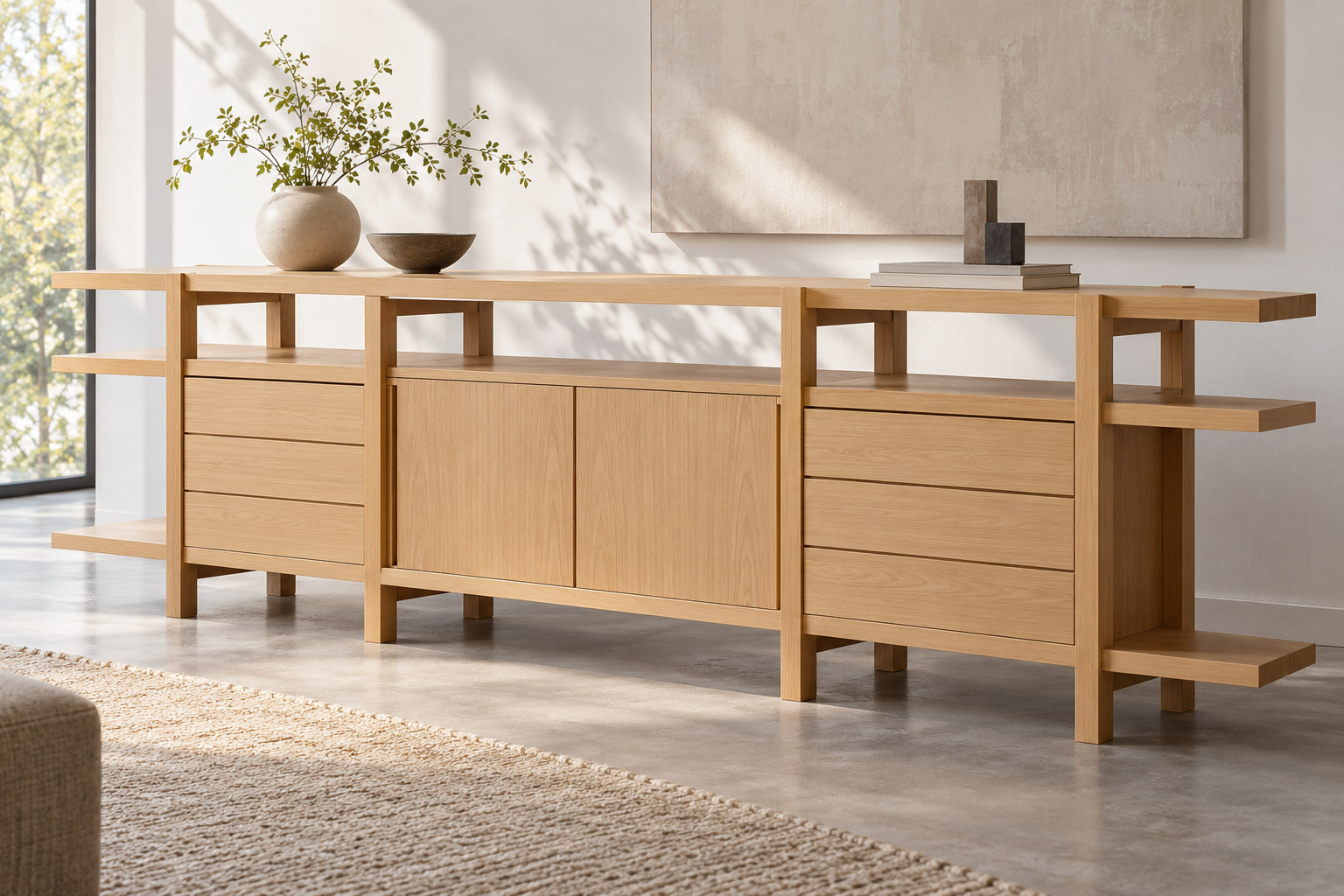
A sideboard often presents one large box. Elling lets the eye pick out rails, upright supports, drawers and doors separately. Storage becomes a composition of parts with air between them.

A pale timber sideboard has exposed projecting rails, central closed doors and side drawers.
PatinaHall editorial reconstruction. It is not a documentary photograph. The framework stays visible around the storage volumes. The setting and joinery are interpretive; no lost original or exact Cassina edition is documented.
On this page
Key facts & takeaways

At a glance

Subject
Elling sideboard
Entry
Design story
Last reviewed
25 October 2026
Designed
1919documented

Three things to remember

  1. The Elling sideboard design dates to 1919.
  2. The original was lost; later examples have their own histories.
  3. Cassina introduced its edition in 2019.

A box becomes a framework

The interest of Elling begins around the storage compartments. Horizontal rails extend beyond the volumes they support, and upright members continue the drawing towards the floor. The framework lets drawers and doors appear as elements placed in space rather than a face applied to one enclosing block.

Rietveld designed the buffet in 1919. The Foundation records its use in several interiors and identifies Piet Elling as the purchaser of the original.1 The person whose name the piece carries is not thereby its co-designer.

Let the parts keep their identities

The open intervals give the rails a different job from the drawer fronts. One draws a line; another holds things. Their meeting remains visible, so the cabinet offers a small lesson in how furniture can organise both objects and empty space.

This is the pleasure of looking at the sideboard obliquely. Depth reveals overlapping members that a flat frontal photograph can compress. The same storage functions remain familiar, while their arrangement feels surprisingly light.
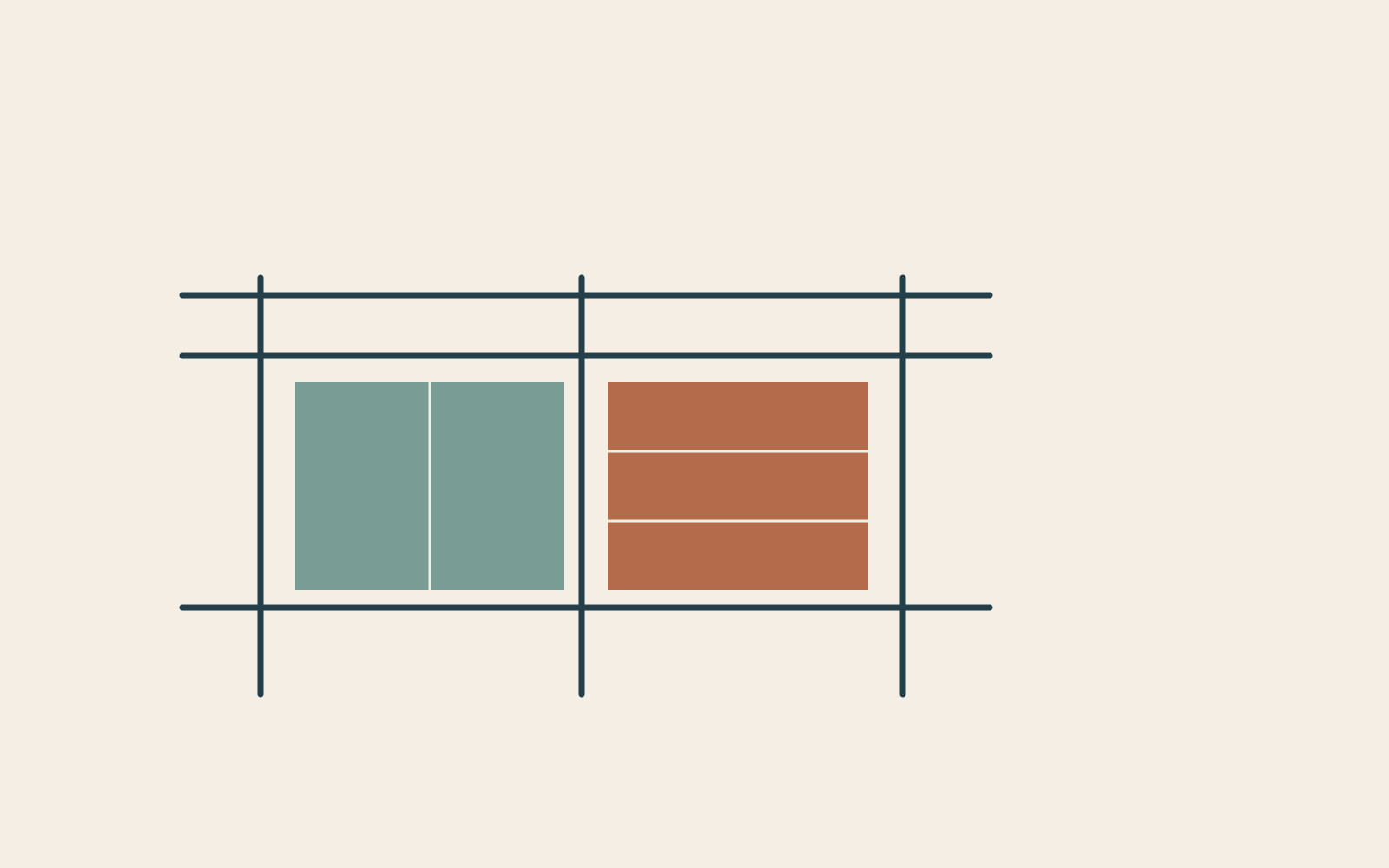
A rail grid surrounds two closed storage blocks, with open intervals around the volumes.
Original PatinaHall schematic, not to scale. Storage volumes remain within a visible framework; the centre is not erased into an open console. The drawing explains organisation, not joinery.

Reconstruction is part of the history

The original did not survive. The Foundation records a reconstruction made by Gerard van de Groenekan for the 1951 De Stijl exhibition, then discusses Cassina’s introduction in 2019.1 Cassina’s catalogue likewise separates the 1919 design date from its 2019 production.2

Those dates make the design’s continued life more interesting. Later makers had to turn an earlier spatial proposal back into furniture. Elling’s enduring quality lies in the way its separate parts still make a complete, usable cabinet easy to imagine.
Research notesEvidence, connections and limits

The Rietveld Foundation identifies the lost original, Van de Groenekan’s 1951 reconstruction and Cassina’s 2019 production. Timber and finish descriptions belong to particular editions; a later example is not the original.

Evidence map

Connected subjects and evidence

Reviewed facts

  • Designed 1919documented

    The design dates to 1919. The Foundation records Van de Groenekan’s 1951 reconstruction and Cassina’s 2019 introduction; these are separate moments.

    Reviewed 25 October 2026 by PatinaHall editorial.
    • Source 1Article dated8April2019, paragraphs1–3 and specifications
    • Source 2Elling Buffet catalogue entry: design/production line

Reviewed connections

  • Elling sideboarddesigned byGerrit Rietvelddocumented

    Gerrit Rietveld designed the sideboard. Piet Elling purchased the lost original. The Foundation identifies Van de Groenekan’s 1951 reconstruction and Cassina’s 2019 production account; a later example is not the original.

    Reviewed 25 October 2026 by PatinaHall editorial.
    • Source 1Article dated8April2019, paragraphs1–3 and specifications
    • Source 2Elling Buffet catalogue entry: design/production line
  • Elling sideboardmanufactured byCassinadocumented

    Gerrit Rietveld designed the sideboard. Piet Elling purchased the lost original. The Foundation identifies Van de Groenekan’s 1951 reconstruction and Cassina’s 2019 production account; a later example is not the original.

    Reviewed 25 October 2026 by PatinaHall editorial.
    • Source 1Article dated8April2019, paragraphs1–3 and specifications
    • Source 2Elling Buffet catalogue entry: design/production line

Research trail

Sources and further reading

  1. Elling sideboard / Elling buffet: Article dated8April2019, paragraphs1–3 and specificationsgerrit-rietveld.nlAccessed 25 October 2026
  2. Elling sideboard / Elling buffet: Elling Buffet catalogue entry: design/production linecassina.comAccessed 25 October 2026

Last reviewed 25 October 2026. Found an error or a stronger primary source? Contact PatinaHall.