A bed belongs to the daytime room
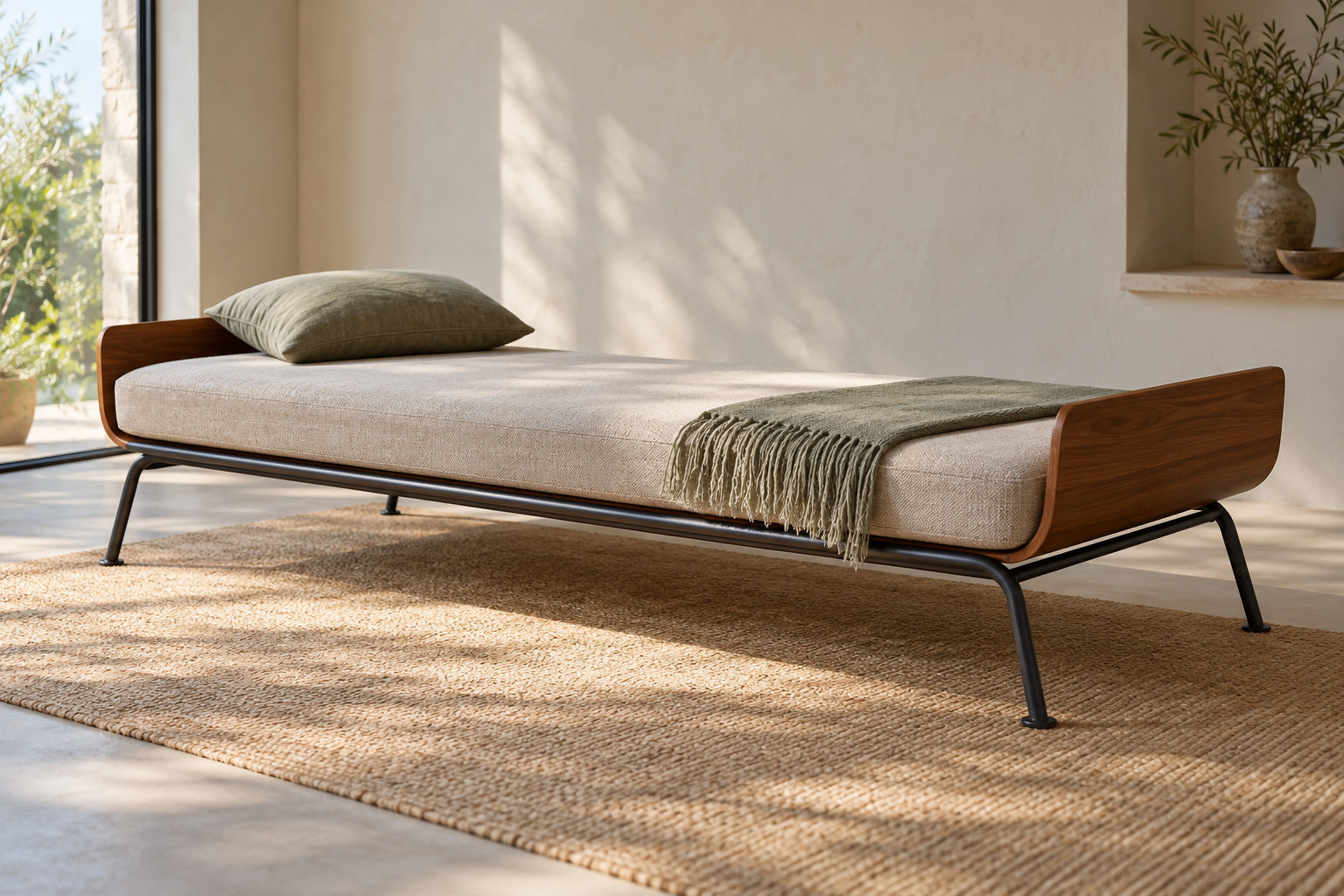
A bed can dominate a small room long before anyone goes to sleep. Cleopatra offers another way to read that presence. The Van Eesteren Museum identifies A.R. (Dick) Cordemeijer’s 1953 design for Auping and describes its steel structure and wooden end details.1
The restrained outline allows the furniture to sit more easily within a room used for different activities. A mattress still supplies a place to lie down, but the surrounding structure avoids the large enclosing surfaces associated with many beds. The space beneath and around it becomes part of its daytime appearance.
Different materials mark different places
Auping’s historical account also places Cleopatra in 1953.2 The combination of metal and wood helps explain its character. A comparatively fine steel structure carries the main outline, while wood marks the ends as warmer, more tactile accents.
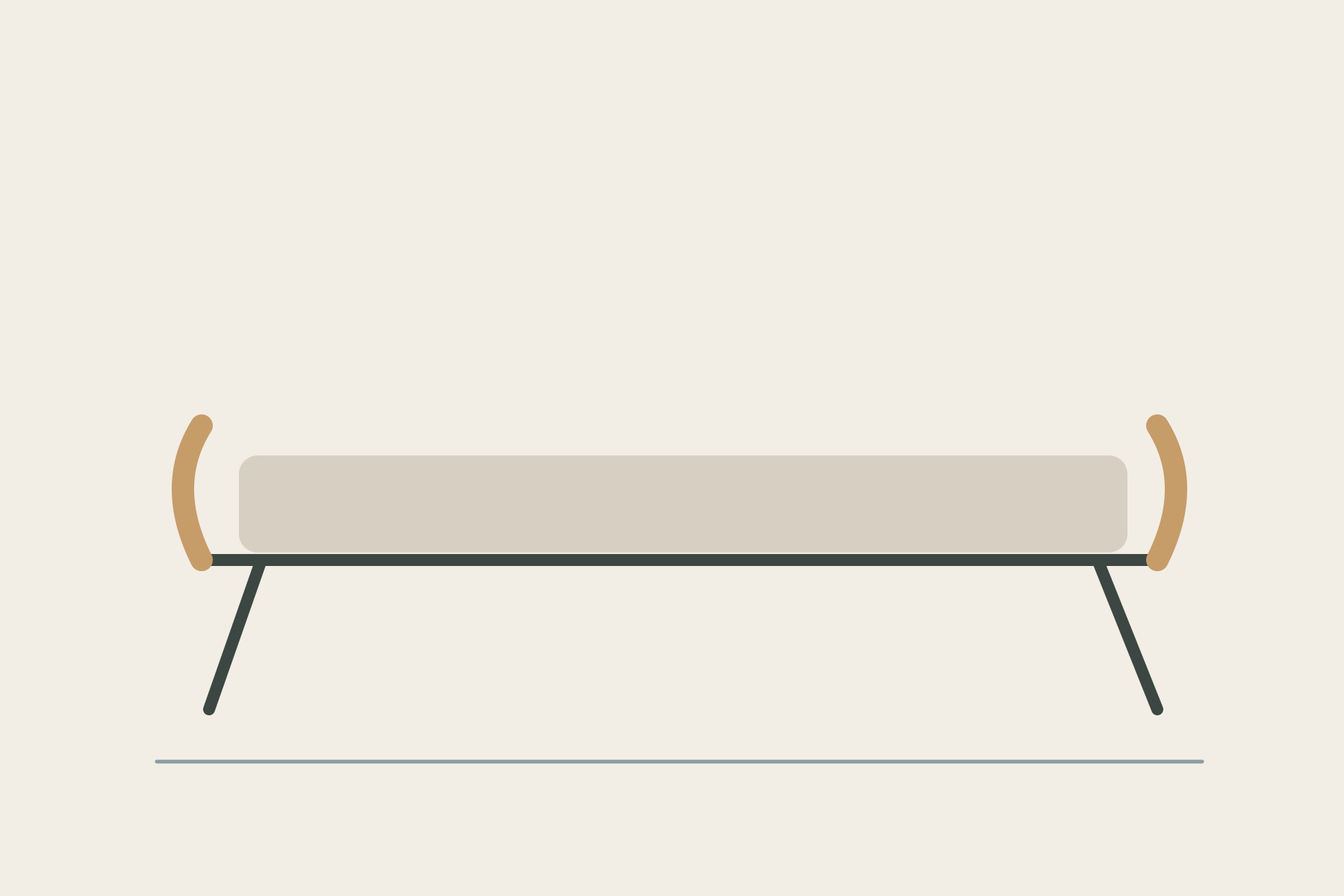
Look from the side and then towards an end. The long horizontal form is clear, but the details stop it becoming an anonymous platform. That balance makes the daybed an interesting piece of domestic furniture history: sleeping furniture can take account of the hours when the room is being seen and used in other ways. The argument is about space and appearance, rather than a claim about sleep quality.
An idea can return in another model
Auping’s later Original explicitly refers back to Cleopatra.3 It is a separate design, not a name that should be substituted for the older model. The connection shows how a manufacturer can revisit an established spatial idea while making another product.
Cleopatra’s useful lesson is modest and enduring. A single piece of furniture may need to belong to several parts of the day. Its structure can acknowledge that wider life, giving a room a place to rest without requiring the whole room to feel asleep.