Follow the work across familiar rooms
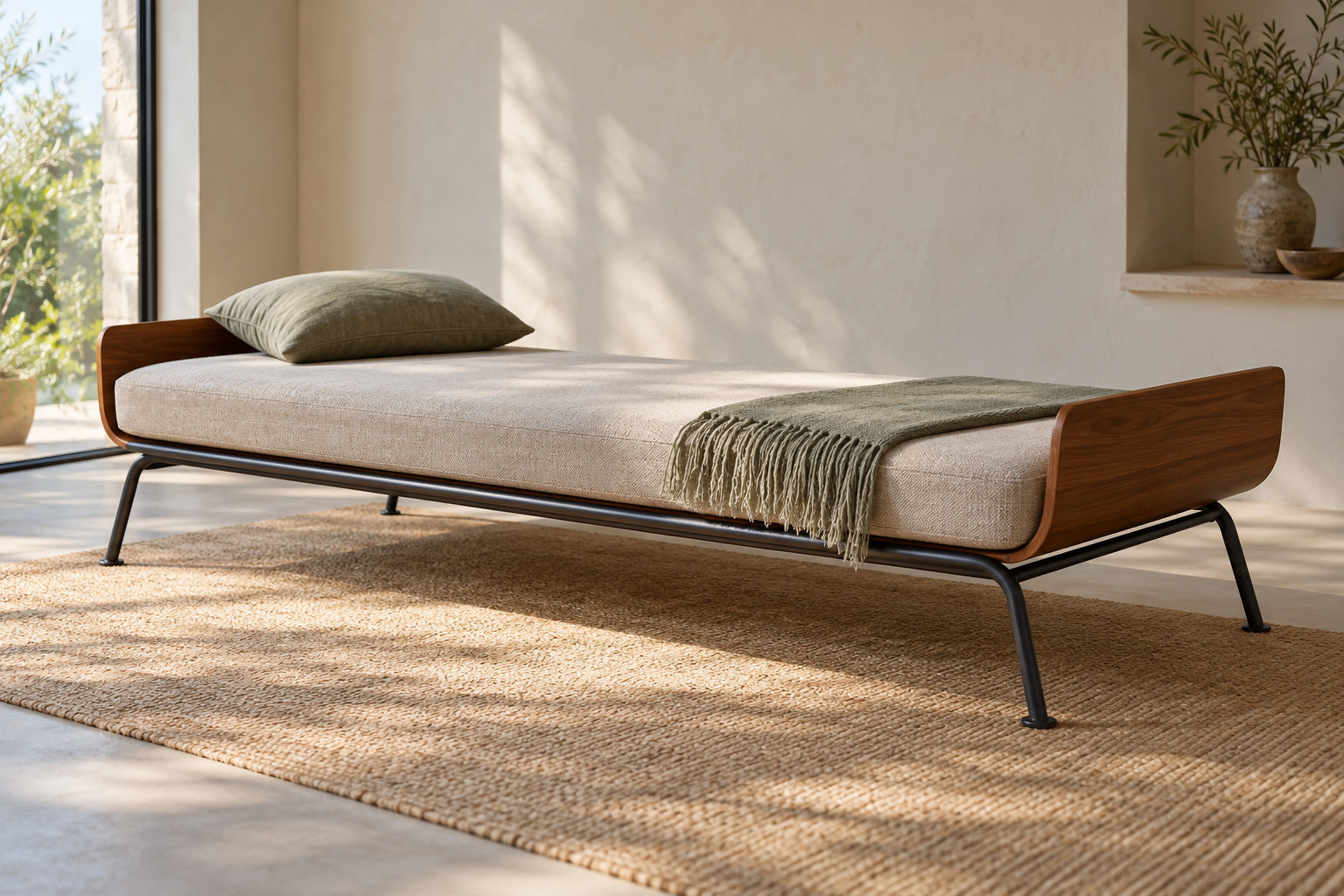
Cleopatra offers a clear starting point: a daybed whose open structure gives a bed a considered daytime presence. Van Eesteren Museum and Auping connect it with A.R. (Dick) Cordemeijer and 1953.23 It is one product within a wider industrial career.
Stichting Gispen Collectie traces an Auping appointment in 1952, then a move to Gispen in 1956.1 Following that work across companies shifts attention from a single celebrated outline to the continuing task of making furniture useful and producible.
Collaboration belongs in the design record
The Gispen heritage account describes products developed with named collaborators, including the 416 armchair with Wim Rietveld and the 5600 storage furniture with Holleman.1 Those credits make the factory story more interesting. Furniture development can involve connected decisions about parts, use, manufacture and product families rather than one isolated act of drawing.
The heritage account also describes adapting construction and upholstery to machine production.1 The connection between design and factory was therefore part of the furniture’s development, not merely a logistical step after its appearance had been decided.
Keep the name attached to the evidence
The sources use different forms: Auping and Van Eesteren give A.R. (Dick) Cordemeijer, while Gispen heritage uses A.R. or André Cordemeyer and explicitly connects the Cleopatra project to the later Gispen career.123 That documented bridge supports following the work without inventing another person or expanding the initials.
The broader picture is rewarding. Industrial furniture gains character through engineering, cooperation and revision as well as through memorable silhouettes. His career helps make those quieter design contributions visible.