The interesting bit is where the pieces meet
Follow the arm of a Sam Maloof chair towards its front leg. The wood changes direction through a rounded transition that invites a hand to keep moving. From a distance the parts may seem to grow together. Up close, the meeting itself becomes part of the design.
Maloof developed that language through years of making. The Smithsonian describes a self-taught woodworker who began his furniture business in 1949, after work in graphic art and as an assistant to the artist Millard Sheets. The chair became a continuing problem to refine, with joints, proportions and surfaces worked out through practice.1
The pleasure of the curve is easy to photograph. The decisions behind it are easier to understand when you step into the workshop.
There were machines in the room
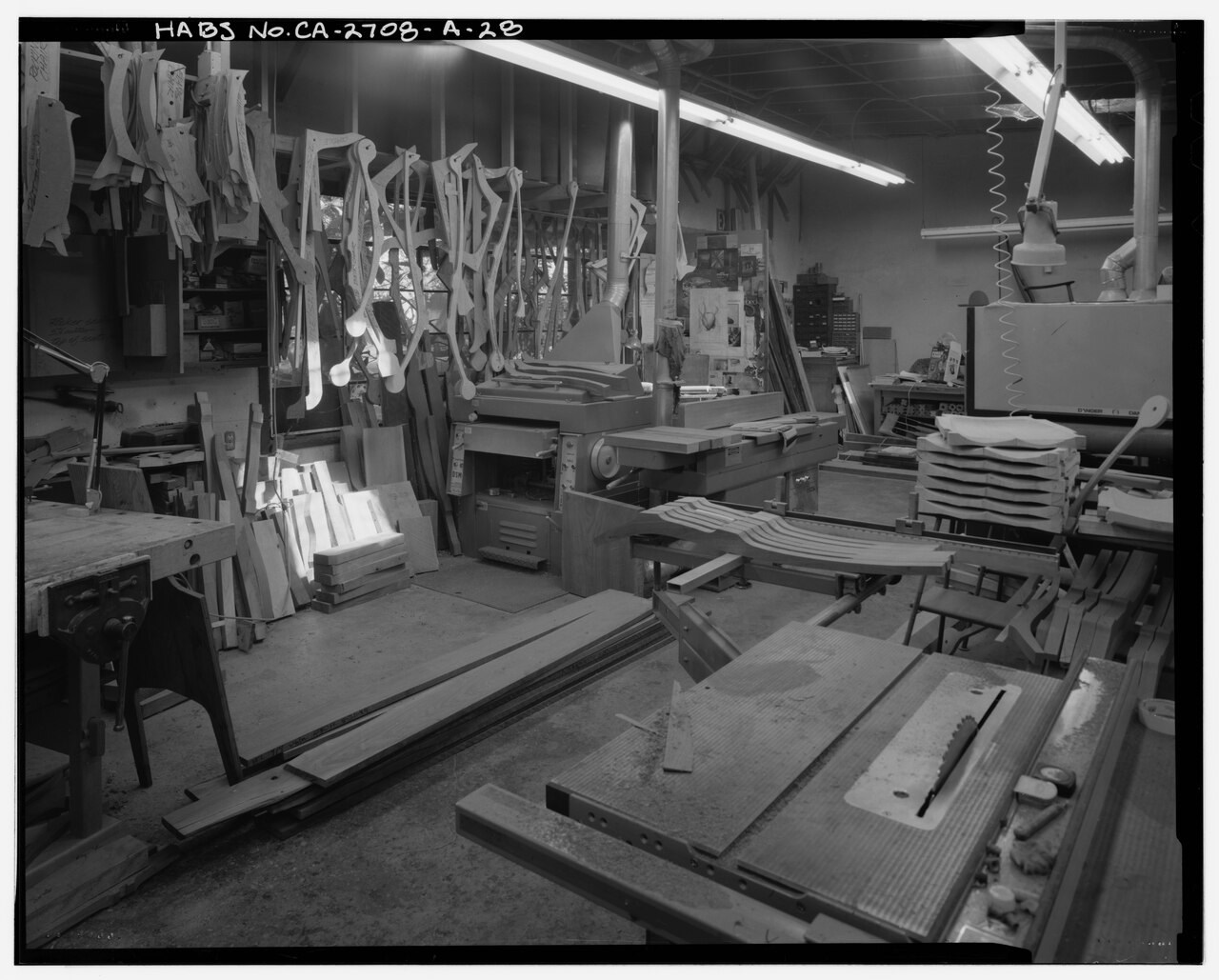
Tavo Olmos’s 1999 survey photograph shows the workshop crowded with equipment, shaped parts and templates. Curves hang on the wall; other components wait in stacks. It is a working place with several stages of furniture-making visible at once.4
In Rick Mastelli’s 1980 workshop account, Maloof moves between a band saw and hand tools, quickly cutting the compound curves of chair arms before refining them with rasps, files and a scraper. Templates help establish a familiar shape, while the final working leaves room for adjustment.6
The photograph becomes more revealing with that sequence in mind. A repeated outline can save time without deciding every surface. A machine can remove the bulk of the waste while the hand settles a transition that will be touched for years. The finished smoothness contains both kinds of work.
The customer had to live with it
Mastelli’s article also preserves Maloof’s account of an early dining-room commission. An interior decorator specified a stain the eventual owner disliked. Maloof took the furniture back and refinished it. The episode gave him a memorable reason to care about the person who would actually use what he made.6
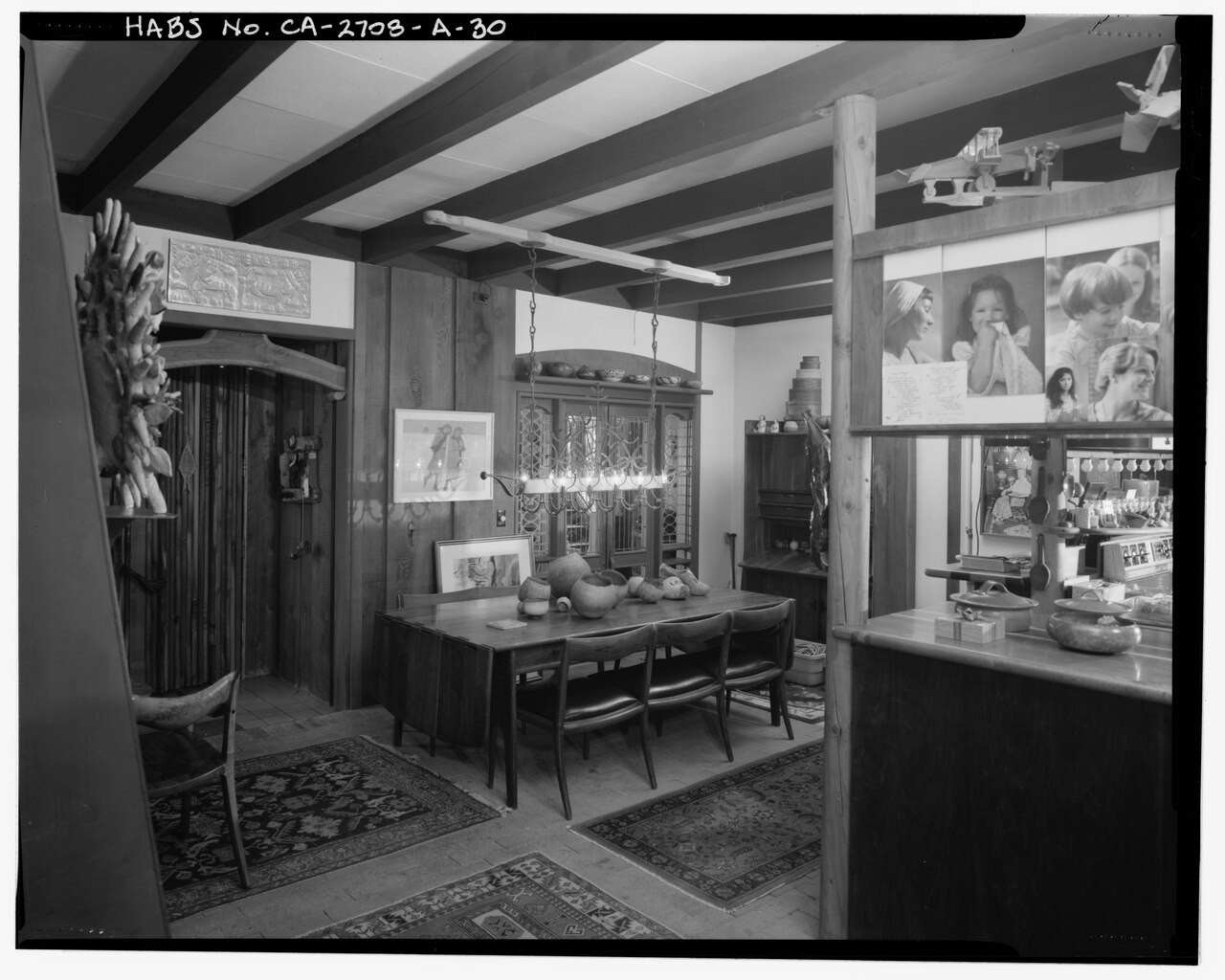
Now look at the dining-room survey photograph. Chairs gather around a table among the other possessions of a lived-in house. Their backs and seats are no longer isolated silhouettes on a seamless museum background. They occupy the space where someone has to pull out a chair, pass behind it and put an arm down.5
These archival views record the former Highland Avenue setting, before the compound’s relocation. They are especially useful because they hold workshop and home within the same documented place. They do not identify the maker of every visible object, and they do not need to: the ordinary company around the furniture is part of their value.
A rocker with room for two
The familiar single rocking chair is only one way into Maloof’s work. The Smithsonian’s Double Rocking Chair, dated 1992, extends the idea into a broad two-person seat. Its recorded materials are fiddleback maple and ebony. The pale, figured wood gives it a different presence from the dark walnut often associated with him.2
The museum’s wider account of American studio furniture places such objects within a field where makers developed individual approaches to useful furniture. That context allows room for different materials, scales and ways of working, rather than one universal idea of what handmade furniture should look like.3
Maloof’s particular invitation is tactile. Look at a seam, an arm or the edge of a seat and imagine the small movement it asks of the body. The long workshop process becomes legible in a moment that takes almost no thought: resting a hand on the chair.