A museum that could change its mind
A row of chairs gives a room a temporary purpose. Fold the chairs away and the same floor becomes available for something else. For the first MASP auditorium on Rua Sete de Abril, Bo Bardi designed seating in 1947 that could fold and stack. Its usefulness included the time when nobody was sitting on it.1
That is an inviting way to approach her furniture. Instead of asking which chair best represents her style, ask what each chair allows to happen. A museum needs space for different activities. A home makes room for personal habits. A public theatre has to establish a relationship between performers and an audience.
The resulting objects need not look like members of a matching suite. Their connection lies in the attention paid to the people around them.
The bowl moves; the frame stays
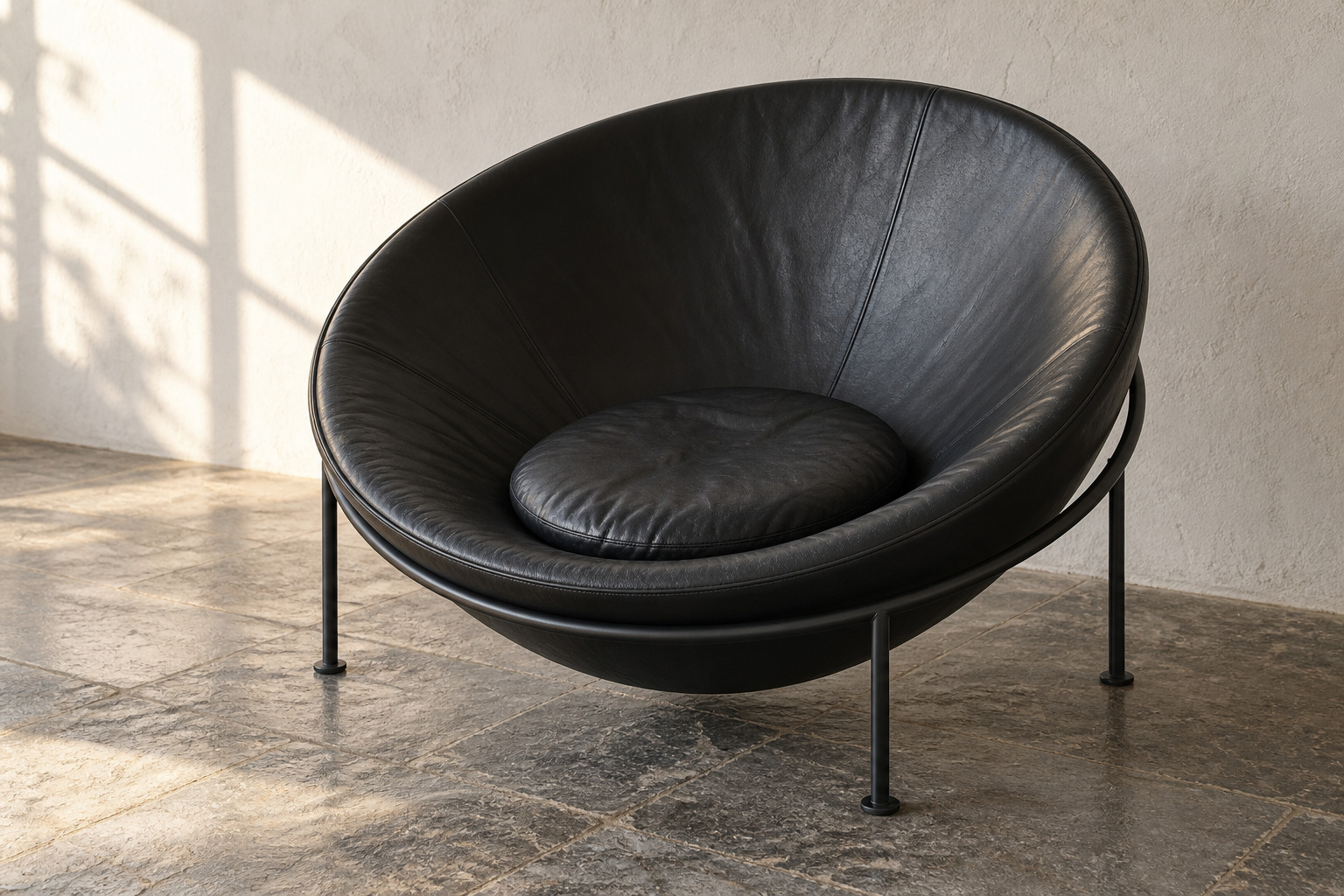
Designed in 1951, Bowl separates a generous hemispherical shell from its supporting ring. Tilt the shell and the seat takes on a different attitude. The thin legs remain where they are while the upholstered volume suggests a more individual way of settling in.
The original experiments included a black leather version and a transparent shell with red cushions. Decades later, Arper worked with the Instituto Bardi to bring a version into industrial production. The available drawings and surviving chairs left questions that the new development had to resolve; the limited edition appeared in 2013.3
This gap between proposal and production is part of the story. A recognisable silhouette can travel through photographs long before its manufacture becomes routine. The present-day object is the outcome of additional decisions, even when the original idea remains easy to see.
Two audiences facing the same event
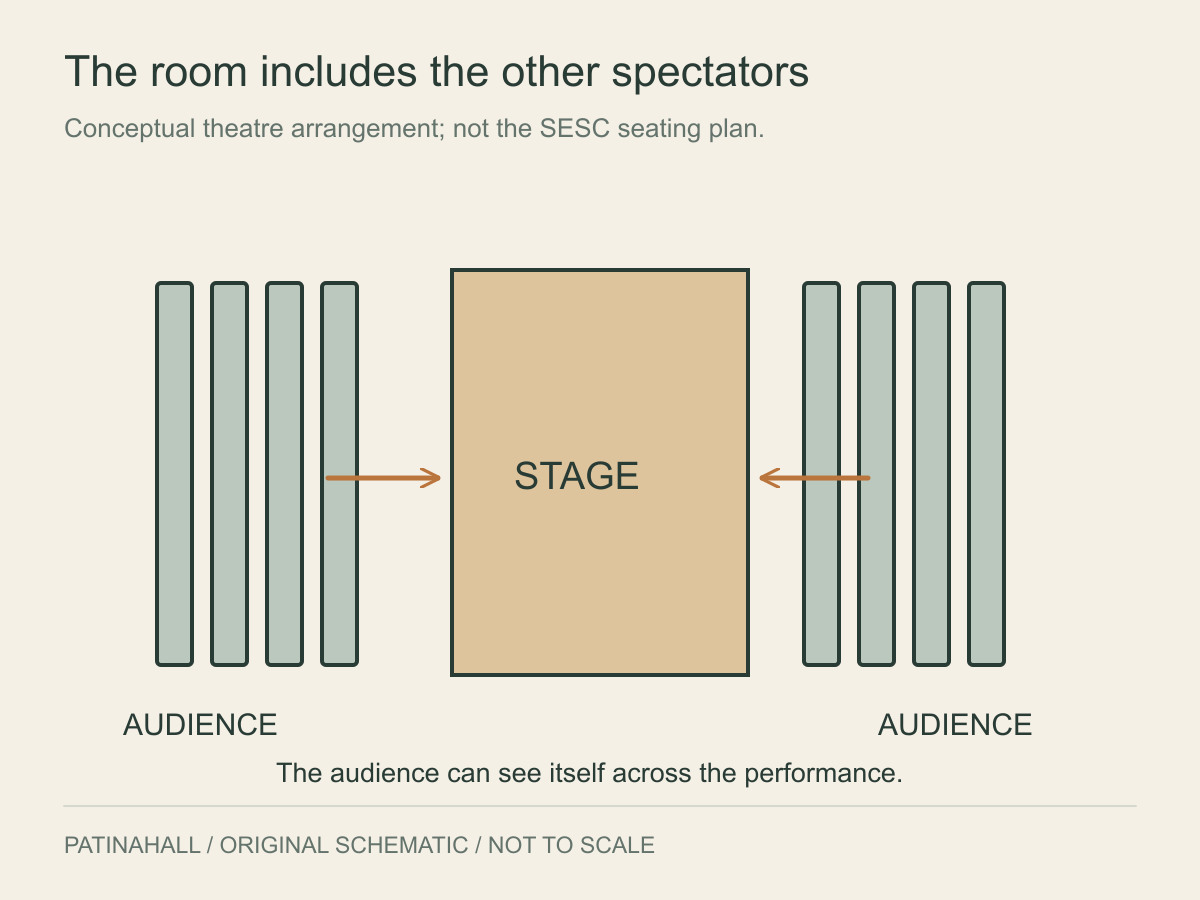
At SESC Pompéia in São Paulo, the theatre places its stage between two banks of seating. Spectators see other spectators across the performance. The arrangement makes the audience part of the room’s visible life.
The seats are wooden and firm. Jochen Eisenbrand’s account for the Instituto Bardi connects this choice to Bo Bardi’s interest in an attentive theatre rather than an upholstered retreat. Their construction also deserves a closer look: thick planes of laminated pine interlock, with additional concealed metal connections developed with her collaborators. The material came from a manufacturing world that included architectural timber structures.2
Firmness alone does not explain the design. The stage, the opposing seats and the exposed character of the space work together. Move one of those chairs into a domestic sitting room and much of its meaning goes missing.
The chair asks something of us
Bowl makes a little territory around one person. The theatre seating places that person among others. Neither object can answer every need, and that is what makes the pair useful to think about.
Bo Bardi’s furniture becomes richer when we imagine it occupied. The empty chair is only the invitation. The rest of the design appears when someone folds it, turns within it, or looks across a stage and notices the people on the other side.