Designer profile

Jeroen Wand: a workshop follows the material

A method learned for one material can become a question for the next. Jeroen Wand’s studio describes just such a journey between paper, wood veneer and aluminium. The workshop becomes interesting as a place where those connections can be tried, kept and changed.

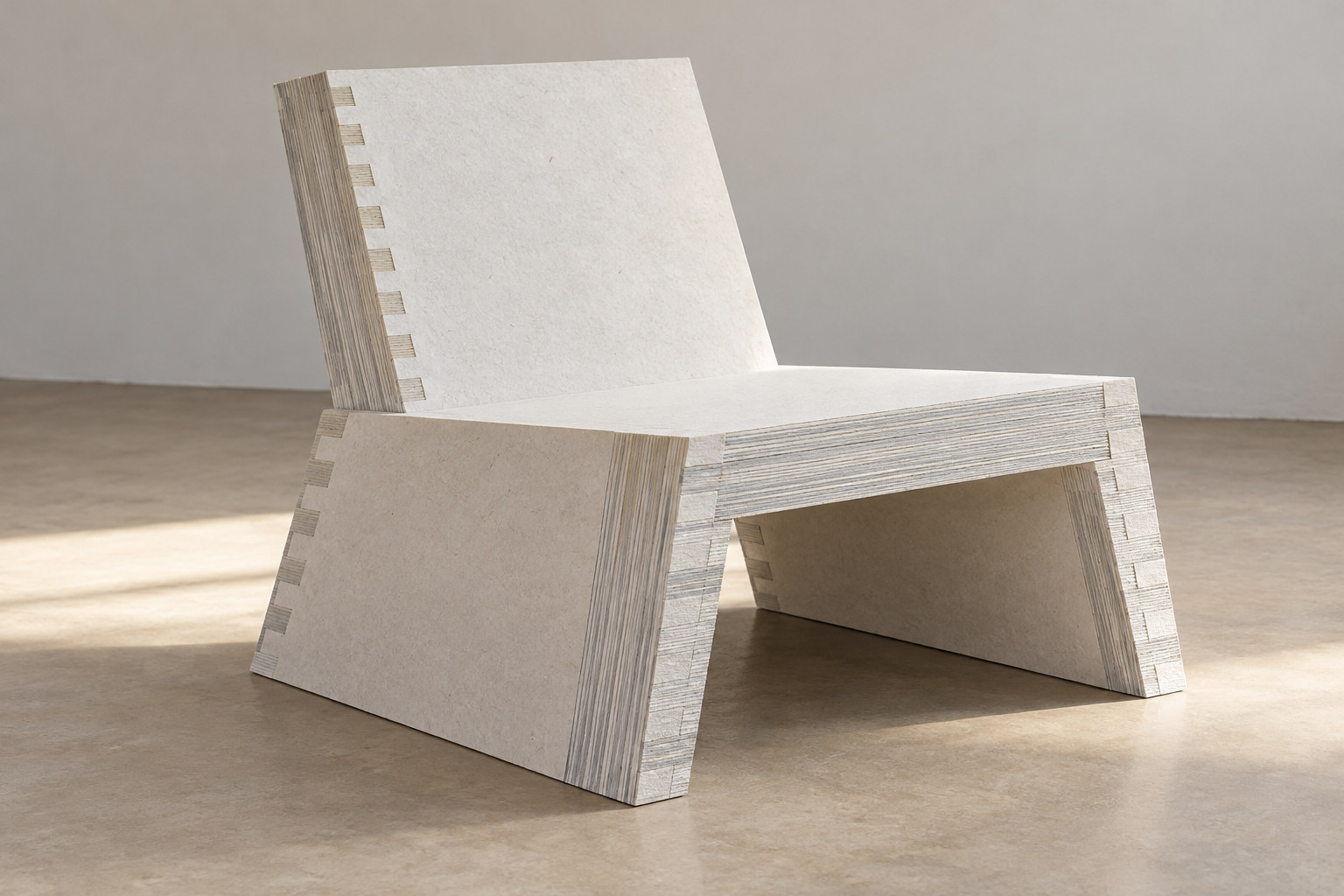
Pale paper-like planes and finely layered exposed edges form an angular chair.
PatinaHall editorial reconstruction. It is not a documentary photograph. This interpretation of Paper Chair makes fine layers and the broad planes’ thickness visible. This interprets paper lamination and joining without reproducing the museum artefact’s measurements, exact joints or condition.
On this page
Key facts & takeaways

At a glance

Subject
Jeroen Wand
Entry
Designer profile
Last reviewed
26 October 2026

Three things to remember

  1. A manufacturing idea can travel while each material keeps its own process.
  2. The studio explains a route between paper, veneer and aluminium.
  3. In Wand’s 2023 account, the studio’s experiments, commissions and making for other designers influence one another.

An idea travels through several materials

Jeroen Wand’s practice becomes especially interesting when one follows an idea between objects. A chair, a table and another chair can form a chain of material questions rather than a sequence united only by appearance.

The studio’s Aluminium Chair account traces such a chain. It describes borrowing lamination from wood production for Paper Chair, links the paper form to folded sheet metal and follows later veneer work before returning to aluminium in 2019.2

Boijmans credits Jeroen Wand for the early chair V 2506(KN&V), created in 2006 and acquired in 2008. The museum records laminated and pressed paper.3

The value of the chain lies in the transfer of questions. What becomes possible when sheets are joined? What changes when a plane is folded? An answer in one material can suggest an experiment in another.

A workshop gives an experiment somewhere to go

The official studio describes a practice shaped by material and technique, naming Jeroen as its founder. Form and function develop through that engagement with making.1

A 2023 Vij 5 interview supplies a more human view of the workshop. Wand talks about employees, developing ideas, making work for others and the place of experimentation within those activities.4

That account makes the workshop more than a backdrop for a finished design. It is a setting where knowledge can move between people and projects, and where a tool or a technique can remain useful after one object is complete.

Wand describes giving the team a preliminary idea and being willing to change his mind when somebody brings a better proposal.4 The workshop gives an experiment people who can develop it as well as tools that can shape it.
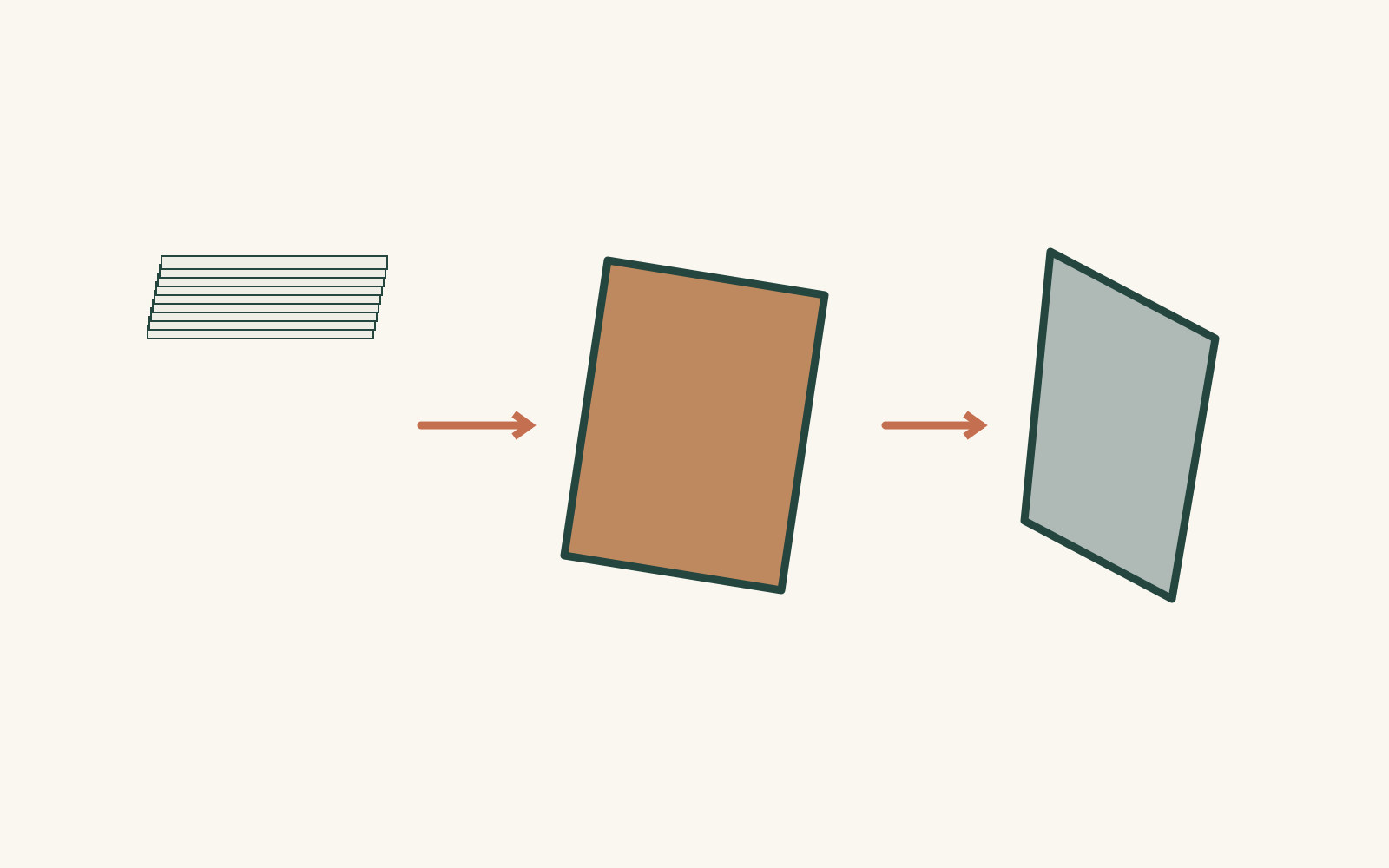
Pale layers, a warm panel and an angled grey plane are linked in a loose sequence.
An idea can move between material practices. The arrows follow the studio’s described exchange of methods, without giving a production recipe or an exact assembly sequence. Original PatinaHall schematic, not to scale.

Following a method across materials

The studio’s sequence makes a borrowed process worth following alongside a finished outline. A way of working with one material can suggest a question for the next.2

The workshop gives that question somewhere to develop. Knowledge moves between materials, while people can keep changing the proposal that first brought them together.

Research notesEvidence, connections and limits

The material lineage follows the studio’s retrospective account. The description of the team belongs to Wand’s June 2023 interview; the early museum chair and later studio output retain their particular credits.

Evidence map

Connected subjects and evidence

Reviewed connections

  • Paper Chair, BoijmansV 2506(KN&V)made byJeroen Wanddocumented

    Boijmans names Jeroen Wand as maker of V 2506(KN&V), 2006, acquired 2008. The museum’s dimensions are not the studio model dimensions.

    Reviewed 26 October 2026 by PatinaHall editorial.
    • Source 3Specifications 139–159; laminated/pressed paper, maker, 2006 creation/2008 acquisition
  • Jeroen Wandcollaborated withStudio Jeroen Wanddocumented

    The official studio names founder Jeroen and its material-led practice. The 2023 interview describes a team and making for others; it is not a current roster or sole-author credit for all studio output.

    Reviewed 26 October 2026 by PatinaHall editorial.
    • Source 1About 14–20
    • Source 426 June 2023; Reinventing the wheel 92–94; Three pillars 100–109

Research trail

Sources and further reading

  1. About Studio Jeroen WandStudio Jeroen WandAccessed 26 October 2026
  2. Aluminium ChairStudio Jeroen WandAccessed 26 October 2026
  3. Paper Chair, V 2506(KN&V)Museum Boijmans Van BeuningenAccessed 26 October 2026
  4. Designer interview: Jeroen Wand, 26 June 2023Vij5Accessed 26 October 2026

Last reviewed 26 October 2026. Found an error or a stronger primary source? Contact PatinaHall.