A bed belongs to a larger field of work
Frans de la Haye’s biography at the Louis Kalff Instituut connects mechanical-engineering training with a career in industrial design. Auronde appears within that wider practice rather than as an isolated furniture idea.1
The biography also lists the Centennial chair for Ahrend and work for PTT that included terminal equipment, control rooms and a post-delivery trolley.1
That range makes the professional lens concrete. A seat, a working environment and a trolley introduce different activities into the design brief. Furniture belongs to a larger field of objects organised around what people do.
An intention needs a place in the object
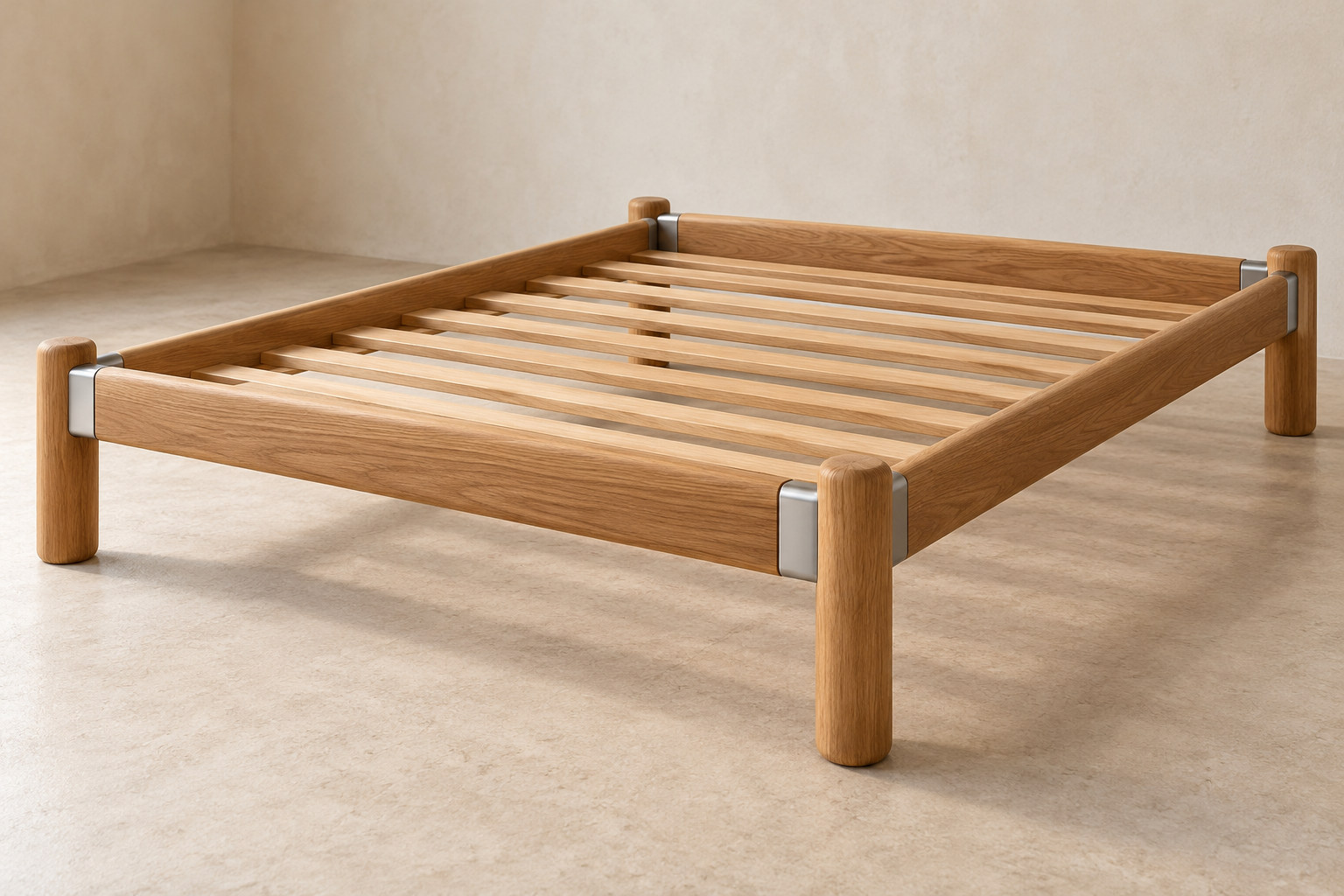
Auping presents de la Haye’s aim for Auronde as enduring appearance combined with straightforward assembly. The statement brings a visual ambition and a making ambition into the same product account.2
Those intentions become interesting when they can be followed into visible decisions. Rounded wooden elements and aluminium connections give the bed a repeatable vocabulary, so its organisation contributes to its character.2
A junction has a role in how the product meets a person as well as in how its parts meet one another. On Auronde, the necessary connection remains a recognisable detail in an ordinary room.
Reading a product from its connections
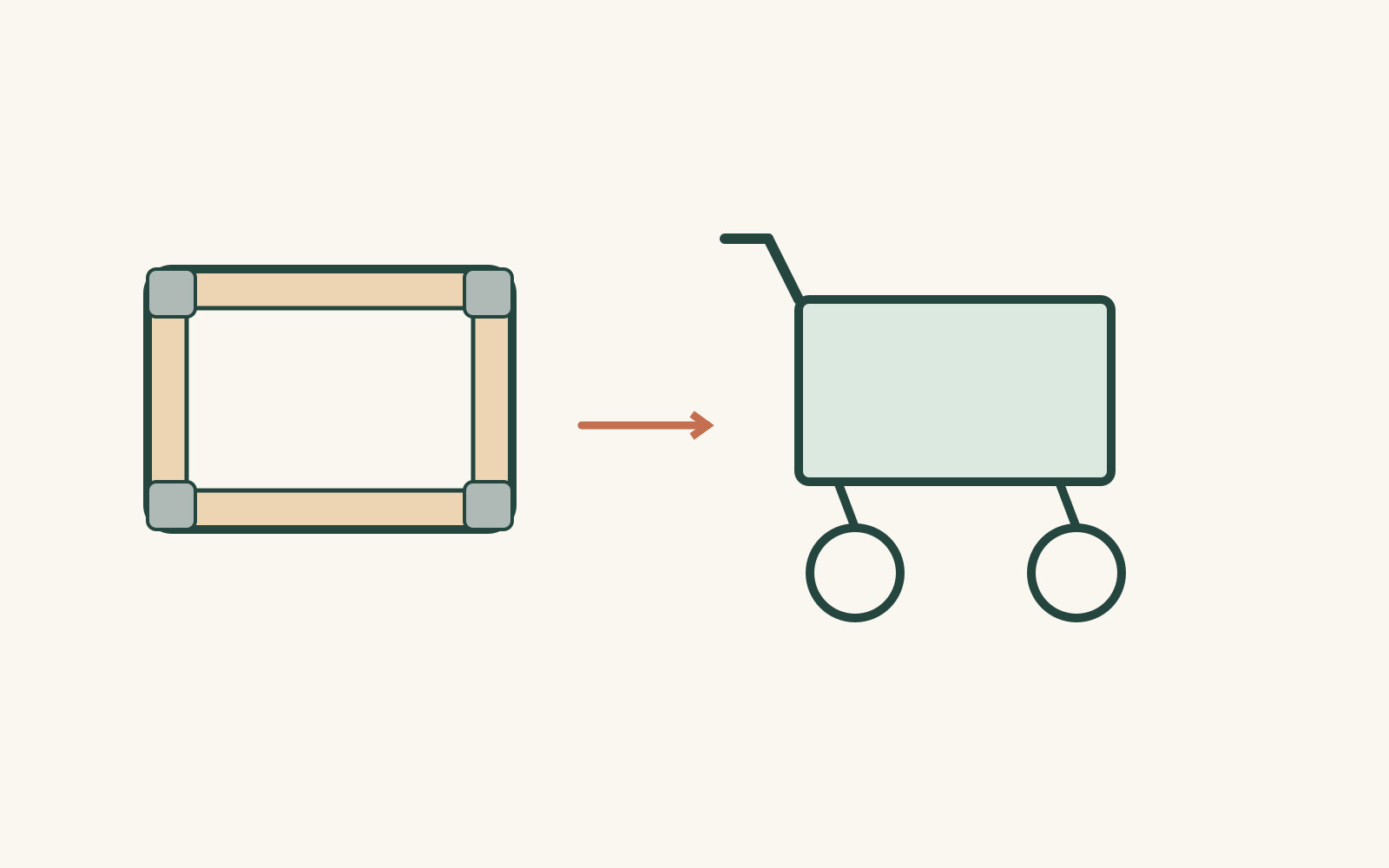
The broader professional record gives that detail another context. De la Haye’s assignments ranged from furniture to equipment and working settings, each bringing its own relationship between a person, an activity and an object.1
That makes the Auronde corner a useful place to end a look across the practice. It is a small, visible meeting where decisions about appearance and assembly have been brought together. A bed shares the industrial designer’s larger question: how will the whole product belong to the activity around it?