Design story

Auronde: why the corners matter

A bed’s long rails are easy to overlook. Its corners are where the parts have to meet. Auronde gives those meetings a visible role: rounded timber and aluminium connecting elements make the bed’s organisation part of its character.

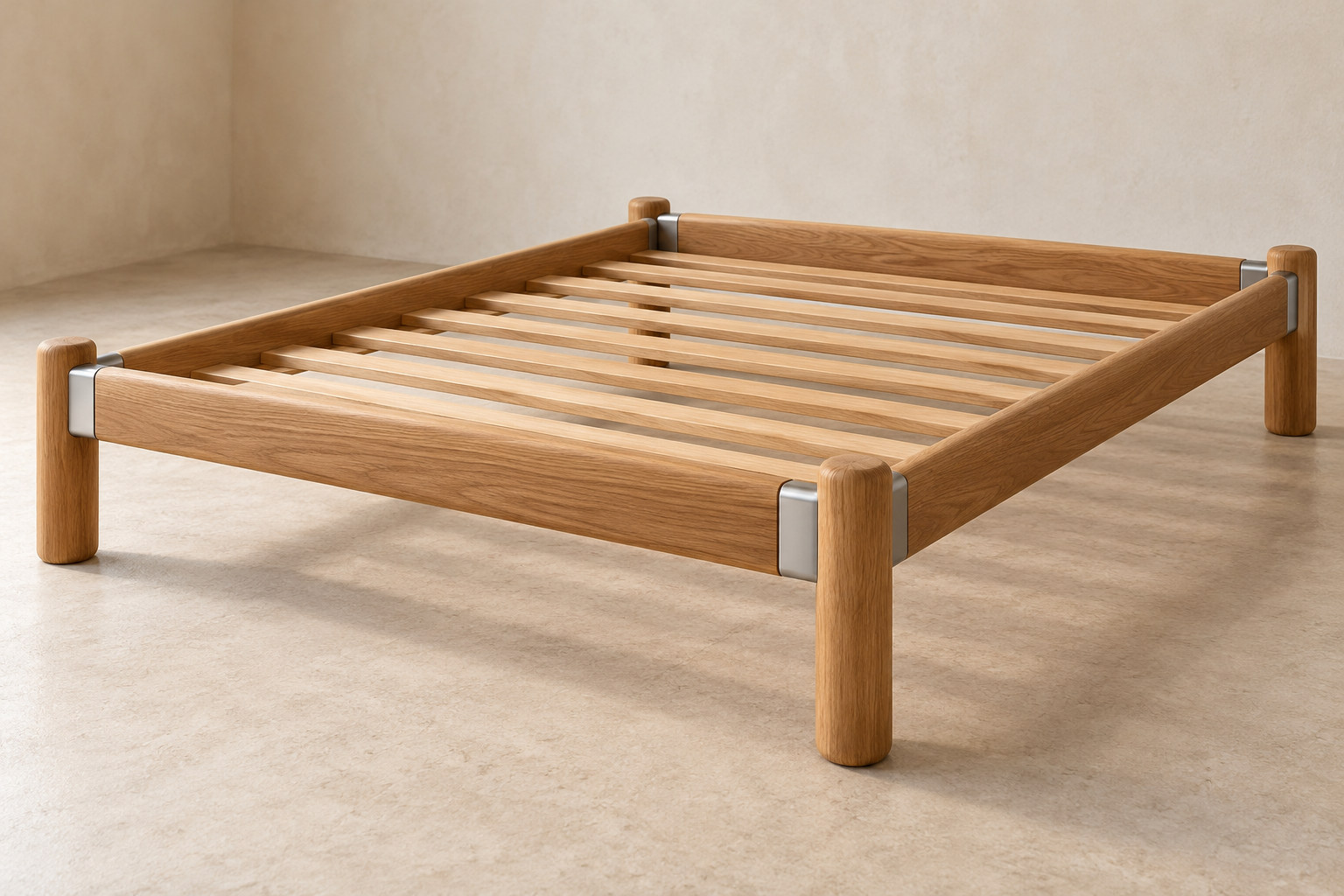
Rounded timber bed rails meet rounded corner legs at visible silver-coloured accents.
PatinaHall editorial reconstruction. It is not a documentary photograph. This interpretation of Auronde uses rounded rails, legs and visible metal accents to give the corners a shared vocabulary. The image interprets the design idea rather than an original bedroom, historic finish or assembly drawing.
On this page
Key facts & takeaways

At a glance

Subject
Auronde bed
Entry
Design story
Last reviewed
26 October 2026

Three things to remember

  1. The corners give the bed a recognisable visual vocabulary.
  2. Auping identifies aluminium connecting elements.
  3. De la Haye’s industrial background helps explain his attention to parts and assembly.

Making a necessary meeting memorable

Auronde gives attention to a place every bed frame must resolve: the meeting of a long rail and a support. Auping describes rounded wooden parts and aluminium connecting elements, making the transition between materials a visible part of the design.1

The change in material helps the eye distinguish the parts. Timber brings a broad, warm-looking surface; the metal connection provides a different accent at the junction. Together they make an ordinary construction question recognisable across the whole bed.

The corner matters at room scale as well as close range. Repetition carries the same vocabulary from one end of the frame to the other. A small set of decisions gives the larger rectangular object its coherence.

A corner can explain the whole

A visible connection offers an easy route into an object. Start with the rail, follow it towards the leg and notice the change where the parts meet. The frame begins to read as a set of related elements.

Auronde’s rounded shapes make that route particularly clear. Edges turn rather than ending abruptly, and the junctions retain a place in the overall outline.

Auping presents de la Haye’s aim as a combination of enduring appearance and straightforward assembly. Those are useful design intentions: the connection should belong to the appearance as well as to the making of the bed.1

The interest is in seeing those intentions expressed through the parts. One does not need an assembly demonstration to recognise that the junction has received as much design attention as the larger rails.
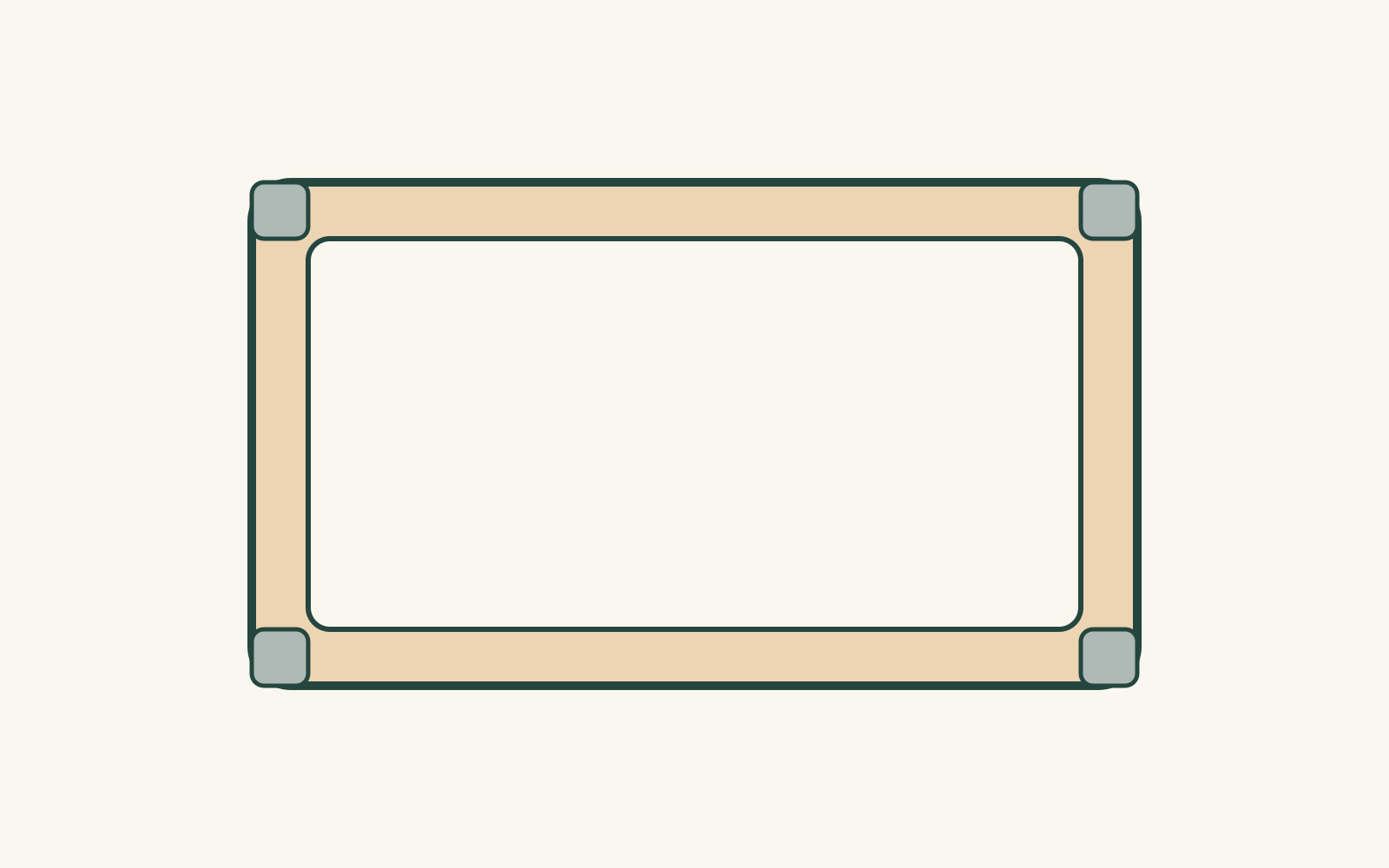
A warm rectangular frame repeats four grey corner accents around an open centre.
Repeated corner meetings carry one visual vocabulary around the frame. The highlighted areas indicate attention to connections, without showing hidden connector mechanics. Original PatinaHall schematic, not to scale.

An industrial designer’s way of looking

The Louis Kalff Instituut’s biography places de la Haye in mechanical engineering and industrial design, with work extending beyond furniture. Auronde belongs to that broader attention to how a product is conceived as a whole.2

That background gives a useful lens for the bed. Materials, repeated components and connections can carry a shared visual idea, rather than leaving character entirely to an added surface treatment.

Auronde’s corners keep that idea close to the eye. A necessary meeting between parts becomes a detail through which the entire bed can be remembered.

Research notesEvidence, connections and limits

Auping says designed 1973; the Louis Kalff Instituut says 1972. These sources do not establish a 1972-design/1973-launch sequence. Present wood, veneer and finish specifications are not universal descriptions of older Auronde beds.

Evidence map

Connected subjects and evidence

Reviewed connections

  • Auronde beddesigned byFrans de la Hayedocumented

    Both Auping and the Louis Kalff Instituut credit Frans de la Haye. Auping dates the design 1973; Kalff says 1972. No design/launch split is established.

    Reviewed 26 October 2026 by PatinaHall editorial.
    • Source 1Auronde introduction; aluminium connection parts; attributed designer intention
    • Source 2Biography paragraphs4–6; bibliography/provenance 10–12
  • Auronde bedmanufactured byAupingdocumented

    Auping presents Auronde and its aluminium connecting parts. Current wood, veneer and finish descriptions remain version-specific.

    Reviewed 26 October 2026 by PatinaHall editorial.
    • Source 1Auronde introduction; aluminium connection parts; attributed designer intention

Research trail

Sources and further reading

  1. Auronde bedAupingAccessed 26 October 2026
  2. Frans de la HayeLouis Kalff InstituutAccessed 26 October 2026

Last reviewed 26 October 2026. Found an error or a stronger primary source? Contact PatinaHall.