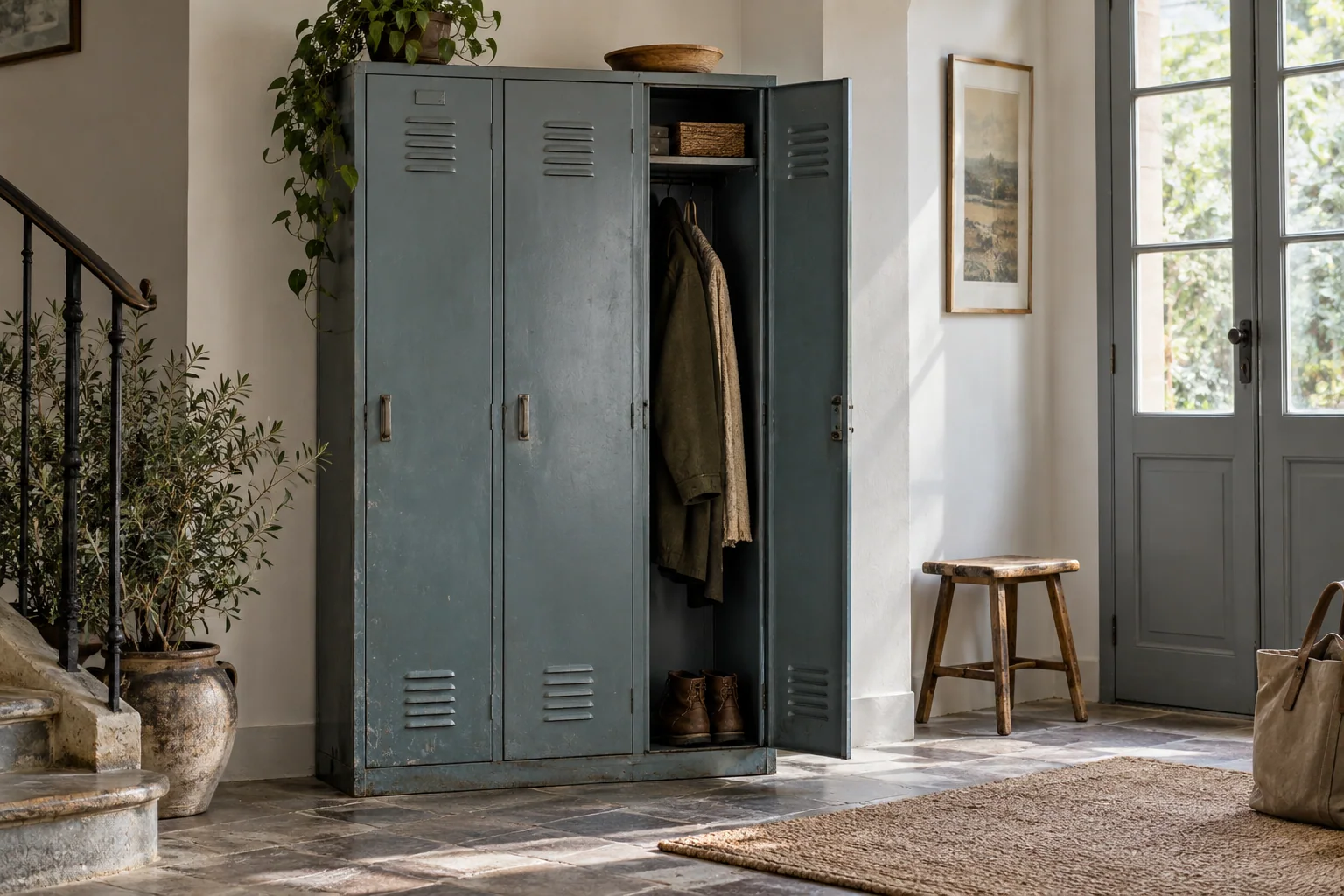
Start with the coat you wear in winter
Bring your usual hanger and a bulky coat to the viewing, or give the seller their dimensions. Check that the hanger sits properly, the sleeves stay clear of the hinge and the door closes without compressing everything against the back. A narrow locker might still suit folded clothes or bags, but that is a different job from hanging coats.
Look below the coat as well. Boots need useful floor space, and a low internal shelf may cut into it. A top shelf can be awkward to reach even when the locker is not unusually tall. Decide whether the arrangement suits the people using it rather than giving everyone an identical compartment simply because the doors match.
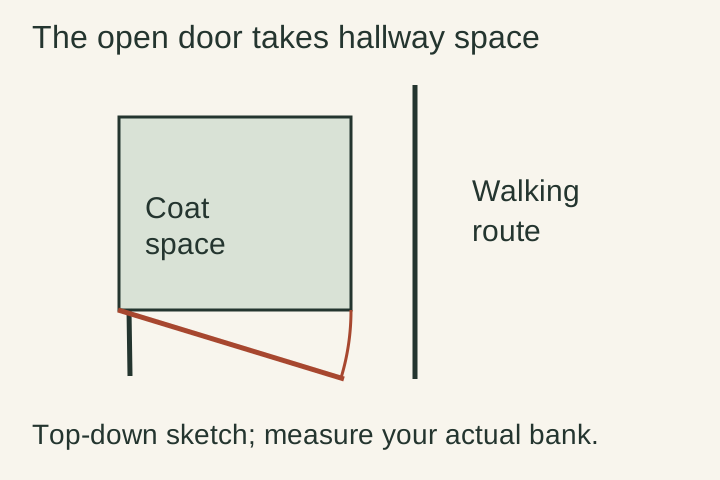
The door needs more room than the closed cabinet
| Check | Why it matters |
|---|---|
| Usable depth with a hanger inside | Internal fittings and the door can reduce the advertised case depth. |
| Door swing and handle projection | A neighbouring wall or front door may obstruct opening. |
| Standing space at an open compartment | Someone retrieving shoes should not block the only passage. |
| Access to the lowest shelf | You need room to bend down as well as room for the cabinet. |
Tape out the case and door movement on the hall floor before arranging collection. Include the skirting board and any radiator behind or beside the intended position. If the bank stands farther from the wall than expected, the passage loses that space all day, not just when a door is open.
Ventilation slots are useful openings to inspect, not proof that damp shoes or coats will dry properly inside. Plan ordinary airing and avoid putting wet items against an uncertain interior finish. Check for blocked slots, sharp edges and old adhesive residue where your clothes will touch.
Can you really remove the extra locker?
Look at the sides, back, top and base of the whole bank. Units may share components or be joined in ways that make an apparent spare column difficult to separate neatly. Before buying a bank of four for a space that fits three, have an installer confirm what will remain at the exposed end and how the smaller assembly will stand.
Current Salsbury installation material distinguishes particular locker arrangements and anchoring details. Its instructions for a three-wide bank include joining adjacent lockers and securing the assembly. Those details belong to the specified system; they demonstrate why an unknown old bank needs its own installation assessment, not a generic screw count.[1]
Do not cut apart a bank on the assumption that each door represents an independent cabinet. Price the final arrangement, including any necessary end components and securing work, before negotiating for surplus units you may not be able to use.
Rust, fresh paint and working locks answer different questions
Ask for clear views of the bottom corners, feet or plinth, rear and door edges. A freshly painted face tells you little about hidden corrosion, previous water exposure or the condition of the supports. Have holes, cracking metal or weakened fixings assessed before filling the lockers.
Try each door normally. Check hinges, latch engagement and whether keys operate the lock they accompany. A key placed in every door is not enough; some may be replacements that do not turn reliably. If you need new locks, identify a compatible solution and include fitting in the cost.
Keep the comparison honest
Compare the delivered bank with its usable end panels, functioning doors and agreed installation against a sound alternative already sized for your hall. Cosmetic wear may be easy to live with; a bank that cannot close, fit or stand properly is a different purchase.
These lockers earn their place when the hall becomes calmer: one coat space, one bag space, shoes that can be found. Let that everyday result guide the choice of a wonderfully worn old finish.