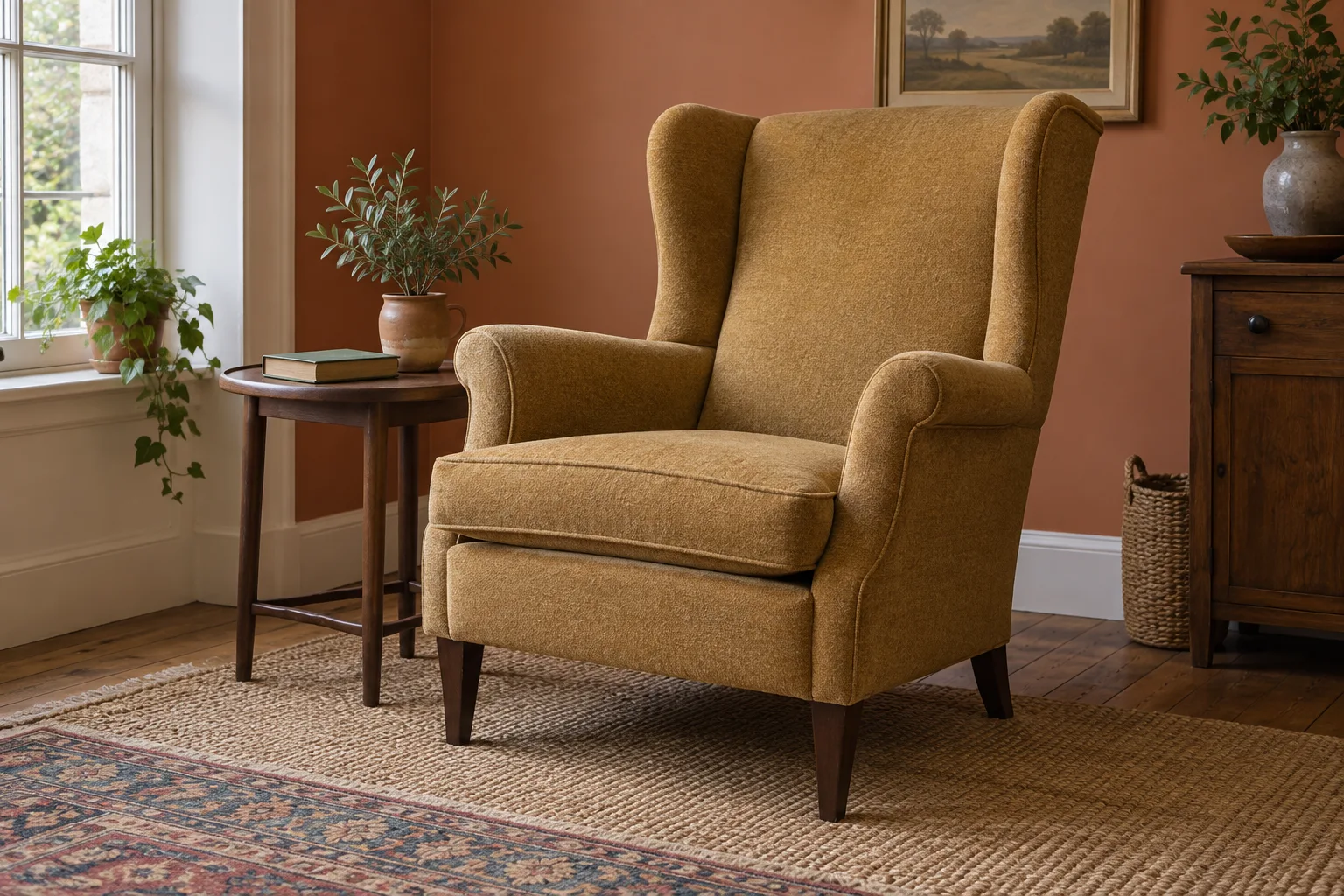
Buy the wings, not the upholstery fantasy
Look at the chair in profile. Do you like the height and reach of the wings, the sweep of the arms and the amount of leg showing? Those features remain when the floral cover becomes plain wool. If you want a lower back or a different arm position, another frame is usually the more direct starting point.
Ask for the accessible maker or model marks and photographs of the whole chair. A winged back does not identify a Penshurst by itself. Where a loose cushion is intended to lift out, look beneath it; keep the cushion with the purchase even if it will be remade. Its dimensions and details can help the upholsterer, though they do not prove it is original.
A 1966 Penshurst, finished again in 2019
Parker Knoll documented a restoration of Isla Simpson’s 1966 Penshurst by its apprentices, completed in 2019. It is a useful real example of an older frame receiving a new upholstery life. It is not evidence that any Penshurst can be restored for the same effort or that the company routinely accepts such commissions.[1]
The current Parker Knoll FAQ says the company does not offer a reupholstery service and points customers towards the Association of Master Upholsterers and Soft Furnishers. Check the current route before buying a chair on the assumption that it can go “back to the factory”.[2]
The design’s longer story is in the Penshurst Library entry.
The cushion and the springs do different work
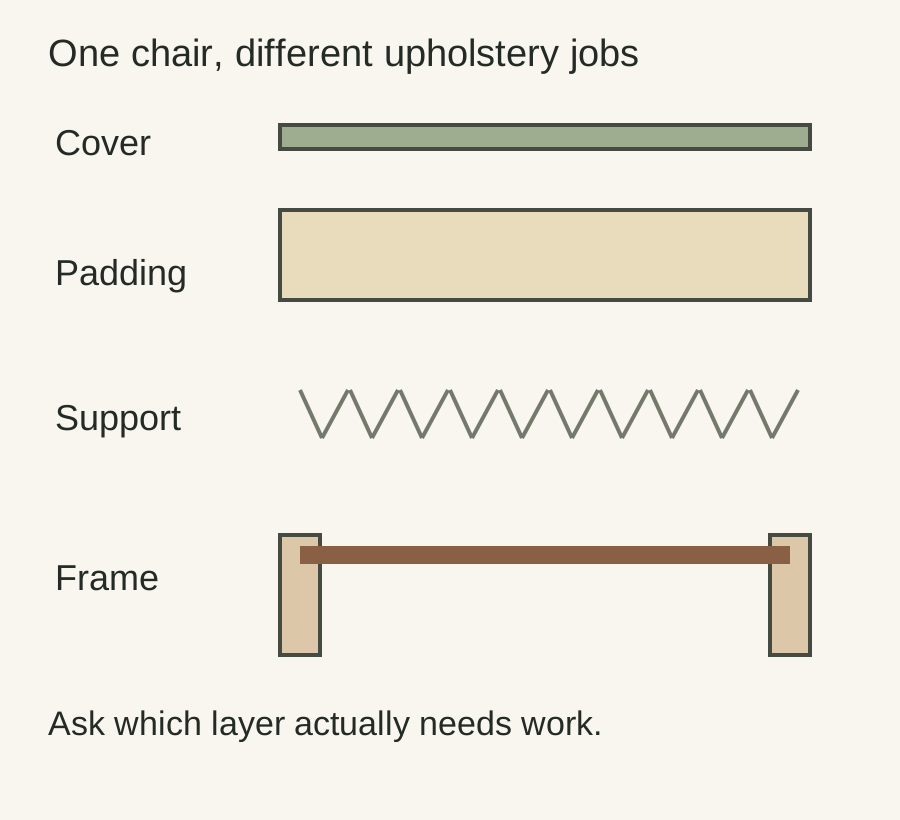
Parker Knoll describes its tension-sprung seating as springs suspended across the frame beneath the cushion. That helps explain the inspection question: is the cushion tired, is the support beneath it affected, or both? The company’s present construction description does not establish what remains inside your older chair.[3]
Ask an upholsterer to distinguish frame repairs, suspension work, renewed padding and cover work. A low corner can have more than one cause. Do not order a thicker cushion to conceal it, and do not dismantle tensioned springs to find out.
For a pair, price two actual chairs. Similar covers can conceal different previous repairs, and a later cushion may explain why one feels much higher than the other. Keep those differences in the estimate rather than assuming the second chair simply doubles the first.
What one workshop publishes for a wingback
Greenwood Upholstery’s April 2026 guide lists the following indicative UK prices for a Parker Knoll-style wingback. These are that workshop’s published figures, checked on 10 September 2026, not a quote obtained for a PatinaHall reader or a European market average.[4]
| Part of the work | Published indication |
|---|---|
| Reupholstery labour | From £450 |
| Fabric | 5–7 metres at £30–£60 per metre: £150–£420 |
| Foam and wadding, if needed | £40–£90 |
| Spring or webbing work, if required | £40–£120 |
| Workshop’s typical total | £600–£1,200; premium material can cost more |
Treat the total as the workshop’s range, not the sum of a guaranteed package. Your written estimate should state what is included, whether tax and collection are extra, and what happens if opening the chair exposes further frame work. Do not buy fabric from this metre range without an approved cutting requirement.
For a simple budget illustration, a £90 chair plus £80 transport and a confirmed £850 restoration commitment totals £1,020. Compare that complete result with a ready-to-use chair you also like. Saving money is one reason to restore; choosing your fabric or keeping a particular frame may be another.
Agree the finished chair before ordering metres
Take the upholsterer photographs of the exact chair and discuss firmness, seat height and the shape of the back as well as colour. Ask how a large pattern will meet across the wings and whether the quoted cloth allowance includes that matching. A plain cloth and a large repeat create different cutting jobs.
Send one complete brief
Please assess this identified chair for everyday reading. Separate frame and suspension work, padding, labour, fabric quantity, trim, tax and collection. Tell me what cannot be fixed until the cover is removed, how extra work is approved, and how we will agree the finished sitting position.
A frame with honest wear and a clear restoration route can be a lovely choice. Buy it because you want the finished chair enough to fund the work, not because the bare frame costs less than the fabric you have already selected.