Design story

Penshurst: a traditional wing chair with a spring story

Penshurst has the reassuring outline of a traditional wing chair. The less visible story is underneath: Parker Knoll’s tension springs helped give upholstered seating a different kind of supporting structure.

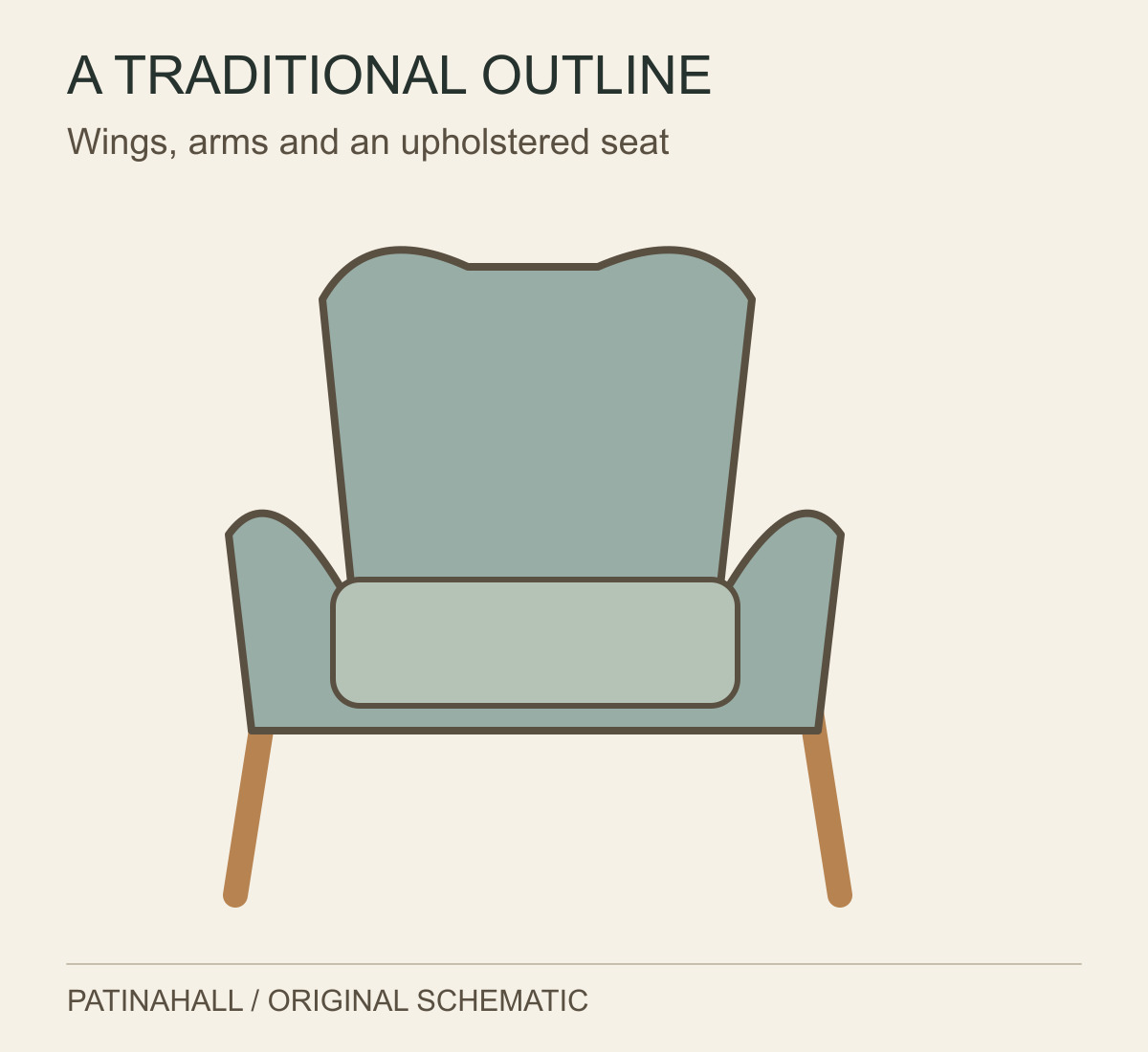
A wing-chair schematic shows a high shaped back, outward side wings, upholstered arms and a separate cushion over visible wooden legs.
The winged outline and separate seat cushion explain the visible Penshurst vocabulary. The drawing is conceptual and does not identify the upholstery or date of a particular chair. Original PatinaHall schematic, not to scale.
On this page
Key facts & takeaways

At a glance

Subject
Parker Knoll Penshurst chair
Entry
Design story
Last reviewed
6 September 2026

Three things to remember

  1. The wings describe the visible chair; the spring system explains part of what lies beneath.
  2. A company’s founding event and an individual chair’s date are different facts.
  3. New upholstery can change a familiar frame’s appearance without supplying a new origin story.

A familiar outline hides the useful detail

Penshurst looks immediately understandable as a wing chair. The high back turns out at the sides, the arms form a sheltered sitting place, and upholstery softens the whole outline. Parker Knoll’s current model keeps that traditional furniture vocabulary in view.1

The technical interest lies lower down. Beneath the cushion, the maker uses its tension-spring system. That hidden arrangement belongs to a different story from the wings and fabric: one about how an upholstered chair supports the person sitting in it without relying on a deep box of large coil springs.2

The spring is below the cushion

Parker Knoll’s account credits Willi Knoll with developing a steel-wire tension-spring approach. It describes how reducing the bulky spring structure could allow a shallower upholstered base and more visible space below the seat.2

This distinction helps explain the object. A cushion changes how the body meets the chair. The support underneath determines what the cushion rests upon and how the seat assembly responds. Both contribute to the experience, but they are not the same component.

That organised underside is easy to forget once the cushion is in place. Yet it helps determine the depth of the upholstered base and the space visible below it. A traditional-looking armchair can therefore contain a production idea that changes its proportions as well as its hidden construction.
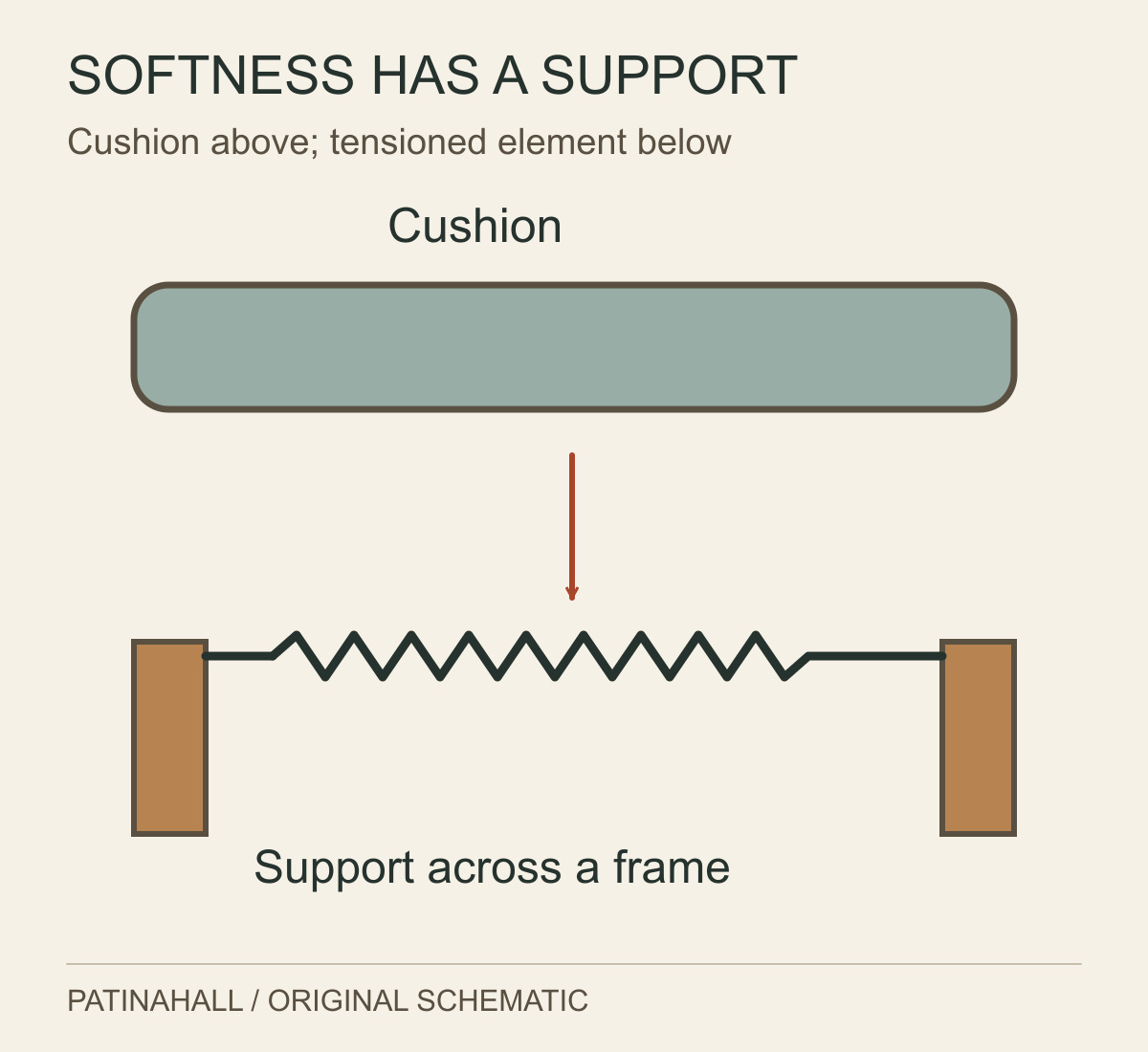
A cushion is drawn above a tensioned support spanning two frame edges, separating surface padding from the hidden supporting system.
This conceptual section distinguishes cushion, support and frame. The zigzag is a spring symbol, not the actual Parker Knoll spring form, fixing method or upholstery build-up. Original PatinaHall schematic, not to scale.

A company story, and one surviving chair

The manufacturer places the Parker and Knoll partnership’s public launch at the British Industries Fair in February 1931. That establishes a company milestone and the setting for the spring system’s British history. It does not, by itself, supply a birthday for every later Parker Knoll model.2

A much more specific account appears in the firm’s 2019 story about an apprentice restoring a Penshurst. The frame carried a 1966 date, and the project fitted it with new William Morris-patterned upholstery. Here the evidence belongs to one chair: a dated structure receiving another surface more than half a century later.3

That is a particularly readable piece of furniture history. The pattern seen after restoration expresses the newer upholstery choice, while the frame keeps its earlier date. The chair contains both moments at once.

The outline survives a change of clothes

An upholstered chair can change the mood of a room through fabric alone. A quiet colour draws attention to the wings and arms; a busy pattern can become the first thing the eye notices. Penshurst’s underlying shape remains available beneath either treatment.

The continuing model is interesting for that combination of visible tradition and concealed technique. Look at the winged back, then imagine the separate jobs below it: cushion, spring support and frame. The familiar armchair becomes easier to understand as an assembly whose soft appearance is only the outermost part.

Research notesEvidence, connections and limits

The maker’s history supports the spring account and the 1931 partnership; its restoration article dates one Penshurst frame to 1966. No first design year, sole designer of the whole chair or universal vintage model number is established. The spring illustration is conceptual, not repair guidance.

Evidence map

Connected subjects and evidence

Reviewed connections

  • Parker Knoll Penshurst chairmanufactured byParker Knolldocumented

    Parker Knoll documents Parker Knoll in the manufactured by role for Parker Knoll Penshurst chair. This relation describes the design family, not the origin of an individual secondhand object.

    Reviewed 6 September 2026 by PatinaHall editorial.
    • Source 1Design, material or production account; scope described in the evidence note
  • Parker Knoll Penshurst chairuses techniqueTension-sprung upholsterydocumented

    Parker Knoll documents Tension-sprung upholstery in the uses technique role for Parker Knoll Penshurst chair. This relation describes the design family, not the origin of an individual secondhand object.

    Reviewed 6 September 2026 by PatinaHall editorial.
    • Source 2Design, material or production account; scope described in the evidence note

Research trail

Sources and further reading

  1. Penshurst chairParker KnollAccessed 6 September 2026
  2. Tension sprung: Willi Knoll and Parker KnollParker KnollAccessed 6 September 2026
  3. Isla’s 1966 Penshurst chair is completeParker KnollAccessed 6 September 2026

Last reviewed 6 September 2026. Found an error or a stronger primary source? Contact PatinaHall.