Design story

Bathboat: bringing the boat inside

A boat keeps water outside; a bath holds it inside. Bathboat lets that small reversal change a familiar object. Its wooden vessel carries associations from one activity into another, asking how much of an everyday experience belongs to the shape and material that surround it.

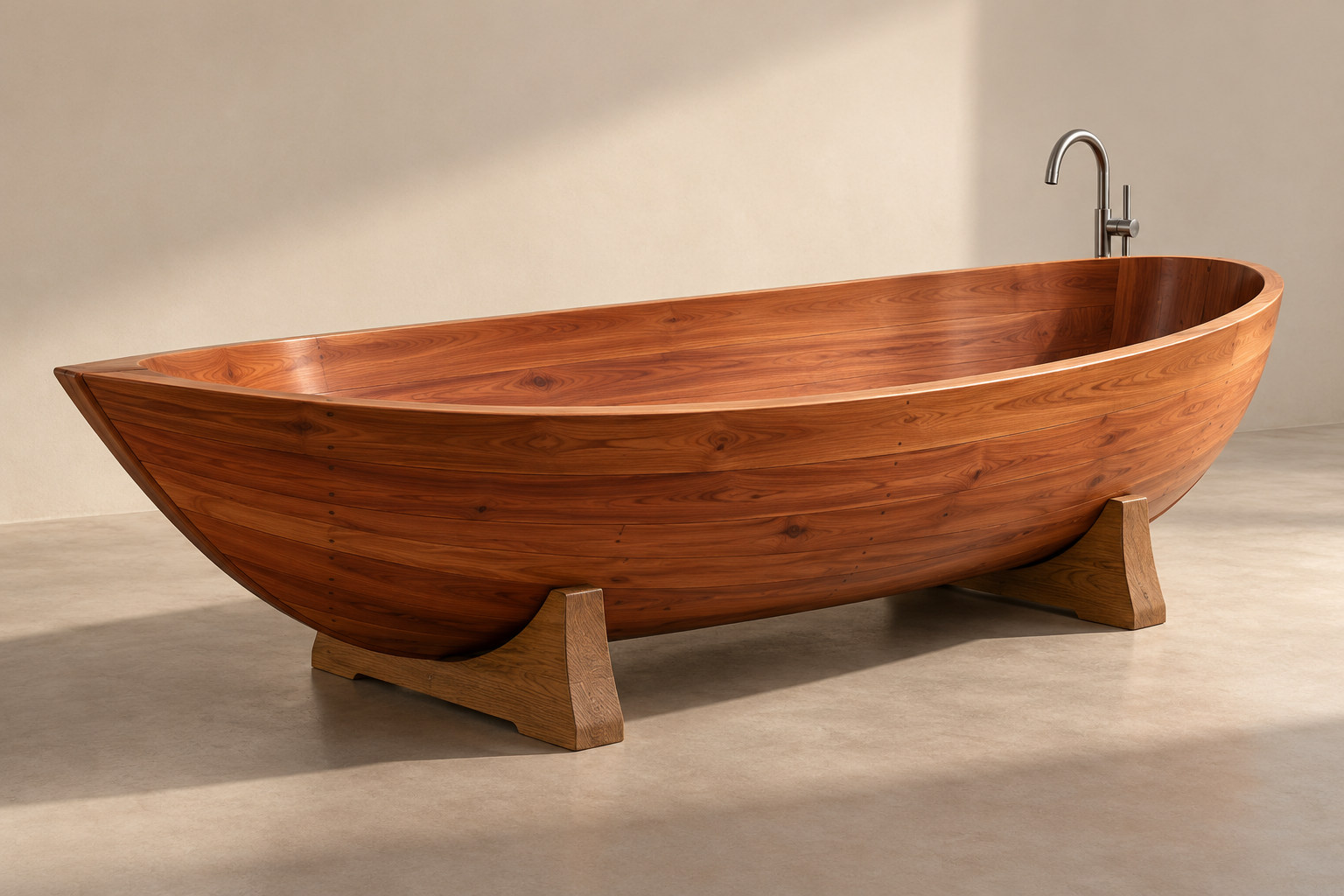
Editorial reconstruction of an elongated wooden bathing vessel with a boat-like pointed end in a simple pale interior.
PatinaHall editorial reconstruction. It is not a documentary photograph. A boat-like wooden basin introduces the reversal between bathing and boating. The imagined vessel is not a documented Bathboat version or evidence of watertightness, plumbing or suitability for use.
On this page
Key facts & takeaways

At a glance

Subject
Bathboat
Entry
Design story
Last reviewed
23 October 2026
Designed
2005documented

Three things to remember

  1. Studio Wieki Somers dates Bathboat to 2005.
  2. Its wood and basin form connect bathing with boating.
  3. The museum credits both the studio and executor 't Vliehout.

Put the water on the other side

A boat keeps water outside; a bath holds it inside. Bathboat brings those familiar relationships together through a boat-like wooden basin. Studio Wieki Somers dates the design to 2005 and describes its starting point as watching a fishing boat on a lake. 1

The transformation does not require the viewer to forget either object. The tapered ends and enclosing sides suggest a small vessel, while the open interior offers the recognisable place of a bath. The two associations remain available at once.

The material carries part of the story

The studio lists red cedar and oak alongside epoxy and lacquer. The combination puts warmth, grain and a shaped wooden boundary where a person might expect the smooth uniformity of a conventional bathtub.1

That changes the experience suggested by the object before anyone uses it. The eye can follow the timber along the basin and read the ends as part of a continuous enclosing form. The boat reference is carried by construction and material as well as by outline.

The article does not turn those materials into instructions for waterproofing or installing a wooden bath. Their role here is to explain why the design can invite a different association.
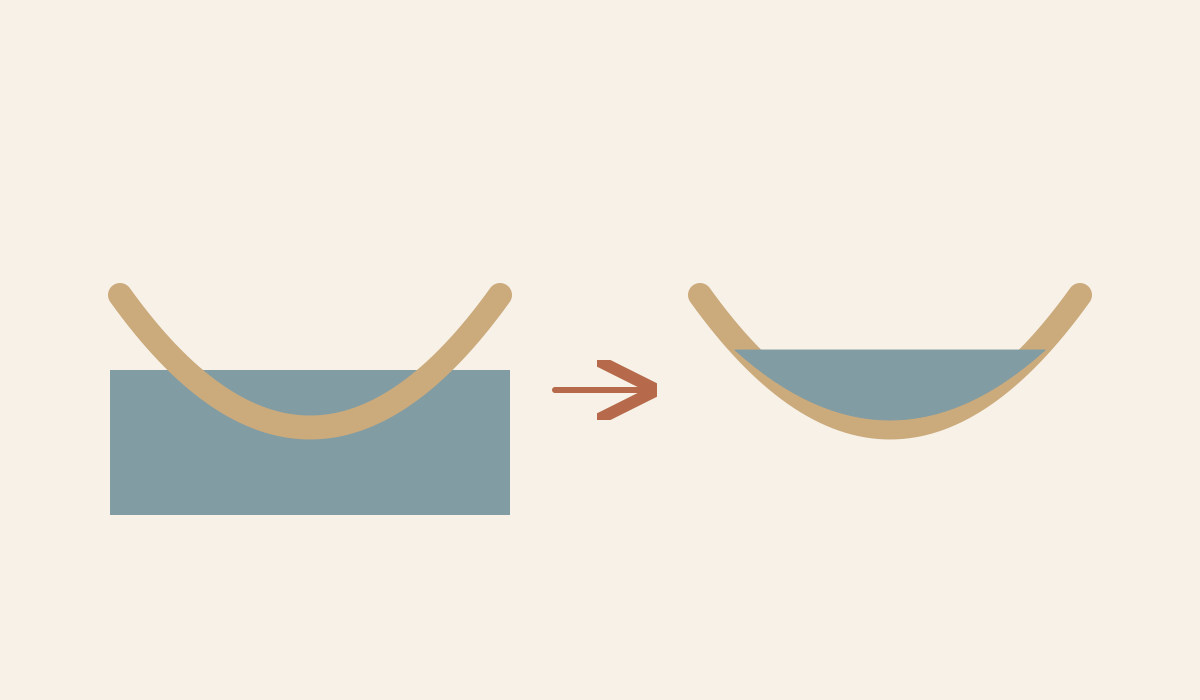
Two simple vessel sections place blue water outside and inside the enclosing form.
Original PatinaHall schematic, not to scale. The familiar boundary reverses: water outside a boat, then water inside a basin. These are conceptual sections, not plumbing or flotation drawings.

Several kinds of authorship meet

Museum Boijmans Van Beuningen records Wieki Somers as designer, Studio Wieki Somers as studio and 't Vliehout as executor of its example. The distinction makes the making visible without assuming that the person who conceived the object performed every production task.2

The museum also preserves a fuller material list for its own object. Those details belong to that record. Studio, gallery and museum measurements should not be combined into a single imaginary version with all the attributes of the others.

An everyday activity acquires another setting

Galerie kreo describes the edition through the relationship between boating and bathing. Its account and the studio's account both emphasise an experience, rather than a new way of storing more water in less space.3

That gives Bathboat its particular place among useful objects. A familiar activity can feel different when the object around it suggests somewhere else. The basin remains inside the room, but its shape gives the imagination a route away from dry land.
Research notesEvidence, connections and limits

Studio, gallery and museum records give different dimensions and production details for their versions. The article treats the design identity without merging those objects or offering plumbing, coating or water-safety advice.

Evidence map

Connected subjects and evidence

Reviewed facts

  • Designed 2005documented

    Studio, gallery and museum records give different dimensions and production details for their versions. The article treats the design identity without merging those objects or offering plumbing, coating or water-safety advice.

    Reviewed 23 October 2026 by PatinaHall editorial.

Reviewed connections

  • Bathboatdesigned byWieki Somersdocumented

    The cited record identifies the designer of this design or coherent project family.

    Reviewed 23 October 2026 by PatinaHall editorial.
  • Bathboatmanufactured by't Vliehoutdocumented

    Boijmans credits 't Vliehout as executor of its 2005 Bathboat example, separately from Studio Wieki Somers. This relationship does not assign that executor to every edition.

    Reviewed 23 October 2026 by PatinaHall editorial.
    • Source 2V 2463 a-b: Designer, Studio and Executor

Research trail

Sources and further reading

  1. Bathboat, 2005Studio Wieki SomersAccessed 23 October 2026
  2. Bathboat, object V 2463 a-b (KN&V)Museum Boijmans Van BeuningenAccessed 23 October 2026
  3. Bath Boat, Studio Wieki SomersGalerie kreoAccessed 23 October 2026

Last reviewed 23 October 2026. Found an error or a stronger primary source? Contact PatinaHall.