Design story

Transience Mirrors: silver shows its changes

A mirror usually directs attention through its surface towards a reflection. Transience gives that surface a subject of its own. Lex Pott and David Derksen use changes in the silver layer to set reflective areas beside fields of colour and irregular texture.

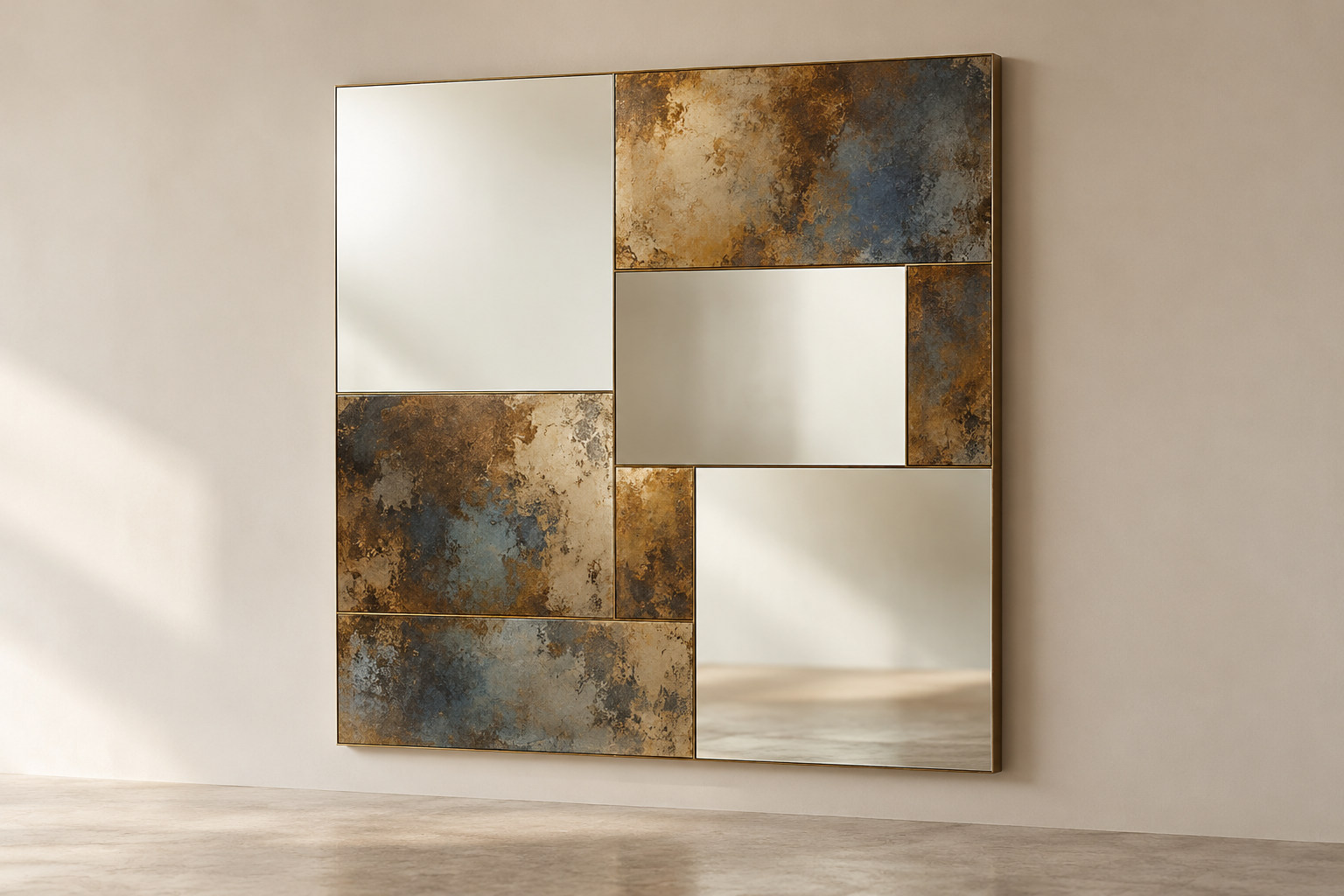
A square wall panel alternates reflective silver-like rectangles with mottled amber and dark fields.
PatinaHall editorial reconstruction. It is not a documentary photograph. Precise boundaries frame irregular fields of colour and reflection. The surface study interprets the project’s geometric/material contrast, without documenting the patina of an actual mirror.
On this page
Key facts & takeaways

At a glance

Subject
Transience Mirrors
Entry
Design story
Last reviewed
26 October 2026

Three things to remember

  1. Lex Pott and David Derksen share the design credit.
  2. The silver layer becomes part of the visible composition.
  3. Different exhibition and edition dates do not establish one universal model year.

Bringing the mirror’s surface forward

Transience makes a normally unobtrusive material layer worth looking at directly. Transnatural explains the project through the oxidation of silver, describing how accelerated treatment reveals different surface states.1

The resulting areas interrupt the expectation of a uniformly reflective sheet. Looking becomes a movement between reflection, colour and texture. The mirror can show something of the room while also keeping attention on its own material surface.

Both Lex Pott and David Derksen are credited for the design. Their shared authorship matters to a project whose interest lies in the relationship between a material experiment and a composed object.1

A precise edge beside an irregular field

Geometry supplies a clear boundary for a process that produces variation. The edges divide the mirror into legible areas; within those areas, the surface can remain mottled or uneven.

Transnatural describes the patterns as handmade and slightly different on each piece. That account helps explain the tension between a repeatable design and a surface that does not become identical from one example to the next.1

The eye has two kinds of order to explore. A straight division can be followed quickly. The smaller changes within a field take longer, inviting attention to colour and texture close to the surface.

This is the project’s useful shift in emphasis: a material change can be given a deliberate place within a composition. The roughness retains its visible character while the geometric arrangement makes it easier to read.
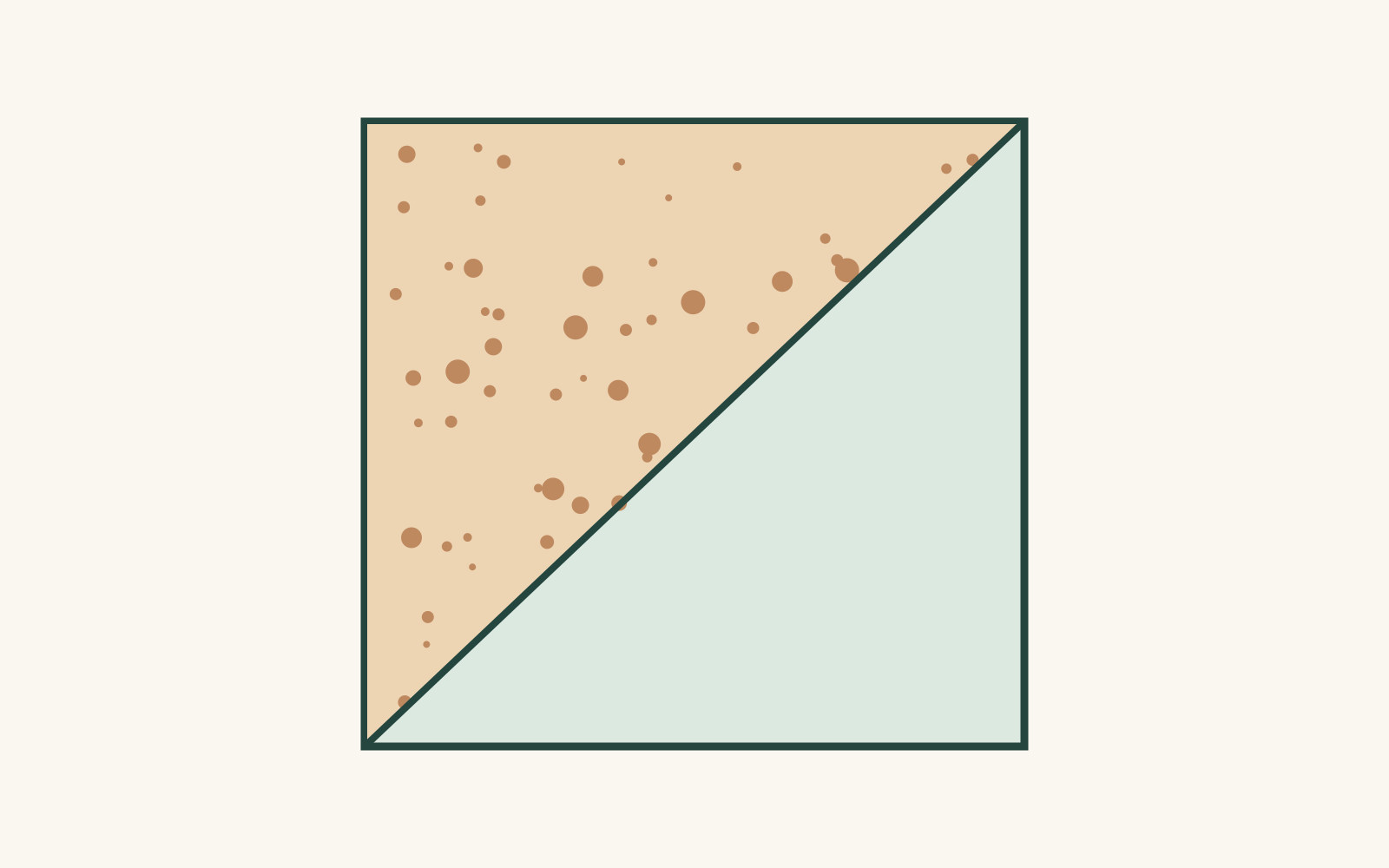
A square is divided diagonally into a plain pale field and an irregular warm stippled field.
A precise boundary can give irregular surface change a deliberate place. The diagram compares geometric order and texture; it supplies no chemical treatment or ageing timetable. Original PatinaHall schematic, not to scale.

An experiment enters different settings

Pott’s exhibition archive places Transience in several 2012 presentations and records the Transnatural mirror collection in Milan in 2015. Those entries describe stages in the project’s public life.2

They also suggest how a material investigation can travel between an exhibition and an object encountered in an interior. The current Square gives the family one clearly defined shape, while the larger project keeps the changing silver layer at its centre.

A reflection moves as the viewer moves. Transience adds another reason to pause: the surface has become something to look at as well as something to look into.

Research notesEvidence, connections and limits

The surface-process explanation is Transnatural’s account; the current Square is one specified example. The sources do not establish a natural ageing timetable, guaranteed continuing change, a stopped process or a domestic treatment method.

Evidence map

Connected subjects and evidence

Reviewed connections

  • Transience Mirrorsdesigned byLex Pottdocumented

    Transnatural jointly credits Lex Pott and David Derksen for the accelerated silver-oxidation mirror project.

    Reviewed 26 October 2026 by PatinaHall editorial.
    • Source 1Project description9–16; joint credit; oxidation and hand variation
  • Transience Mirrorsdesigned byDavid Derksendocumented

    David Derksen shares the design credit with Lex Pott. Hand variation belongs to the described mirrors; no domestic chemical treatment or ageing prediction is implied.

    Reviewed 26 October 2026 by PatinaHall editorial.
    • Source 1Project description9–16; joint credit; oxidation and hand variation

Research trail

Sources and further reading

  1. Transience Mirror SquareTransnaturalAccessed 26 October 2026
  2. Lex Pott: ExhibitionsLex Pott StudioAccessed 26 October 2026

Last reviewed 26 October 2026. Found an error or a stronger primary source? Contact PatinaHall.