Design story

Tejo Remy: old drawers, one new body

The useful trick in Tejo Remy’s chest is the pale wood around the old drawers. Each drawer gets a new home made to fit it; a strap brings those separate homes together.

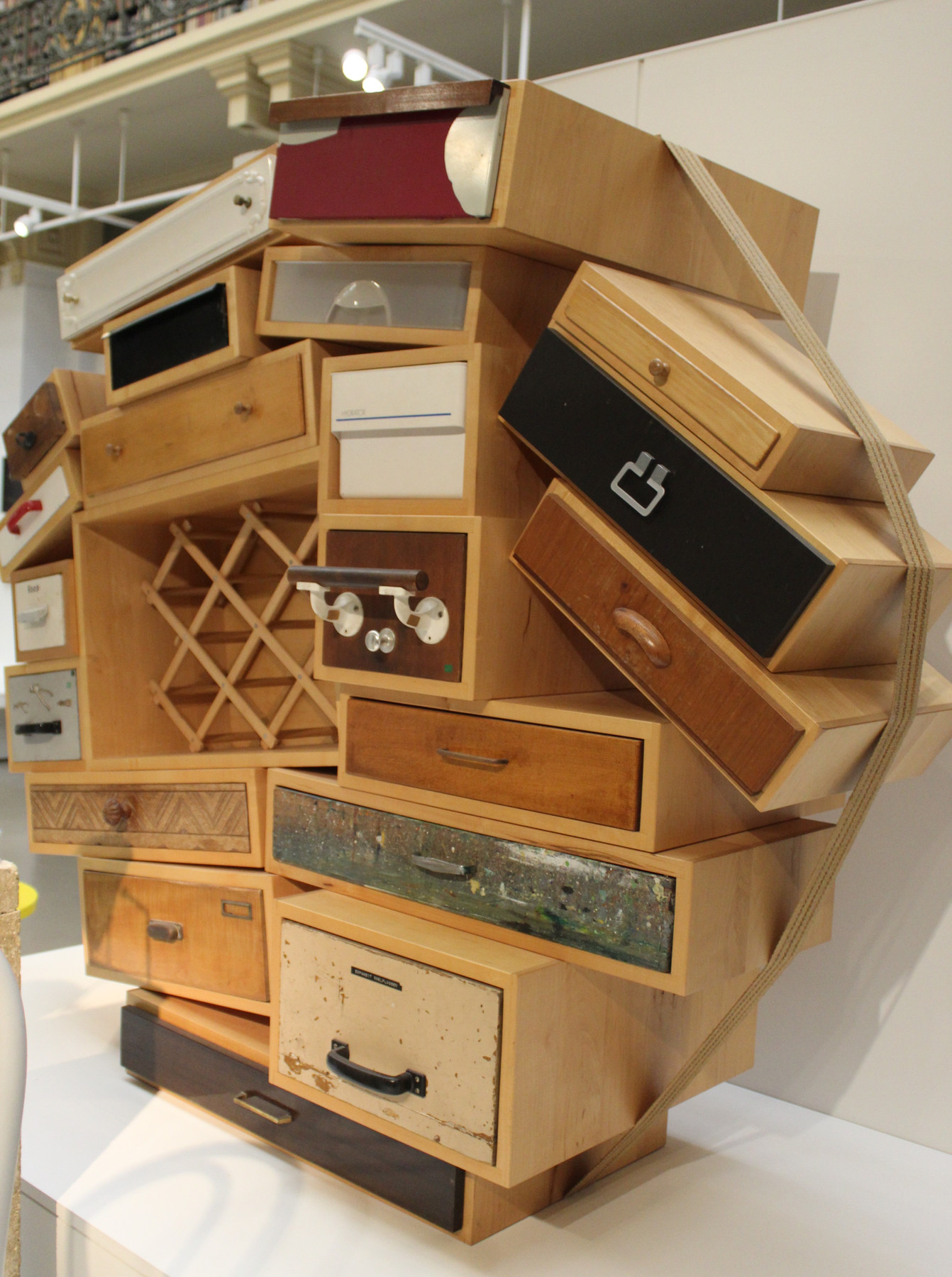
Found drawer fronts in individual pale wood housings form an irregular chest, gathered by a strap at the Victoria and Albert Museum.
The V&A example, photographed in 2024: old fronts sit within new maple housings. Photograph by 14GTR, CC0 1.0.
On this page
Key facts & takeaways

At a glance

Subject
You Can’t Lay Down Your Memory chest of drawers
Entry
Design story
Last reviewed
10 September 2026

Three things to remember

  1. Each found drawer receives a maple housing made to fit it.
  2. The retaining strap gathers the individual housings into one piece.
  3. The old fronts invite associations with memory without supplying documented personal histories.

The pale wood explains the trick

The old drawer fronts have different handles, colours and proportions. The pale wood around them supplies the connection: each found drawer has received a new maple housing, made to fit it. A strap gathers the separate units into Tejo Remy’s You Can’t Lay Down Your Memory.1

Look at the edges of the drawers in the V&A example photographed here. Each old front sits inside a newer outline.4 That extra layer lets the drawers work without their original cabinets.

The useful part of the design is easy to miss because the mismatched fronts are so engaging. Remy has built something new around each discarded part, giving it another place to slide into.

A cabinet built from its contents

Normally a cabinet determines the size of its drawers. Here the found drawers determine the size of the new boxes around them. The direction of design has reversed: start with what exists, then make the surrounding furniture fit.

Droog describes the chest as a response to consumption, using old drawers alongside new maple and a retaining strap.2 The reuse involves labour and new material. Someone must make each housing, then bring the unlike units together.

The strap makes that final gathering visible. Instead of hiding the separate boxes behind one cabinet face, it lets us see them as a group. The piece has enough order to become furniture while keeping the differences that made its parts worth noticing.
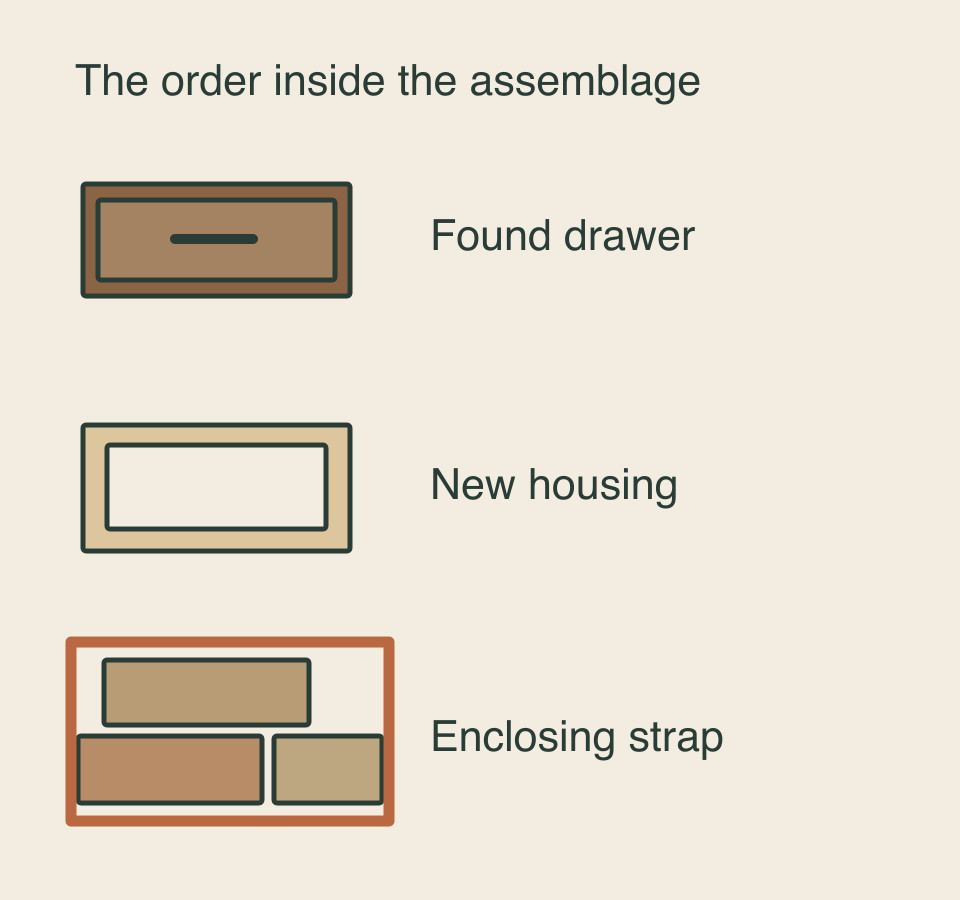
Three diagrams separate a found drawer, a new enclosing housing and the strap that gathers an assembly.
An old drawer receives a new housing; a strap gathers the group. Original PatinaHall schematic, not to scale or an assembly specification.

Drawers with room for a story

The design dates to 1991. Renny Ramakers recalls it in Droog’s first Milan presentation in 1993, where existing objects and familiar materials became the starting points for new work.13

The title draws attention to what drawers mean beyond storage. MoMA connects the work to the memories that objects and their contents can carry.1 Most people know a drawer by what they keep in it: letters, cutlery, keys or things that have never found a better home.

Remy leaves space for those associations without supplying a biography for each old front. The handles remain invitations to open something. The new housings give the drawers a future without smoothing away all signs of their past.

Research notesEvidence, connections and limits

The photograph shows the V&A example, not MoMA’s accession 432.1996. The 1991 design date and 1993 Milan presentation do not establish every example’s manufacture date; the former owners and contents of individual drawers are unknown.

Evidence map

Connected subjects and evidence

Reviewed connections

  • You Can’t Lay Down Your Memory chest of drawersdesigned byTejo Remydocumented

    MoMA records Tejo Remy as designer of the 1991 chest.

    Reviewed 10 September 2026 by PatinaHall editorial.
    • Source 1Object description and historical account
  • You Can’t Lay Down Your Memory chest of drawersmanufactured byDroogdocumented

    Droog presents the chest in its collection; the relation does not date every surviving example to 1991.

    Reviewed 10 September 2026 by PatinaHall editorial.
    • Source 2Object description and historical account
  • You Can’t Lay Down Your Memory chest of drawersuses materialMapledocumented

    MoMA describes custom maple housings around found drawers.

    Reviewed 10 September 2026 by PatinaHall editorial.
    • Source 1Object description and historical account

Research trail

Sources and further reading

  1. Tejo Remy: You Can’t Lay Down Your Memory, 1991, 432.1996The Museum of Modern ArtAccessed 10 September 2026
  2. Chest of drawers by Tejo RemyDroogAccessed 10 September 2026
  3. Waste to worth: Renny Ramakers on the first Droog presentationDroog / Renny RamakersAccessed 10 September 2026
  4. Tejo Remy’s chest of drawers, V&A example; photograph, 2024 — photograph and rights recordWikimedia Commons / 14GTRAccessed 10 September 2026

Last reviewed 10 September 2026. Found an error or a stronger primary source? Contact PatinaHall.