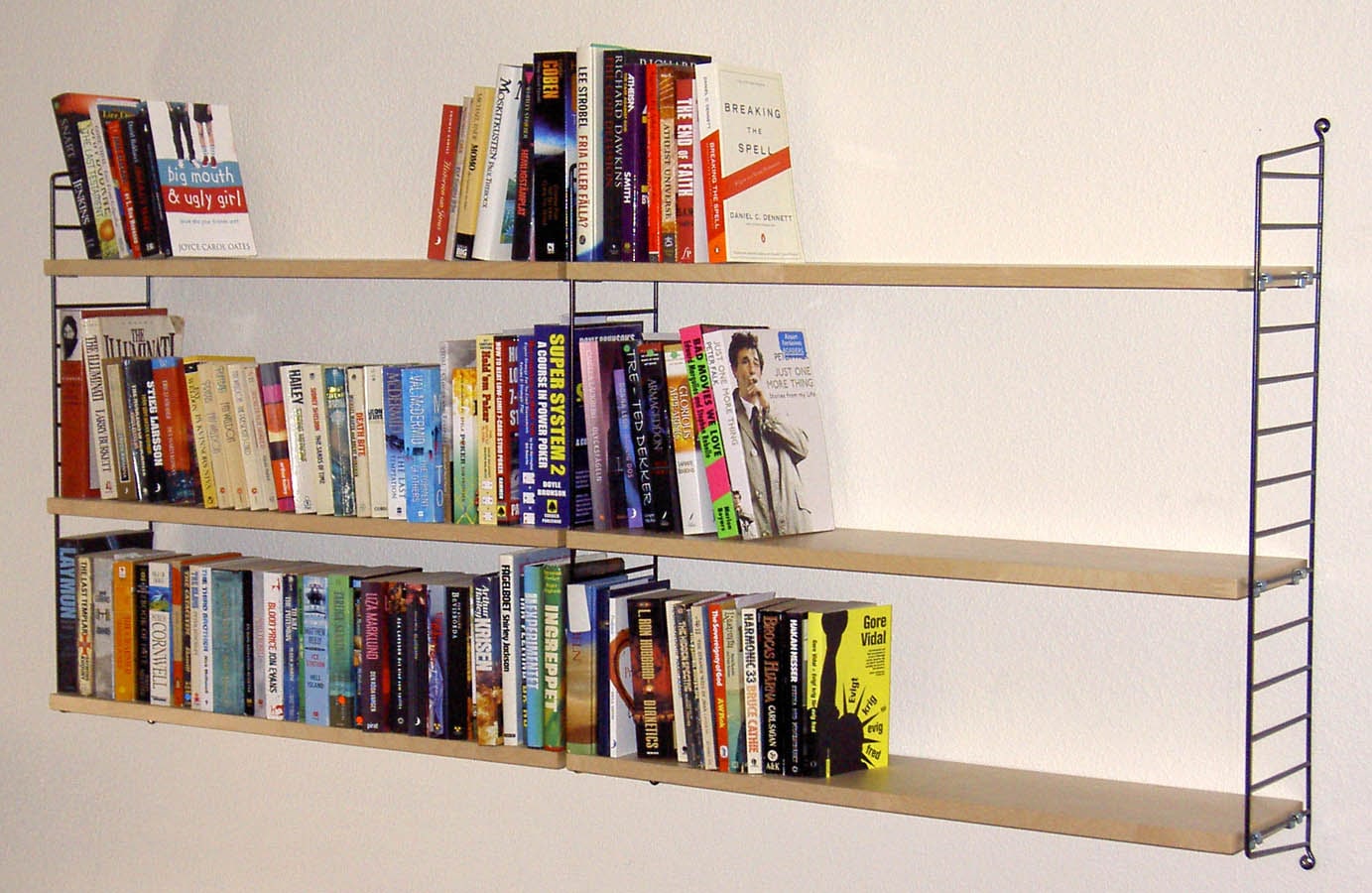

A bookcase without a heavy outline
String leaves a room visible behind its books. The shelves sit between slender sides rather than within a solid cabinet, so the wall continues to contribute colour and light to the arrangement. The furniture supplies a framework without becoming one large enclosed mass.
That open appearance is connected to a practical beginning. String Furniture’s account describes a 1949 competition organised by the Bonnier publishing company for a bookshelf that would be affordable and easy to transport and assemble. Kajsa and Nisse Strinning’s design won.1
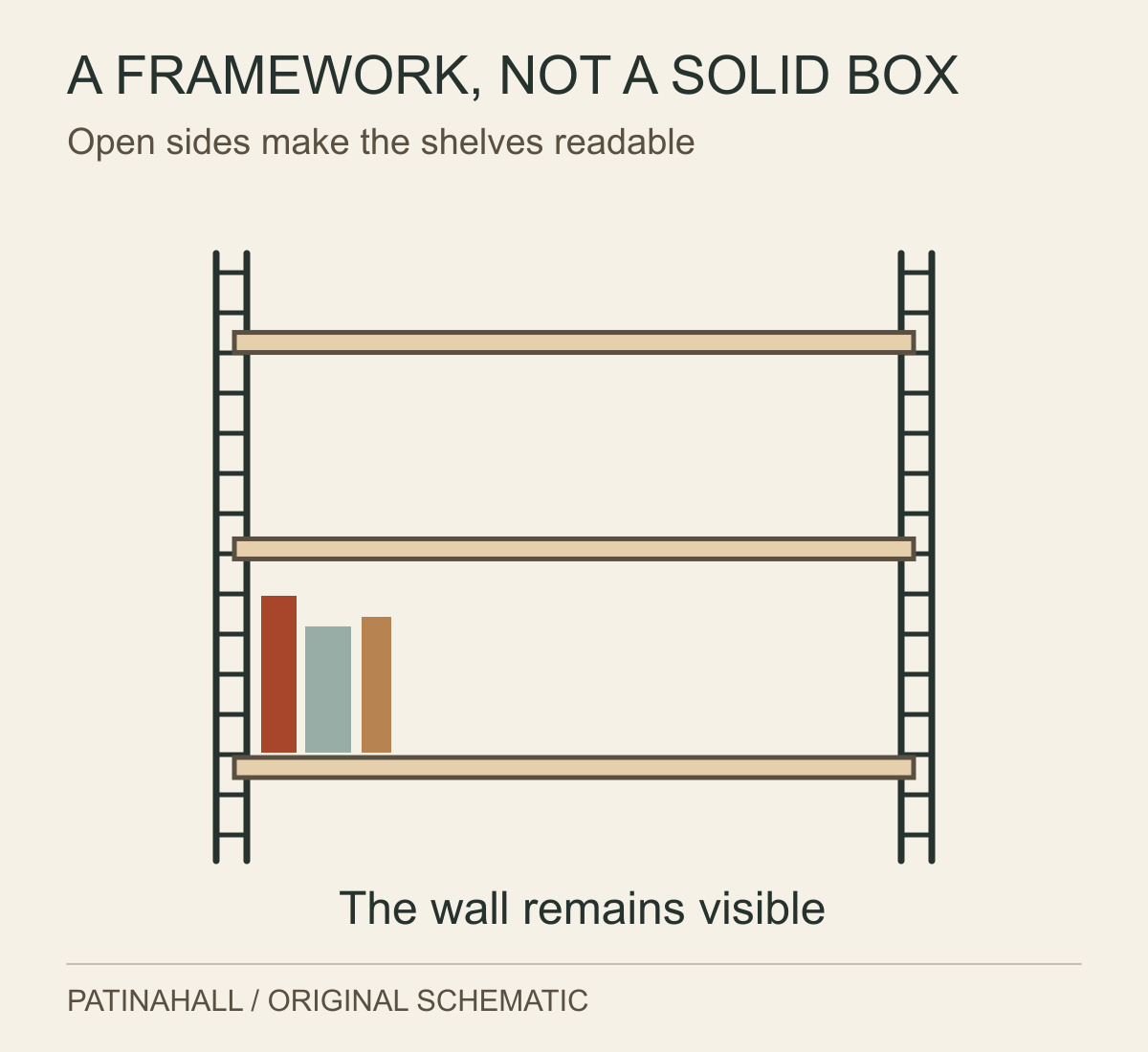
The side panel becomes a ladder
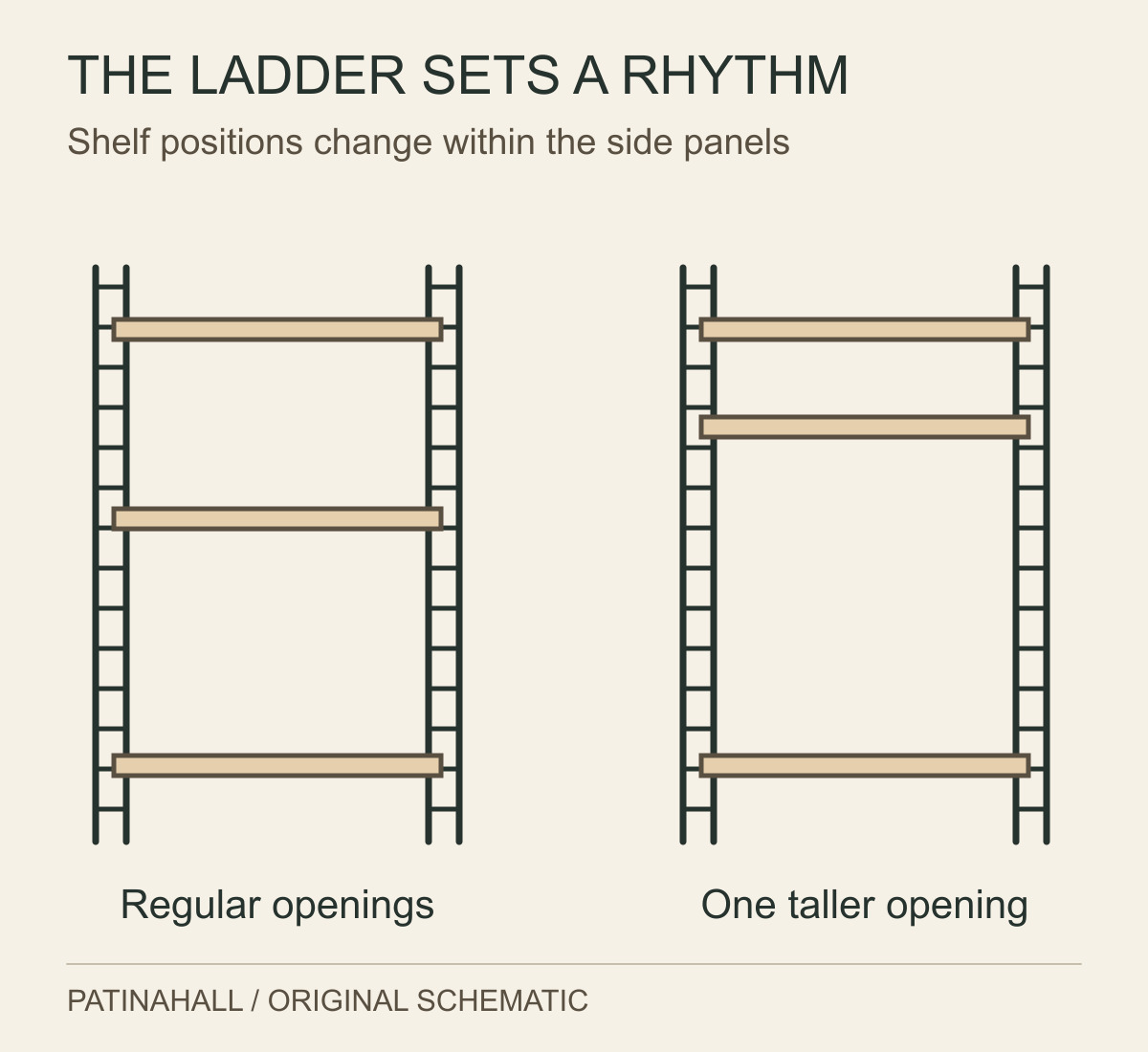
The wire sides give the eye a set of repeated horizontal positions. A shelf interrupts that pattern at a chosen height, and another repeats the action farther up. The supports therefore make the system’s adjustable character visible.
The current String System includes shelves, panels, cabinets and accessories, with both wooden and metal shelf options. The manufacturer also records plex panels introduced in 1954 as an early expansion of the system. The familiar wire ladder was a starting point for a wider set of components.2
Imagine a row of books beside a taller object. Moving a shelf changes the gap available above it, while the side panel continues to define the whole arrangement. The rhythm can vary locally without the furniture losing its overall structure. That is what makes a system different from a single shelf fixed at one predetermined height.
Two designers behind the drawing
The maker credits both Strinnings. Its portrait describes Nisse’s interest in everyday problems and Kajsa’s work exploring and documenting their ideas in construction drawings. The competition shelf emerged from that shared practice, which had already included a wire plate rack.1
This background fits the finished object. A plate rack and a bookshelf both organise ordinary things by giving them repeated positions and sufficient support. The attraction lies in reducing a domestic irritation through a comprehensible structure, rather than asking the owner to adopt an elaborate new ritual.
The same account describes a later transfer of manufacturing rights to String Furniture after a period out of production. The current maker belongs to the design’s continuing history, rather than being the original company of 1949.1
A small shelf is not every shelf
String Pocket arrived in 2005 as a later design by Nisse Strinning. The current product family presents compact shelving combinations, while String System remains the broader component programme. Keeping the names separate helps make sense of superficially similar arrangements.3
What they share visually is easy to enjoy without flattening those differences. Thin sides set a rhythm, horizontal surfaces interrupt it, and the wall remains part of the composition. Once the books are in place, the design is still doing the same modest job that prompted the original competition: finding them an orderly place in a room.