The upholstery is the body
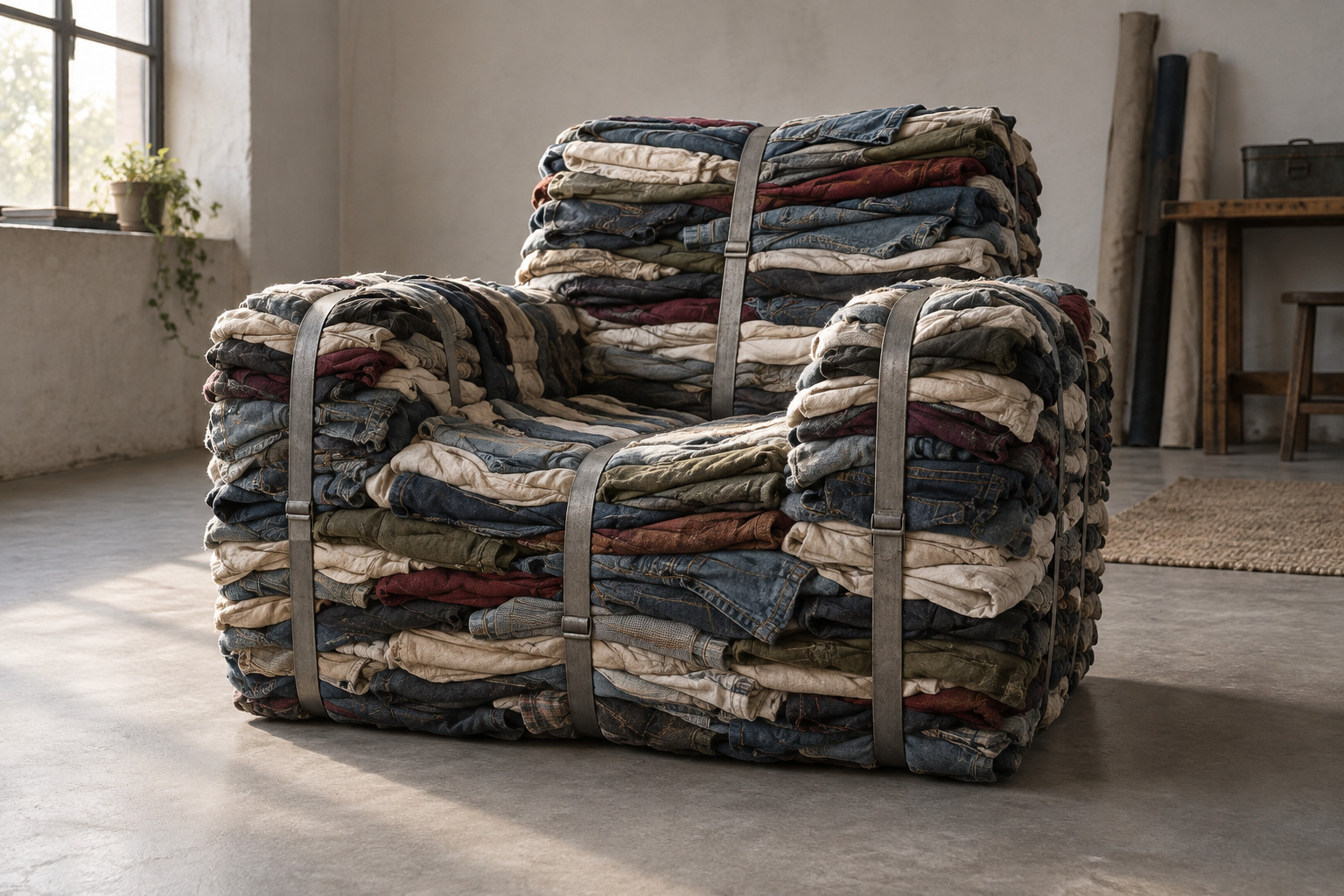
In a conventional upholstered chair, a cover conceals most of the layers beneath it. Rag Chair reverses that expectation. The layers are what we are meant to see.
Remy presented the design as part of his 1991 graduation work. Droog describes second-hand clothes gathered into a functional form and held by metal pull straps. The textiles retain visible differences rather than being reduced to a uniform surface.2
From a distance, the mass reads as a chair. Move closer and the surface separates into folded edges, colours, worn fabrics and fragments of garments. Recognition works in both directions: chair first, clothing afterwards—or clothing first, then the surprise that it is a chair.
The straps keep the argument together
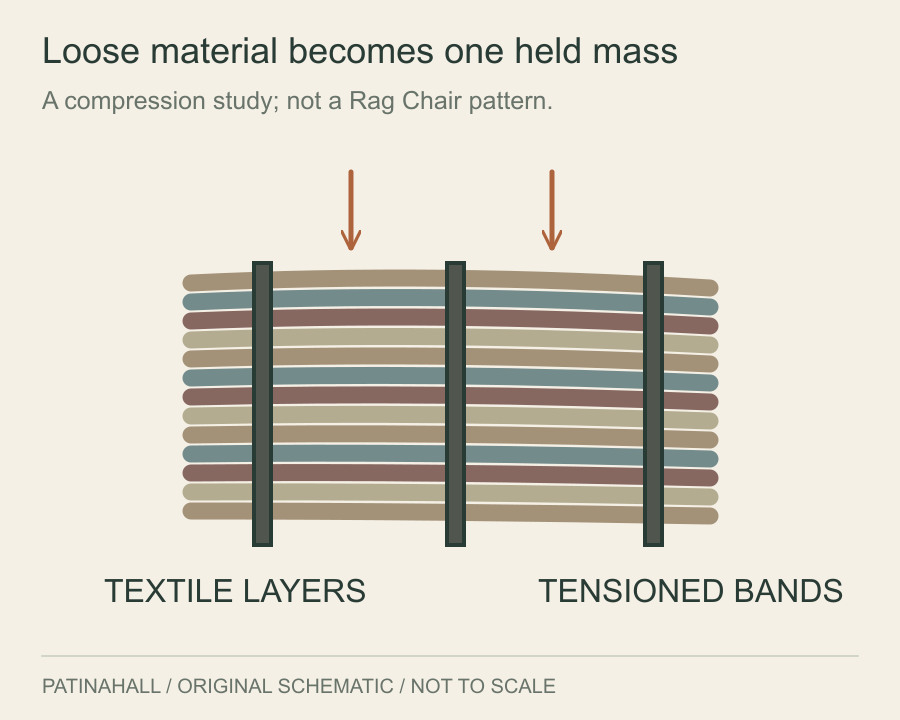
Loose fabric has very little reason to remain in a furniture-shaped pile. Compression gathers the layers; the straps restrain them. The visible binding makes the relationship between soft material and firm outline unusually clear.
The National Gallery of Victoria records its example as cotton, steel and other materials. It also separates the design’s 1991 date from the manufacture of this particular chair in 2004, identifying Remy as both designer and manufacturer and Droog as retailer.1
Those distinctions help us look more carefully. Rag Chair is a repeatable idea without requiring every example to have the same surface. Its identity lies partly in the method, while the materials give each object a different appearance.
Some clothes can mean more than others
Droog’s editions account describes a chair built from a substantial quantity of rags and offers the possibility of including a client’s own discarded clothes. This adds a personal dimension to an already visible material history.3
A faded piece of cotton may be merely a useful colour to one viewer and a remembered shirt to another. The chair does not need an explanatory label on every layer for that difference to matter.
There is also a useful limit to the idea. Using old fabric does not by itself supply a complete environmental assessment. What the object demonstrably does is keep existing textiles present and recognisable inside a new purpose.
A repeatable design that refuses uniformity
Industrial furniture often tries to make variation disappear. Matching surfaces reassure us that the next example will look like the first. Rag Chair makes differences part of what we notice.
Its outline and restraints provide enough order for the fabric to remain unruly in smaller ways. One band is darker, another more worn; a seam interrupts an otherwise quiet layer. The eye can keep finding evidence of earlier use.
The chair’s most appealing quality is that it does not ask the material to begin again from zero. The old clothes have changed jobs, but they have not entirely lost their identities.