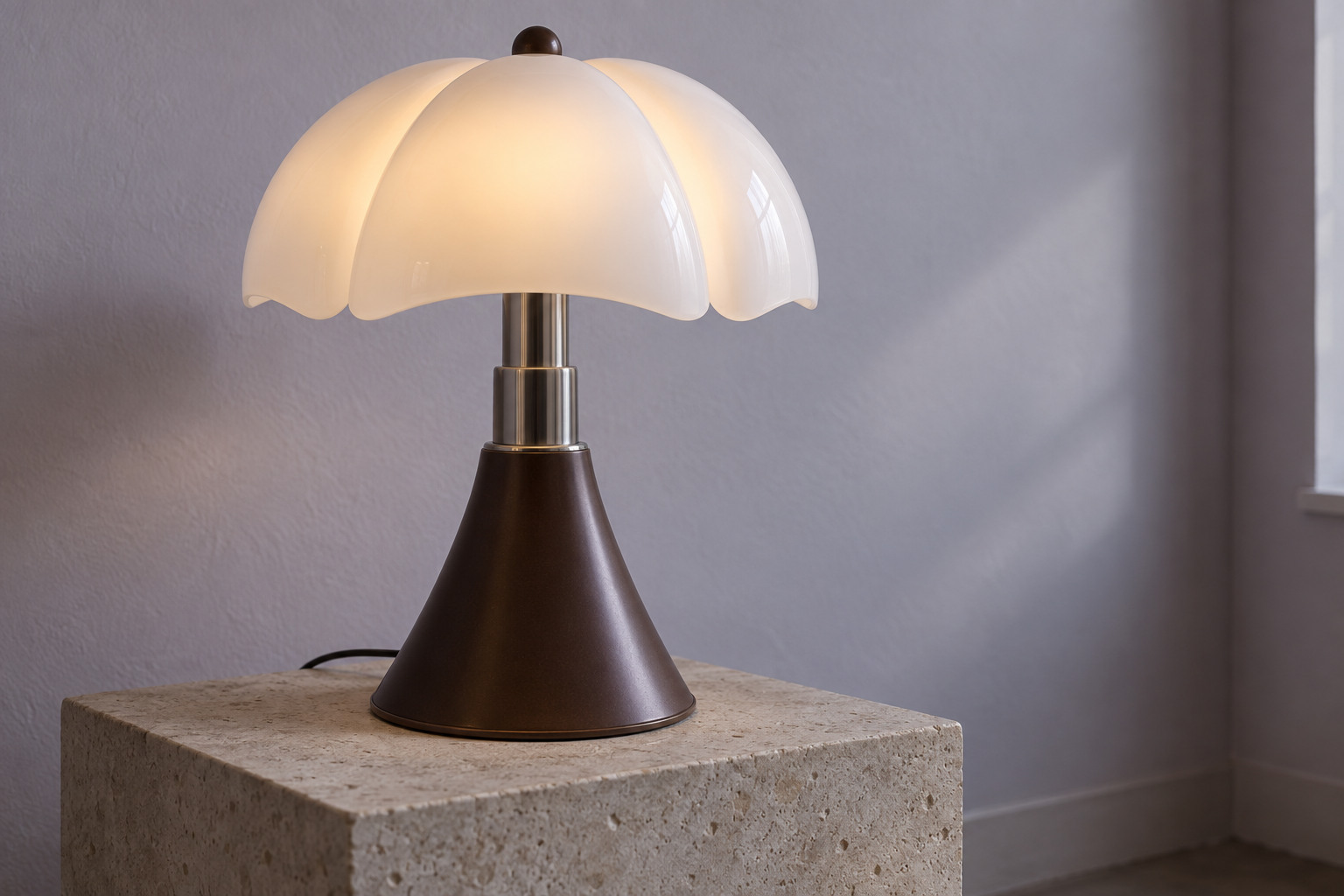
The neck changes the relationship
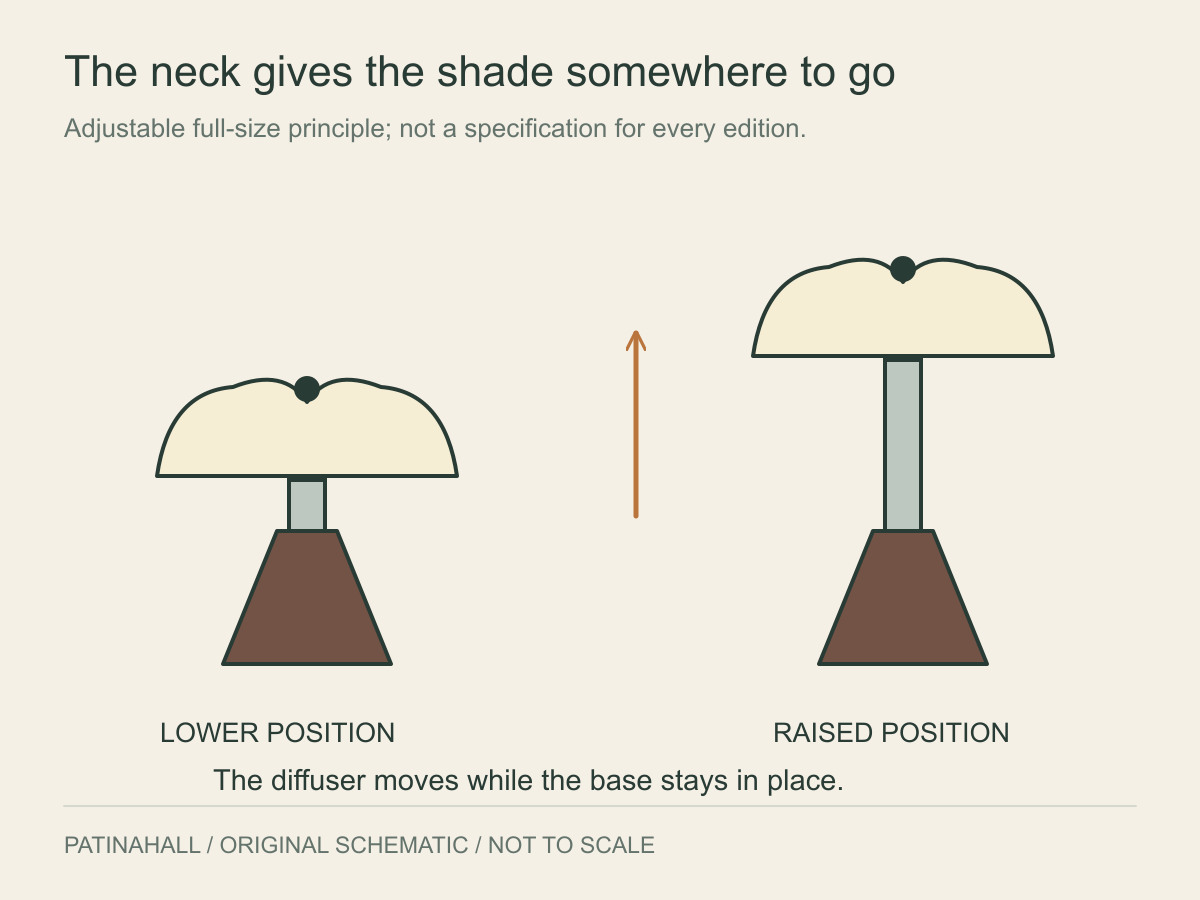
A lamp’s height determines more than its silhouette. It changes where the glowing surface sits in relation to a person’s eyes, the furniture beside it and the room beyond. Pipistrello makes that relationship adjustable through its telescopic metal neck.
Martinelli Luce describes the combination of a painted metal base, stainless-steel telescopic elements and a white opal methacrylate diffuser. In the adjustable full-size family, the diffuser can rise above the broad base instead of remaining at one fixed level.1
The movement is modest compared with the drama of the shade, but it matters. The same object can appear settled close to a low surface or extend further into the surrounding space. The stem gives its large upper volume somewhere to go.
A shade that contains the light
The lobed diffuser hides the individual light sources inside a continuous luminous form. Its spreading outline explains the name Pipistrello, Italian for bat, without requiring the lamp to imitate an animal literally.
The 1972 MoMA catalogue for Italy: The New Domestic Landscape records the design with a lacquered metal base, stainless-steel shaft and Perspex shade. It places the lamp among objects through which Italian designers were reconsidering the domestic environment.2
There is a useful contrast between the visible parts. The base feels concentrated and grounded. The narrow reflective stem separates it from the pale volume above. When the lamp is on, the shade becomes both an object in the room and a source of light within it.
The showroom had several levels
Domus’s archive brings the lamp back into an interior. Its July 1967 coverage of Aulenti’s Olivetti showroom in Paris described Pipistrello lamps contributing to the lighting across different levels. Steps and display surfaces helped organise the products, while the lamps formed part of that larger arrangement.3
A showroom has to make machines understandable and inviting. Light can guide attention towards a display, connect separate areas or give a visitor a reason to pause. A conspicuous lamp can perform those tasks while remaining a memorable object itself.
The archival drawings also show the telescopic idea being worked through. The form that now seems familiar required decisions about finishes, hidden light sources and the relation between the shade and its support.
A small lamp is a different proposition
The later Mini Pipistrello keeps the recognisable outline at a smaller, fixed height. It does not reproduce every movement of the adjustable family.1
That distinction brings the design back to use. A silhouette can be scaled down, but the relationship between a lamp, a surface and a person changes with it.
Look beneath the spreading shade again. The less celebrated neck is what lets the larger lamp negotiate its place. Its character comes partly from the shape we recognise, and partly from the space it can put between its two ends.