Furniture for a particular kind of book
Paperback publishing changed the physical presence of books in a room. A compact volume could be carried, lent and left beside a chair. The original Penguin Donkey was designed to hold Penguin paperbacks, bringing furniture into the same modest scale of use.2
That connection was more than a convenient association made afterwards. The V&A records publisher Allen Lane’s support for the design and a promotional leaflet distributed through Penguin Books. A publisher saw value in the small piece of furniture that could keep its books close to a reader.1
The object therefore begins with a very specific relationship: a seated person, the books currently wanted and somewhere nearby to put them. A wall of shelves answers a different question.
Two panniers and a place between
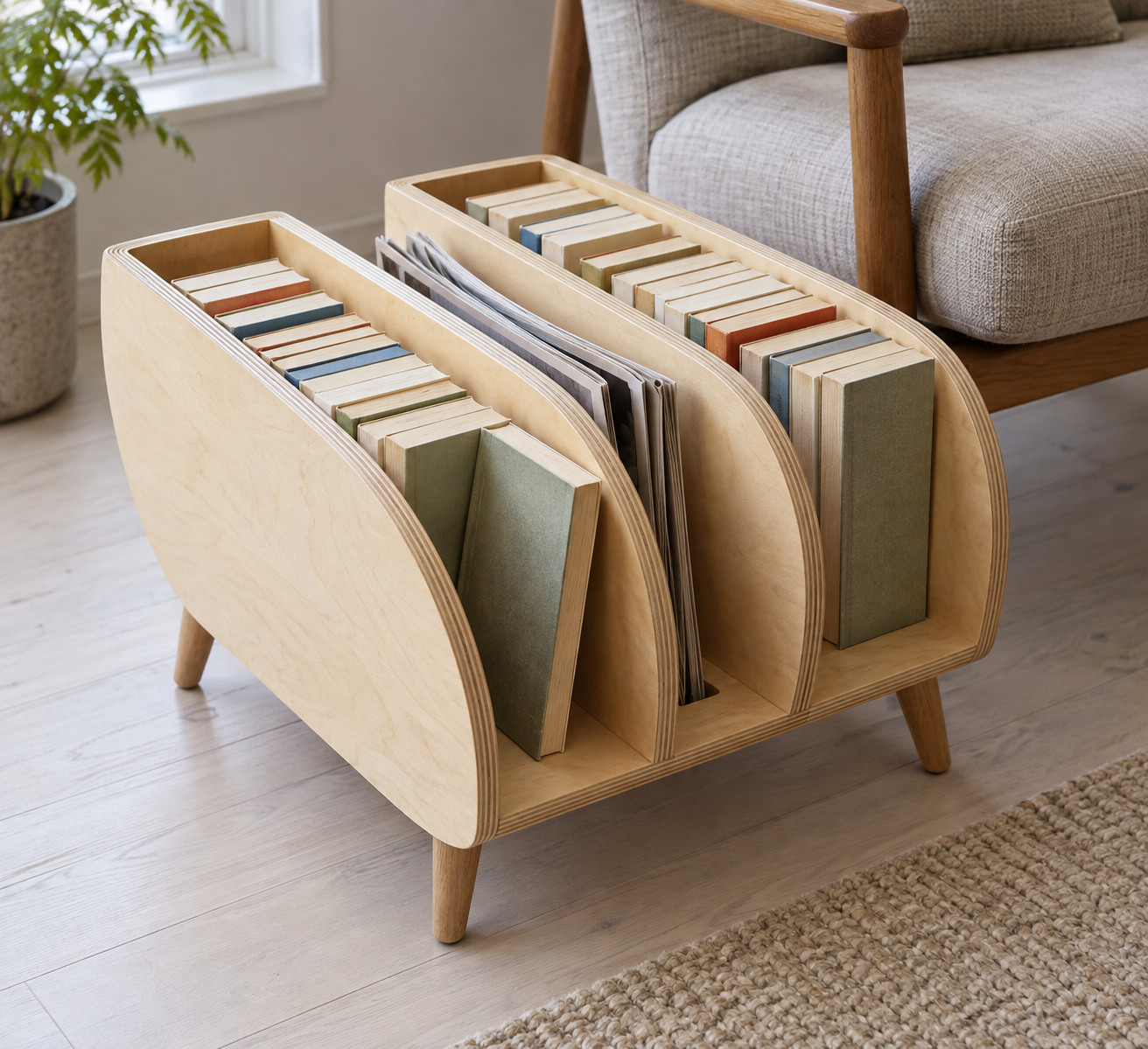
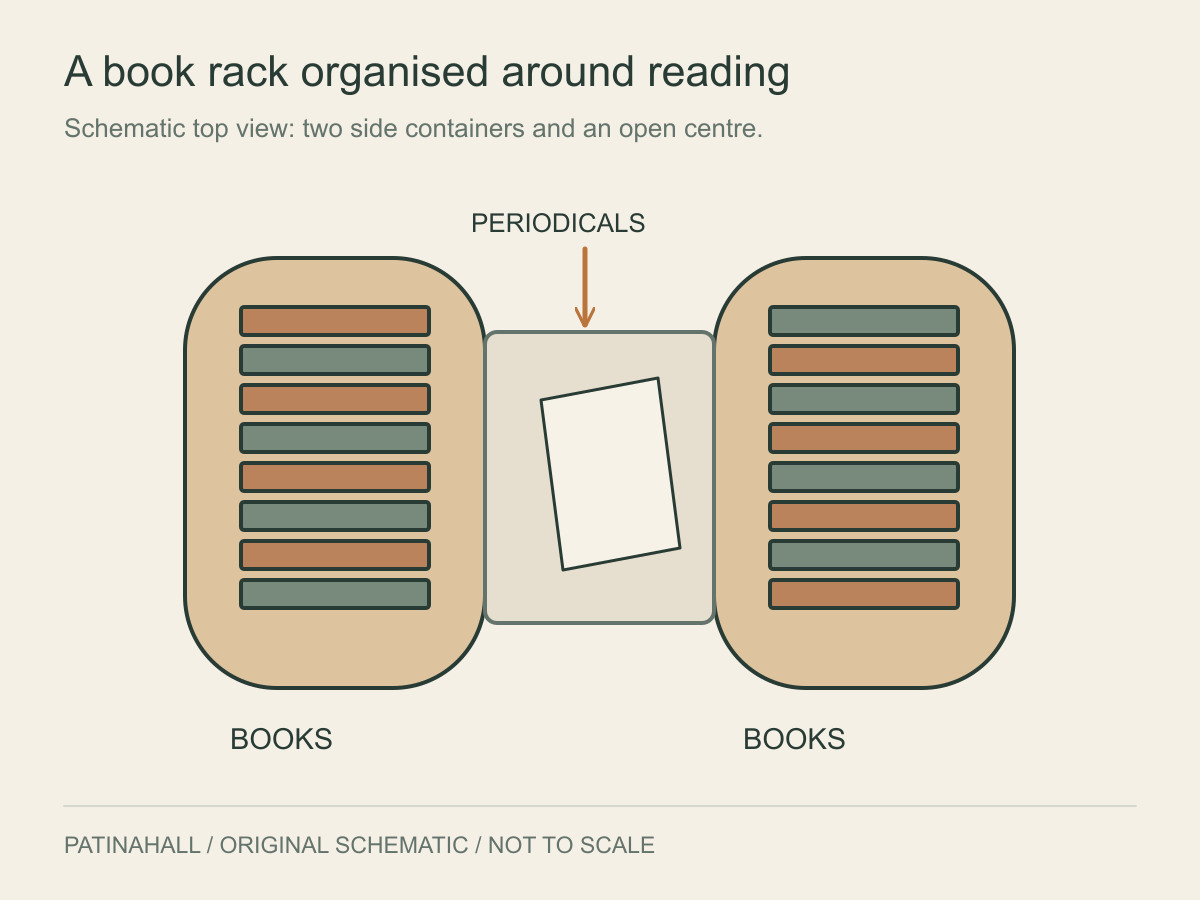
The name becomes understandable when the rack is seen from above. The side compartments resemble a pair of panniers, carried on four short legs. Curved plywood gives the containers their rounded forms, while the central space provides another place for periodicals.1
Each part has a readable task. The sides hold the books upright. The low height keeps them accessible from a chair. The opening between the compartments prevents the whole piece from becoming a single solid box.
The book rack also changes appearance as it fills. Book spines, paper edges and magazines become part of what the reader sees. Its contents supply a colour and rhythm that no empty product photograph can completely represent.
That is one reason a small reading companion can feel personal so quickly. Its visible inventory records a person’s present interests rather than an entire lifetime’s collection.
A promising beginning interrupted
Egon Riss designed the original in 1939. The V&A gives an early production of about a hundred and connects its interruption with the outbreak of war. Those figures describe the beginning of manufacture, not the number of examples surviving today.1
Riss’s wider life also exceeds this compact object. The University College Cork research record for the Isokon Gallery’s study follows his work from Vienna through displacement to Britain and into post-war industrial architecture. The charming book rack is one point in a much less comfortable historical journey.3
Its smallness should not make that background invisible. Objects made for ordinary leisure can carry the consequences of events that interrupt both makers and manufacture.
More than one Donkey
The name returned in different forms. Ernest Race designed Penguin Donkey MK2 in 1963; Shin and Tomoko Azumi designed Donkey 3 in 2003. The V&A treats these as later interpretations, rather than simply later production dates of Riss’s original.1
The continuing question is easy to recognise even when the outline changes. Where do the books go while someone is living with them?
Riss answered with two small containers beside a chair. The books remain visible, the next one is close enough to reach, and the furniture leaves most of the room to the reader.