Design story

A'dammer: the cupboard with a disappearing door

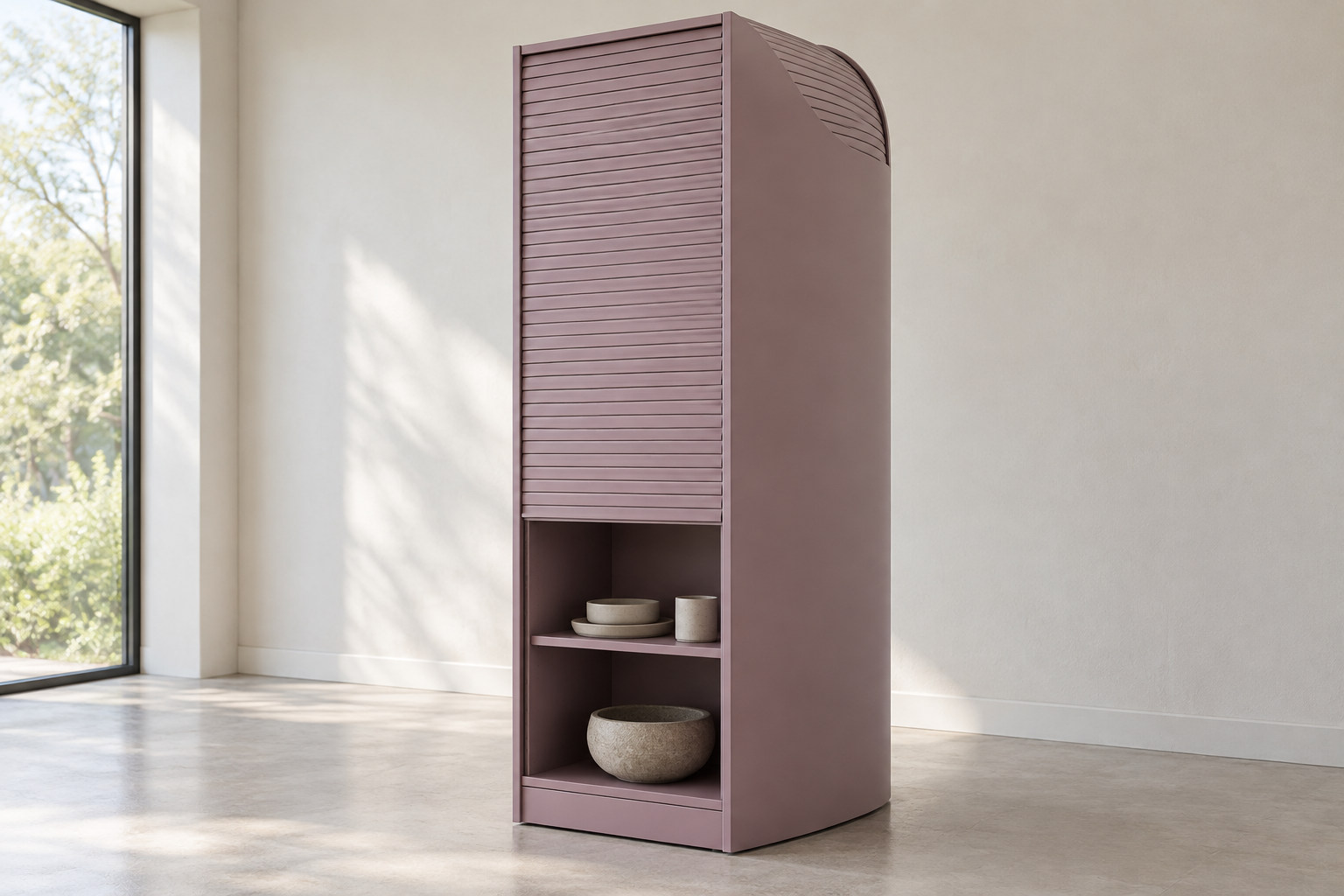
A cupboard’s door can occupy more room than its contents suggest. A’dammer makes opening a different kind of event: its front travels within the object instead of swinging towards you. The rounded column stays recognisable while the amount of storage on show changes.

Editorial reconstruction of a plum cupboard with a rectangular shutter front, open lower shelves and a top curved from front to back.
PatinaHall editorial reconstruction. It is not a documentary photograph. A partially open shutter explains a contained opening action. The imagined colour, shelf arrangement and proportions are not a documented Pastoe edition or a drawing of its internal track.
On this page
Key facts & takeaways

At a glance

Subject
A'dammer cupboard
Entry
Design story
Last reviewed
23 October 2026
Designed
1978documented

Three things to remember

  1. Aldo van den Nieuwelaar designed A'dammer in 1978.
  2. The shutter travels into the back of the cupboard.
  3. Pastoe connects the name to Amsterdam's street bollards.

A door needs somewhere to go

A cupboard takes up more space when its door opens. A'dammer addresses that everyday fact with a shutter that moves into the cabinet's back. The room does not have to accommodate a swinging panel. Aldo van den Nieuwelaar's design for Pastoe turns the door's journey into the cupboard's most recognisable feature.1

The narrow column and rounded upper edge belong to that journey. Follow the front upwards and imagine the shutter continuing around the curve. Its repeated horizontal lines make a moving surface readable even while it stands still.

A familiar object at another scale

Pastoe dates the design to 1978 and connects its name with Amsterdam's street bollards. The association is helpful because it starts with a recognisable upright shape rather than an abstract claim about style. Inside a home, the column has acquired shelves and a moving front. 1

Its proportions can make it read almost like a free-standing marker in the room. Yet the front can also reveal a different scene: the objects stored behind the shutter. Opening the cupboard changes its appearance without adding a door-shaped object beside it.
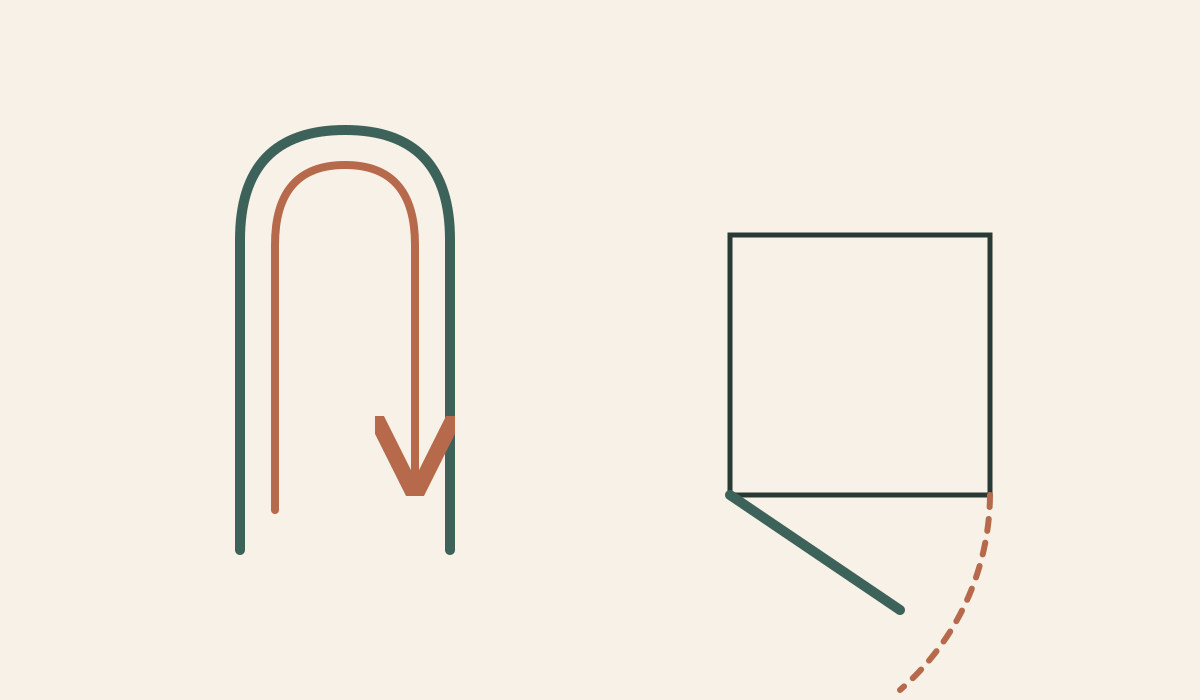
A curved shutter route is compared with the arc of an opening hinged cupboard door.
Original PatinaHall schematic, not to scale. A shutter can follow a contained route while a hinged door sweeps into the room. The comparison does not specify A’dammer’s internal fittings.

The shutter edits the view

Storage furniture performs two jobs for the eye. It can arrange things and conceal them. A partially open shutter allows those jobs to coexist: one portion becomes a display while another remains behind a regular ribbed surface.

Domus's history places A'dammer within Pastoe's continuing experiments with storage, alongside modular systems and later cabinet designs. It is one answer to a recurring production and domestic question: how should the outside of a cupboard relate to what it contains? 3

The mechanism should not be mistaken for a construction drawing. The article's schematic explains the route and the difference from a hinged door, without claiming the exact internal fittings of any particular edition.

An individual voice in a longer history

Kunsthal's centenary exhibition presented Pastoe through archives, environments and collaborations. That broader view helps prevent a recognisable model from becoming the whole history of its manufacturer. 2

A'dammer has its own particularly clear contribution. Its storage surface can withdraw into the object instead of claiming another piece of the room. The memorable curved column is also a place for a door to go.

Research notesEvidence, connections and limits

Pastoe describes the name, shutter action and present versions. Dimensions, colours and materials remain edition-specific. The conceptual shutter diagram is not a measured mechanism drawing or evidence that an older door will run freely.

Evidence map

Connected subjects and evidence

Reviewed facts

  • Designed 1978documented

    Pastoe describes the name, shutter action and present versions. Dimensions, colours and materials remain edition-specific. The conceptual shutter diagram is not a measured mechanism drawing or evidence that an older door will run freely.

    Reviewed 23 October 2026 by PatinaHall editorial.
    • Source 1A'dammer, Aldo van den Nieuwelaar, 1978

Reviewed connections

  • A'dammer cupboarddesigned byAldo van den Nieuwelaardocumented

    The cited record identifies the designer of this design or coherent project family.

    Reviewed 23 October 2026 by PatinaHall editorial.
    • Source 1A'dammer, Aldo van den Nieuwelaar, 1978
  • A'dammer cupboardmanufactured byPastoedocumented

    The source records this production relationship; it does not identify the maker or date of an unreviewed example. Later studio production is not used to date the original design.

    Reviewed 23 October 2026 by PatinaHall editorial.
    • Source 1A'dammer, Aldo van den Nieuwelaar, 1978

Research trail

Sources and further reading

  1. A'dammer, Aldo van den Nieuwelaar, 1978PastoeAccessed 23 October 2026
  2. Like Pastoe: 100 jaar vernieuwing in vormgevingKunsthal RotterdamAccessed 23 October 2026
  3. Pastoe's ninetieth birthdayDomusAccessed 23 October 2026

Last reviewed 23 October 2026. Found an error or a stronger primary source? Contact PatinaHall.