Artefact story

No Screw No Glue: the joint is in the shape

The shape of a furniture part can also be its way of meeting the next part. Joost van Bleiswijk’s No Screw No Glue concept turns that relationship into the main design question, here anchored to a 2003 museum chair.

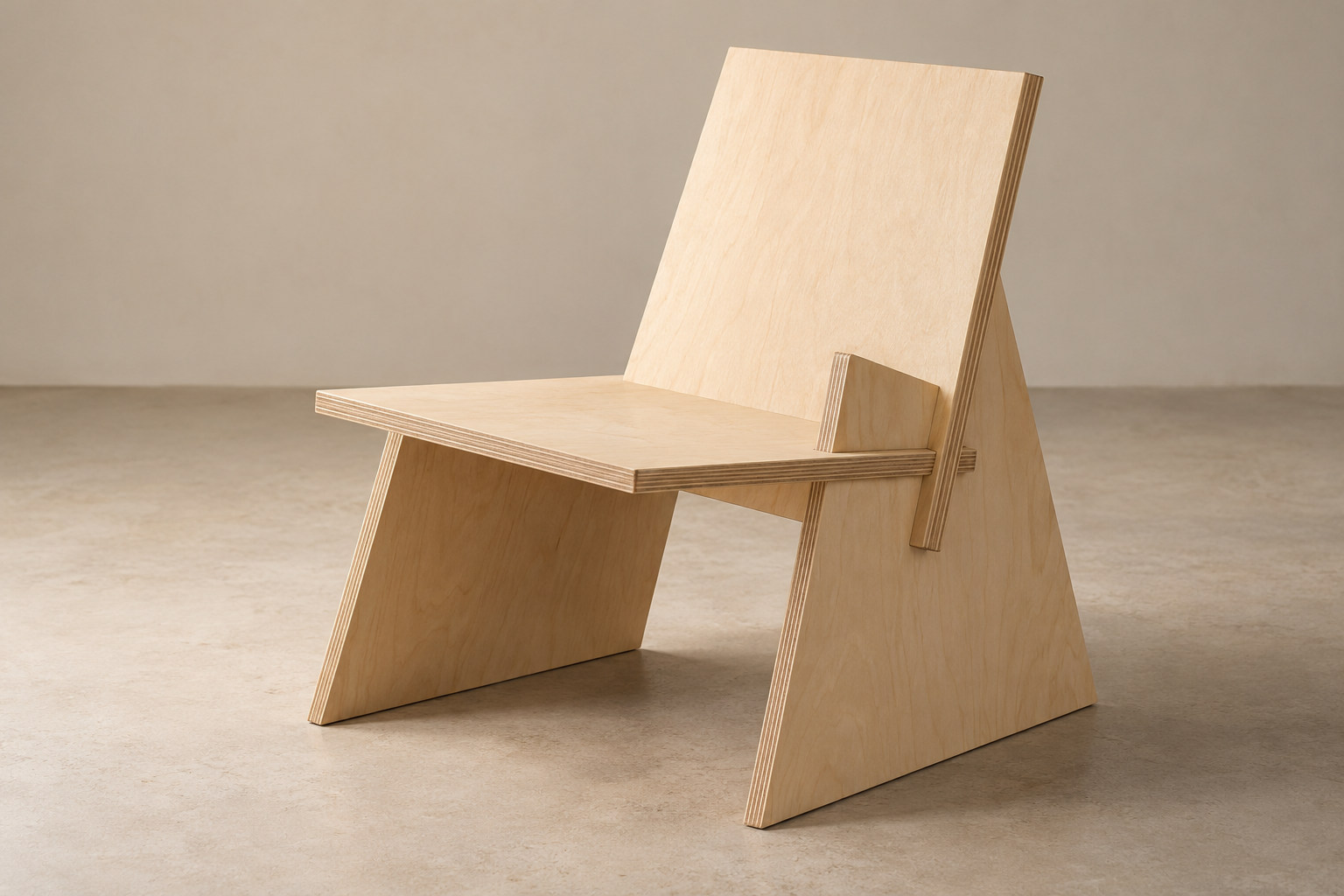
Pale plywood panels form a chair with visible layered edges and overlapping meeting points.
PatinaHall editorial reconstruction. It is not a documentary photograph. Sheet shapes and their meeting points introduce the interlocking concept. The image interprets a birch-plywood chair idea, not the precise joints, condition or measured geometry of object 35239.
On this page
Key facts & takeaways

At a glance

Subject
No Screw No Glue Chair, Centraal Museum 35239
Entry
Artefact story
Last reviewed
25 October 2026
Object dated
2003documented

Three things to remember

  1. This is Centraal Museum’s exact chair, object 35239.
  2. Its material is birch plywood.
  3. Later steel and Richlite products are separate developments of the broader concept.

The panel carries the connection

In Joost van Bleiswijk's No Screw No Glue concept, the outline of a part helps determine how it meets the next one. His account describes sheets sliding into one another to create an object. The connection is a shape to design, alongside the larger shape of the furniture.2

Centraal Museum's chair, object 35239, is catalogued as 2003 and birch plywood. It gives that broader concept a particular physical expression: sheets of a familiar furniture material becoming somewhere to sit.1

The interesting place to begin looking is where two panels meet. Their relationship helps turn flat parts into a form occupying space.
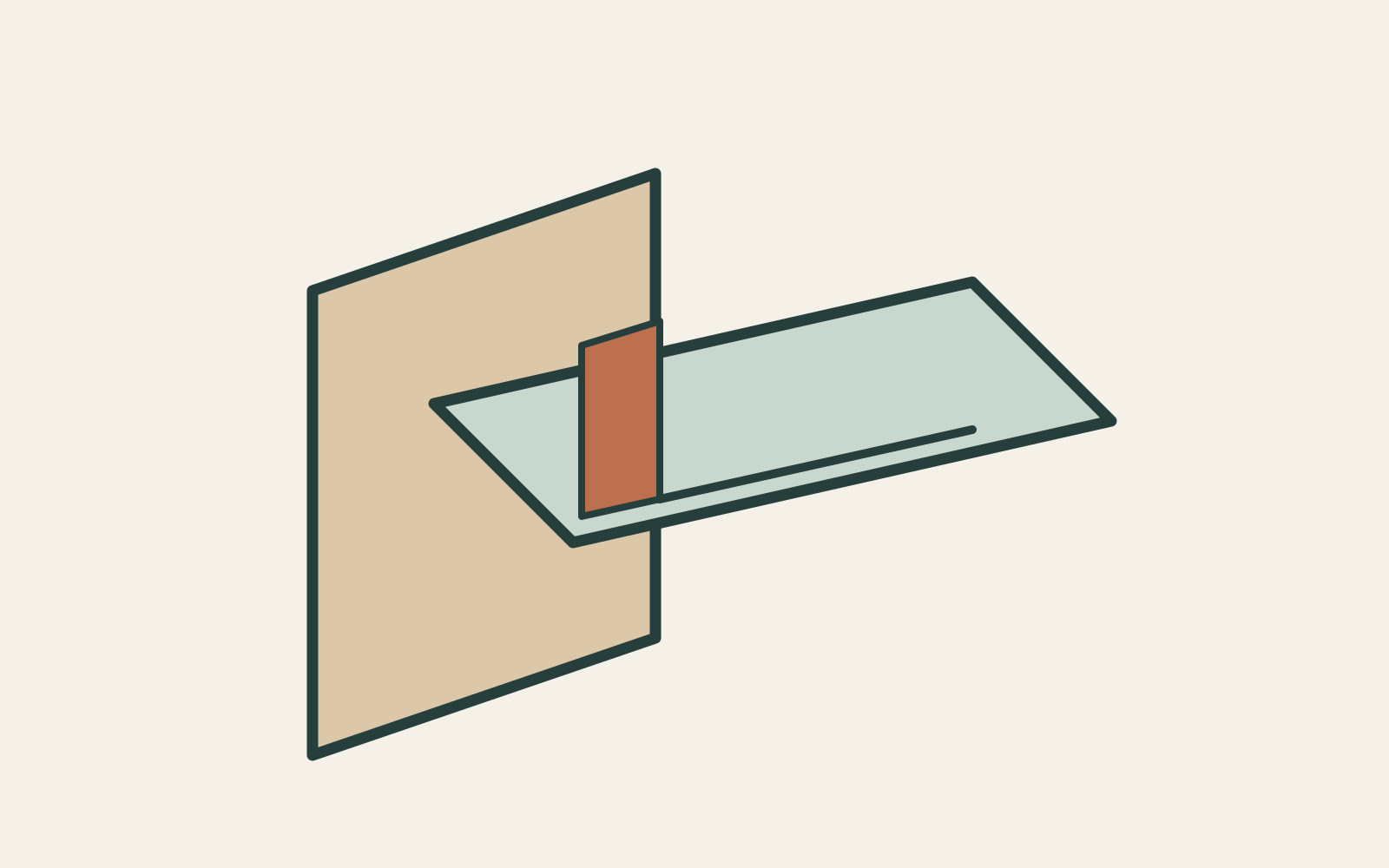
Two differently shaded sheet-like panels overlap at a conceptual meeting point.
A panel’s shape can define its connection with another. Original PatinaHall schematic, not to scale; no dimensions or usable joint specification are supplied.

Wanting a shape, accepting a limit

Van Bleiswijk describes wanting a particular shape and trying to achieve it with sheets alone. He enjoyed the limits the method imposed. Finding a route through them was part of the creative work.2

That puts the designer's problem close to the material. An outline that looks convincing in isolation still has to participate in a larger arrangement. A part has to belong to the chair and meet its neighbours.

In the interview, he describes moving to another material after exploring the possibilities of one. A new material offered another set of limits. The broader concept could continue through that change, while each object kept its particular material and form.2

An early chair in a longer practice

The museum bought the birch-plywood chair in 2020 and included it among the works in the 2021 exhibition Joost van Bleiswijk: Reconnect. It remained a specific early object within a much longer investigation.13

The chair's title leaves the making question visible. Look at a panel, then at the connection beside it: the boundary of one part is also an opportunity to bring the next into the design.

Research notesEvidence, connections and limits

The collection record identifies the historic chair, while the designer interview explains the general interlocking method. Neither supplies measured joint plans, a load rating or an assurance about the condition of a surviving example.

Evidence map

Connected subjects and evidence

Reviewed facts

  • Object dated 2003documented

    Centraal Museum catalogues chair 35239 as 2003. Its purchase in 2020 and appearance in the 2021 Reconnect exhibition are later events.

    Reviewed 25 October 2026 by PatinaHall editorial.
    • Source 1Maker; dating; medium; dimensions; acquisition
    • Source 3Exhibition description and collection list

Reviewed connections

  • No Screw No Glue Chair, Centraal Museum 35239attributed toJoost van Bleiswijkattributed

    The museum credits Joost van Bleiswijk for this birch-plywood chair. His later interview describes early wooden work and subsequent series in other materials.

    Reviewed 25 October 2026 by PatinaHall editorial.
    • Source 1Maker; dating; medium; dimensions; acquisition
    • Source 2First No Screw No Glue versions; Why no screws or glues?
    • Source 3Exhibition description and collection list
  • No Screw No Glue Chair, Centraal Museum 35239uses techniqueInterlocking plywood panels in No Screw No Gluedocumented

    Van Bleiswijk describes shapes cut from sheets and slid together. The selected museum chair is birch plywood; later steel and Richlite pieces belong to other versions.

    Reviewed 25 October 2026 by PatinaHall editorial.
    • Source 1Maker; dating; medium; dimensions; acquisition
    • Source 2First No Screw No Glue versions; Why no screws or glues?

Research trail

Sources and further reading

  1. Centraal Museum, No screw no glue Chair 35239Centraal Museum UtrechtAccessed 25 October 2026
  2. Moooi, Meet Joost van BleiswijkMoooiAccessed 25 October 2026
  3. Centraal Museum, Joost van Bleiswijk: ReconnectCentraal Museum UtrechtAccessed 25 October 2026

Last reviewed 25 October 2026. Found an error or a stronger primary source? Contact PatinaHall.