Technique study

NewspaperWood: yesterday’s paper finds a grain

Cut across a stack of paper layers and the surface begins to tell a different story. NewspaperWood makes that layered structure useful for furniture, turning printed sheets into a wood-like grain. The material’s past remains visible as a pattern, even when the news itself can no longer be read.

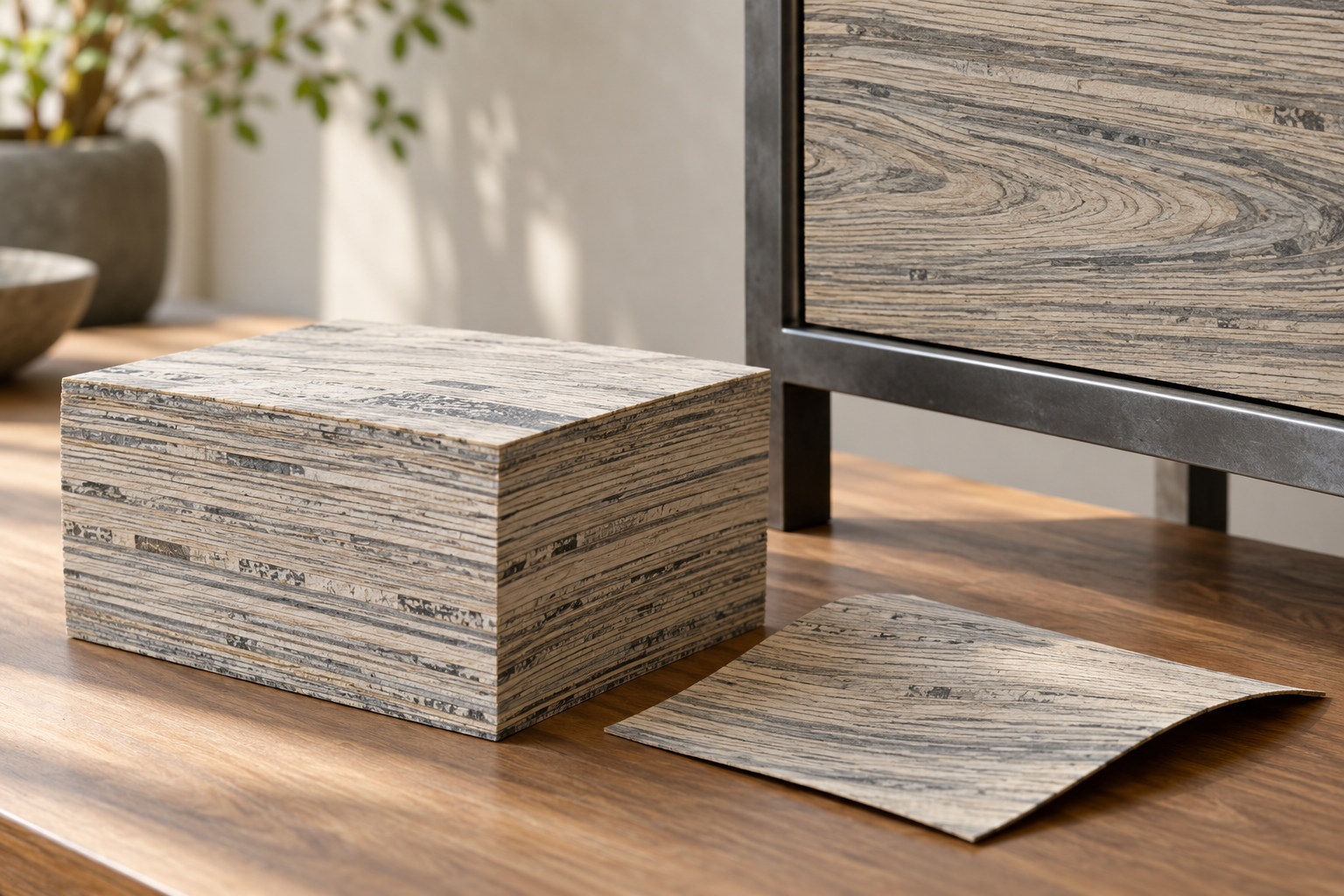
Layered grey paper-like block, thin veneer sample and framed panel illustrate a wood-like cut grain.
PatinaHall editorial reconstruction. It is not a documentary photograph. A block, veneer and panel study shows how paper layers can become a visible furniture grain.
On this page
Key facts & takeaways

At a glance

Subject
NewspaperWood layering
Entry
Technique study
Last reviewed
26 October 2026

Three things to remember

  1. The grain comes from paper layers, not a newly grown piece of timber.
  2. An idea for a material preceded the furniture collection.
  3. A veneer panel and a thicker early sample are different material formats.

A wood assignment takes a detour

In an interview for the first NewspaperWood collection, Mieke Meijer recalled a 2003 workshop assignment at Design Academy Eindhoven. Thinking about wood and paper led her to ask whether paper could acquire a wood-like form again.1

The question was productive because it changed the starting point. Instead of first designing a cabinet and choosing a surface, she began with the possibilities of a material. Furniture would become one way to explore what that material could do.

The interview traces development with Vij5 and the presentation of the first collection in Milan in 2011. The idea needed a route from a student experiment into forms that other designers could use.1

Cutting reveals another kind of grain

The New Material Award account describes glued newspaper layers cut into boards and worked through operations associated with woodworking, including sawing, milling and sanding. The cut surface makes the layers visible as a grain.3

This grain records a different history from a tree’s growth. Its lines belong to sheets being brought together. Looking closely means reading the order of a new assembly rather than searching for annual rings.

The resemblance to wood is the invitation, but the difference makes the material interesting. Paper has not biologically become a tree again. Its layered structure offers a new visual and practical role in an interior object.
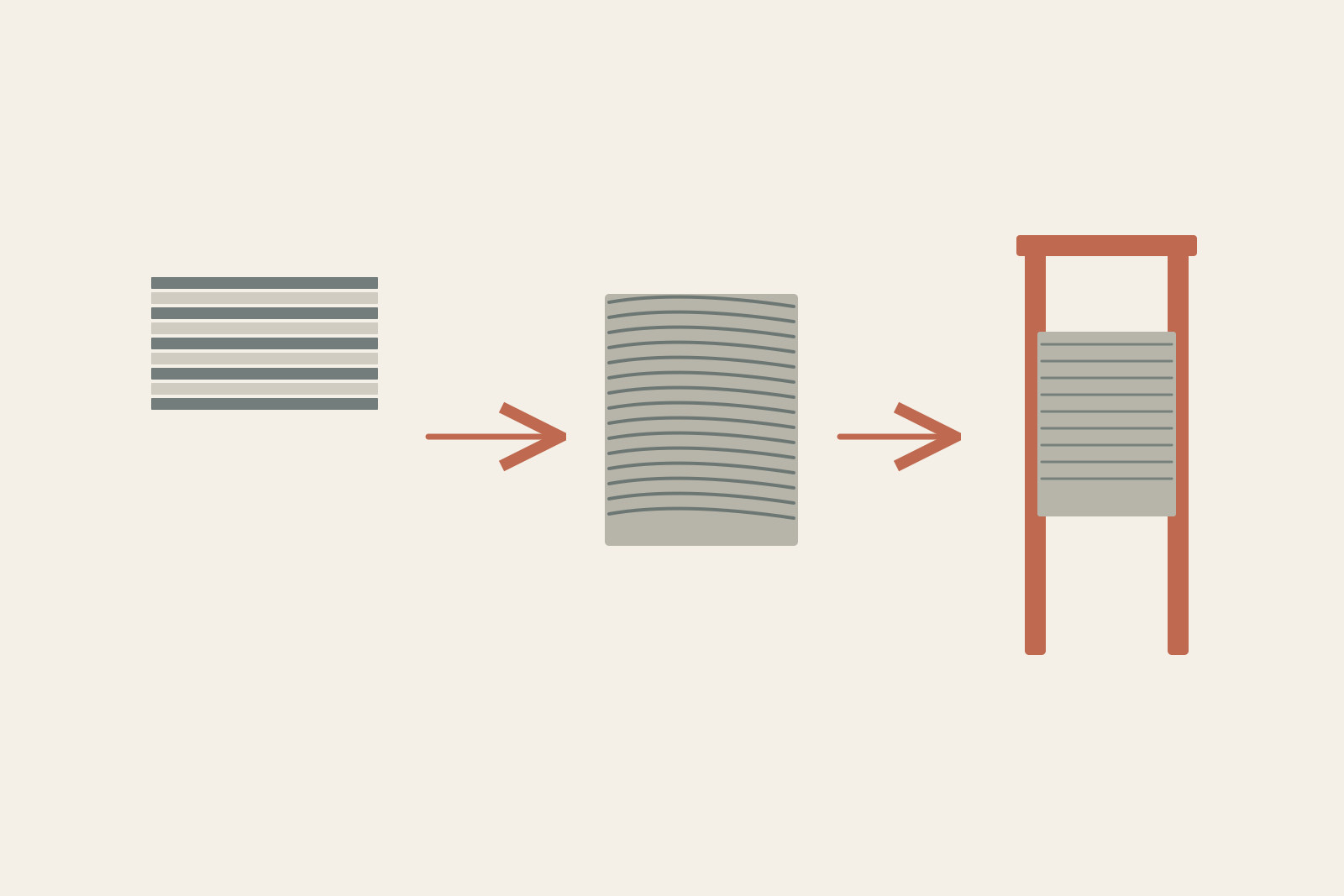
Paper layers, a wood-like cut surface and a furniture-facing panel distinguish material manufacture from its later use in furniture.
Paper layers, a wood-like cut surface and a furniture-facing panel distinguish material manufacture from its later use in furniture. Original PatinaHall schematic, not to scale.

The cabinet starts around the material

Vij5 describes Breg Hanssen’s Framed cabinets as designs made around NewspaperWood. Their steel frame carries the panels and gives the material a clear place to be seen. The cabinet entered the collection in 2011.4

The making account separates the tasks: the material is produced as veneer, processed into panels and assembled with the metal furniture structure. Calling the whole thing NewspaperWood would hide the work done by those other materials and makers.4

It is a useful example of a material directing an object’s design. The frame supplies a readable boundary; the paper-derived surface supplies a grain with its own past.

A material can change format

The New Hybrids record describes a later paper-thin development, using folds to reinforce the material. That is another way to work with its layered character, rather than proof that every application uses the same thickness or substrate.2

The difference between a block, a veneer and a folded sheet shows why material development does not end with a memorable sample. Different formats make different objects possible. In NewspaperWood, yesterday’s printed surface becomes the starting point for tomorrow’s furniture question.

Research notesEvidence, connections and limits

This is a history of a material-making technique and documented applications. Historical descriptions of formats or availability are not current supply promises, and the story makes no unsupported closed-loop or carbon-saving claim.

Evidence map

Connected subjects and evidence

Reviewed connections

  • Framed cabinet with NewspaperWooduses techniqueNewspaperWood layeringdocumented

    Vij5 describes Breg Hanssen’s Framed cabinet as an application of NewspaperWood, with layered newspaper veneer processed into panels and carried by a steel frame. The technique relation concerns the material used; it does not claim that Hanssen personally manufactured that material.

    Reviewed 26 October 2026 by PatinaHall editorial.
    • Source 4Work or object record and accompanying maker account: NewspaperWood layering. Framed by Breg Hanssen
  • New Hybrids with NewspaperWooduses techniqueNewspaperWood layeringdocumented

    The New Hybrids record describes a later, paper-thin development of NewspaperWood and the use of folds to reinforce it. This is a distinct application of the layered newspaper material. It is not a claim that all NewspaperWood products use the same thickness, substrate or folding process.

    Reviewed 26 October 2026 by PatinaHall editorial.
    • Source 2Work or object record and accompanying maker account: NewspaperWood layering. New Hybrids

Research trail

Sources and further reading

  1. Interview met Mieke MeijerVij5Accessed 26 October 2026
  2. New HybridsNewspaperWoodAccessed 26 October 2026
  3. NewspaperWoordNew Material AwardAccessed 26 October 2026
  4. Framed by Breg HanssenVij5Accessed 26 October 2026

Last reviewed 26 October 2026. Found an error or a stronger primary source? Contact PatinaHall.