Design story

Charly: the chair that wears a padded jacket

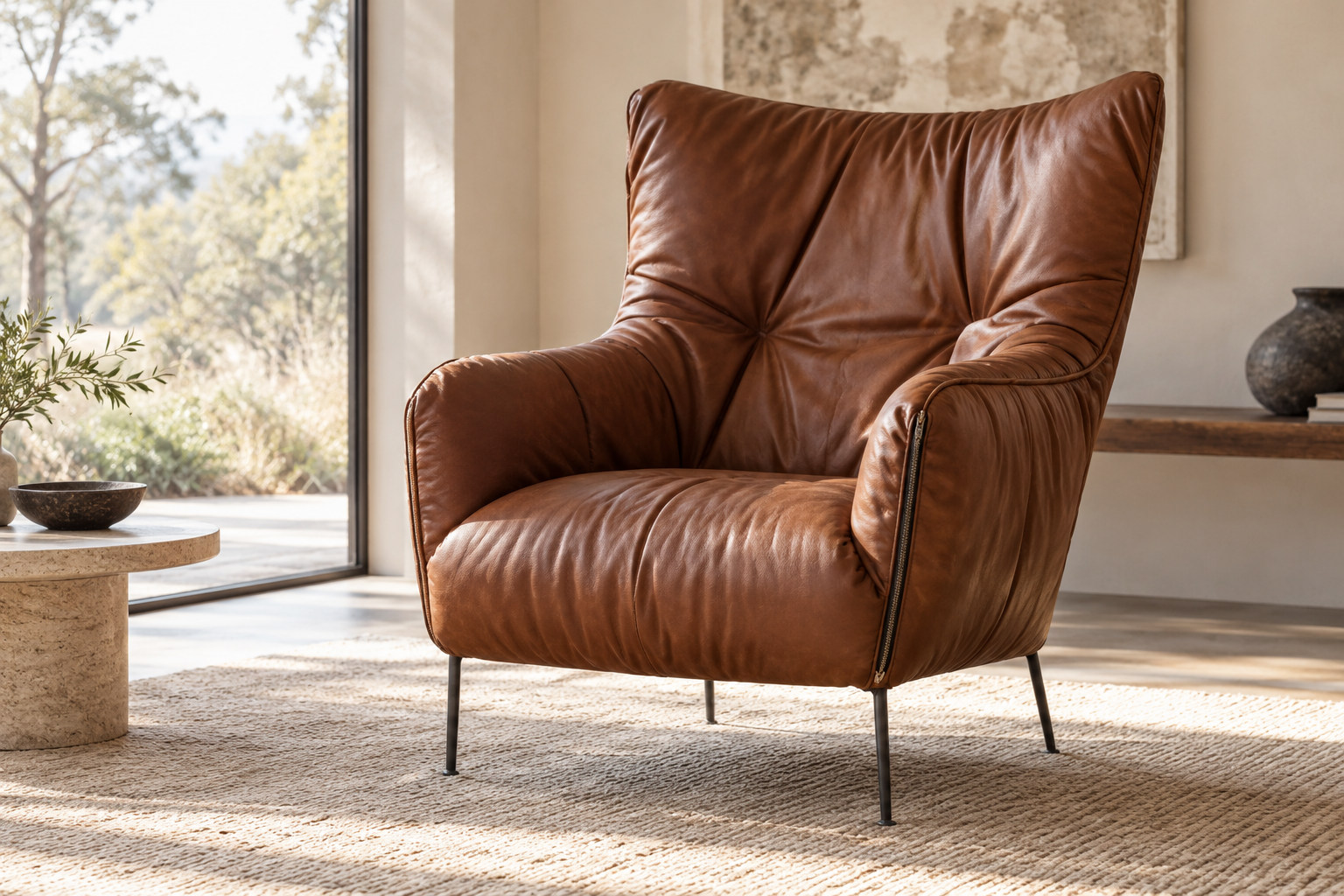
Charly’s upper body looks dressed. Its padded outer cover gives the chair an enveloping presence, while the small legs leave a clear interval between that soft volume and the floor.

Tall cognac upholstered armchair with a softly gathered outer cover, broad upper back, curved arms and small slender metal legs.
PatinaHall editorial reconstruction. It is not a documentary photograph. A reconstruction of Charly’s garment-like cover and visible legs. It explains the contrast of soft volume and fine support without showing an exact original chair or its hidden frame.
On this page
Key facts & takeaways

At a glance

Subject
Charly armchair
Entry
Design story
Last reviewed
23 October 2026
Designed
1983documented

Three things to remember

  1. Montis’s technical sheet identifies Charly with 1983.
  2. The producer compares its padded outer cover with a jacket.
  3. Charly Flex is a distinct variant with an adjustable back.

Dress the chair

Montis tells the Charly story through a domestic observation: a duvet draped over a chair. The producer compares the resulting padded cover to a jacket and describes zips as part of that outer garment.2

The comparison helps the eye. Upholstery is often treated as the chair’s complete identity, with its edges concealed. Here a cover has its own character. It gathers and rounds the upper body, making the outside seem like something wrapped around a supporting form.

Keep the floor in view

The small legs matter because they interrupt that soft mass. Air remains visible beneath the seat, and the chair has a different relationship to the room from a padded body continuing straight to the floor.

Montis’s technical sheet identifies Gerard van den Berg and 1983. It separately describes the current metal frame, moulded foam and upholstery.1 Those hidden parts explain why the garment metaphor need not mean an unstructured bundle: a yielding-looking surface can belong to an intentionally formed chair.
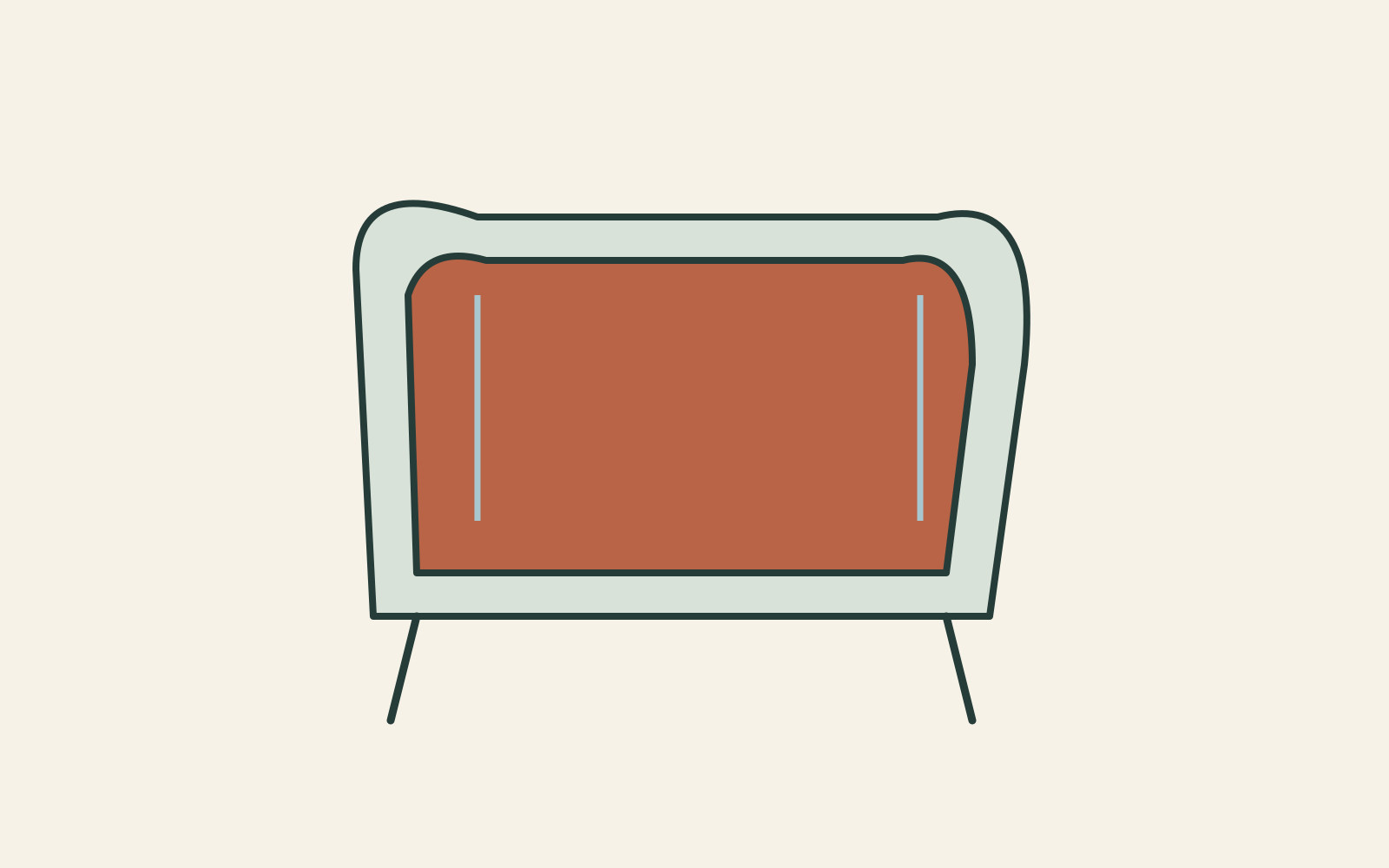
Nested soft outlines suggest a cover around a chair body, with two small visible supports and open space beneath.
Original PatinaHall schematic, not to scale. The outer coloured band stands for the padded cover around an underlying body. Small dark supports leave the floor visible below it; the nested shapes explain the garment idea, not a hidden-frame cutaway.

A familiar gesture, developed carefully

The duvet story gives the design an accessible beginning. It is possible to recognise the gesture without knowing a catalogue number: something soft has been laid around a place to sit.

Charly then makes that gesture coherent as furniture. Broad padded areas, an outer cover and small supports work at different scales. The result invites a useful second look at upholstery itself—where it gathers, where it turns, and how its outline settles above the floor.

Research notesEvidence, connections and limits

Montis’s technical sheet identifies Charly with 1983; its marketing page loosely says the 1970s. The precise sheet is used for the date. Current construction and Charly Flex features must not be assigned to every earlier Charly.

Evidence map

Connected subjects and evidence

Reviewed facts

  • Designed 1983documented

    Montis’s technical sheet identifies Charly with 1983; its marketing page loosely says the 1970s. The precise sheet is used for the date. Current construction and Charly Flex features must not be assigned to every earlier Charly.

    Reviewed 23 October 2026 by PatinaHall editorial.
    • Source 11, designer and 1983; current technical specifications and distinct Charly Flex

Reviewed connections

  • Charly armchairdesigned byGerard van den Bergdocumented

    The cited primary or institutional record identifies this designer for the repeatable model or coherent project family. A design credit does not identify the manufacture of every example.

    Reviewed 23 October 2026 by PatinaHall editorial.
    • Source 11, designer and 1983; current technical specifications and distinct Charly Flex
  • Charly armchairmanufactured byMontisdocumented

    The source establishes this maker relationship in its stated scope. A historical example, current production and the original design date are separate facts.

    Reviewed 23 October 2026 by PatinaHall editorial.
    • Source 11, designer and 1983; current technical specifications and distinct Charly Flex

Research trail

Sources and further reading

  1. CHARLY / CHARLY FLEX: Gerard van den Berg, 1983MontisAccessed 23 October 2026
  2. Charly: an upholstered jacket around a chairMontisAccessed 23 October 2026

Last reviewed 23 October 2026. Found an error or a stronger primary source? Contact PatinaHall.