Softness with an outline
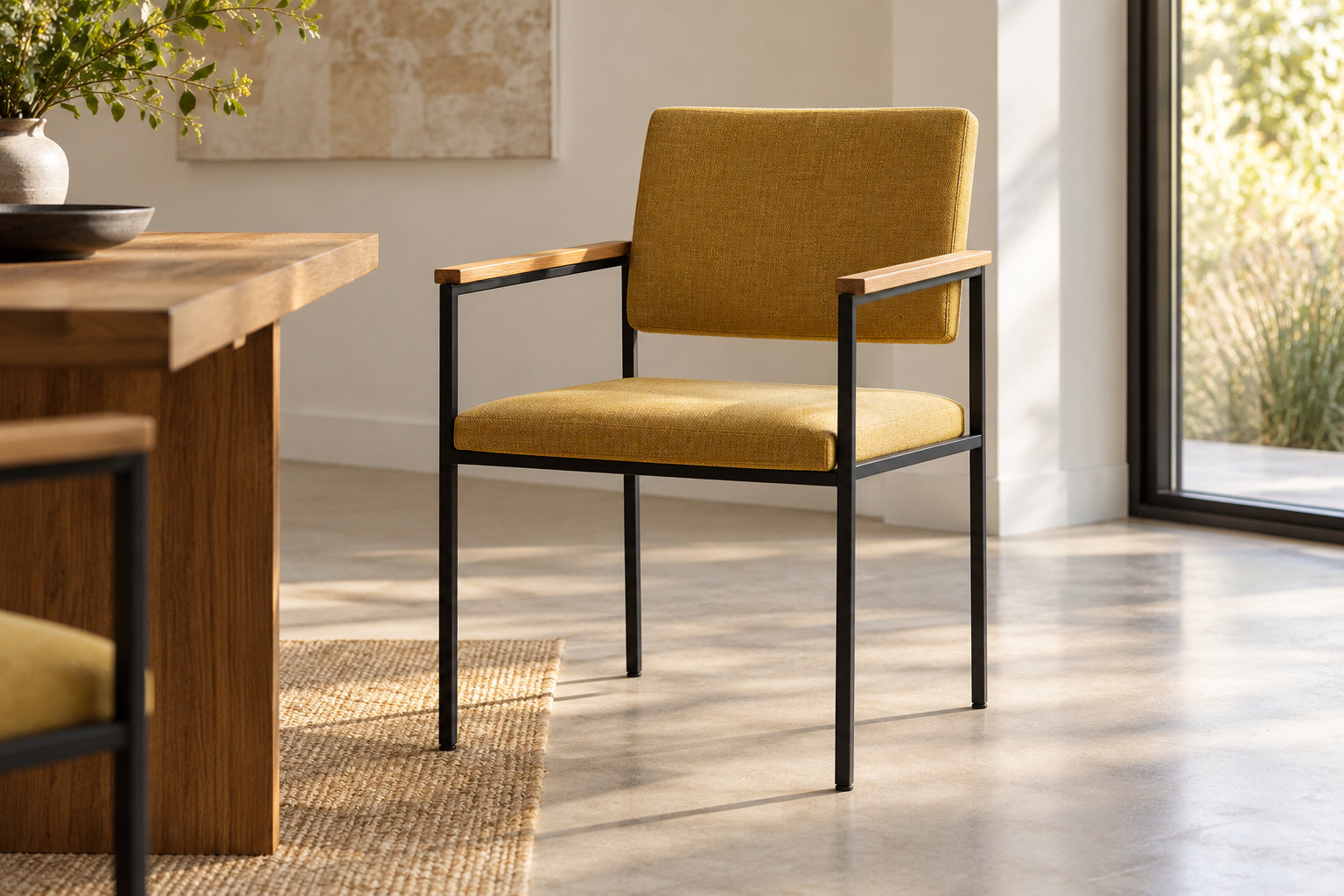
Start with the side of the chair. The square steel tube makes a clear route around the upholstered elements; the wooden armrest rests along its own line. The materials remain readable instead of disappearing into one continuous cover.
Spectrum identifies SE 69 as a 1959 design by Martin Visser. The present chair combines an upholstered seat and back with solid wooden armrests and a square-tube frame.1 The contrast gives the eye something precise to follow while leaving the sitting surfaces visibly padded.
A name from the dining room
Spectrum explains Visser’s naming system through use: S for stoel, E for eetkamer, with Z used for zitkamer elsewhere. The letters place the chair in a dining-room family before the model number distinguishes it.2
That modest naming habit suits the object’s argument. The armrests, upright back and open sides are parts of a seat intended to take its place around a table. The furniture’s purpose stays close to its identity, rather than being hidden behind a dramatic name.
Leave room between the materials
Visser joined Spectrum in 1954, according to the company’s account. His work there included decisions about how furniture should be identified and presented as well as how it should look.2
SE 69 rewards that same clarity of attention. Follow wood, steel and upholstery separately, then see how little visual competition is needed between them. The softened centre and exact outline can share the chair.