Yellow cut into black
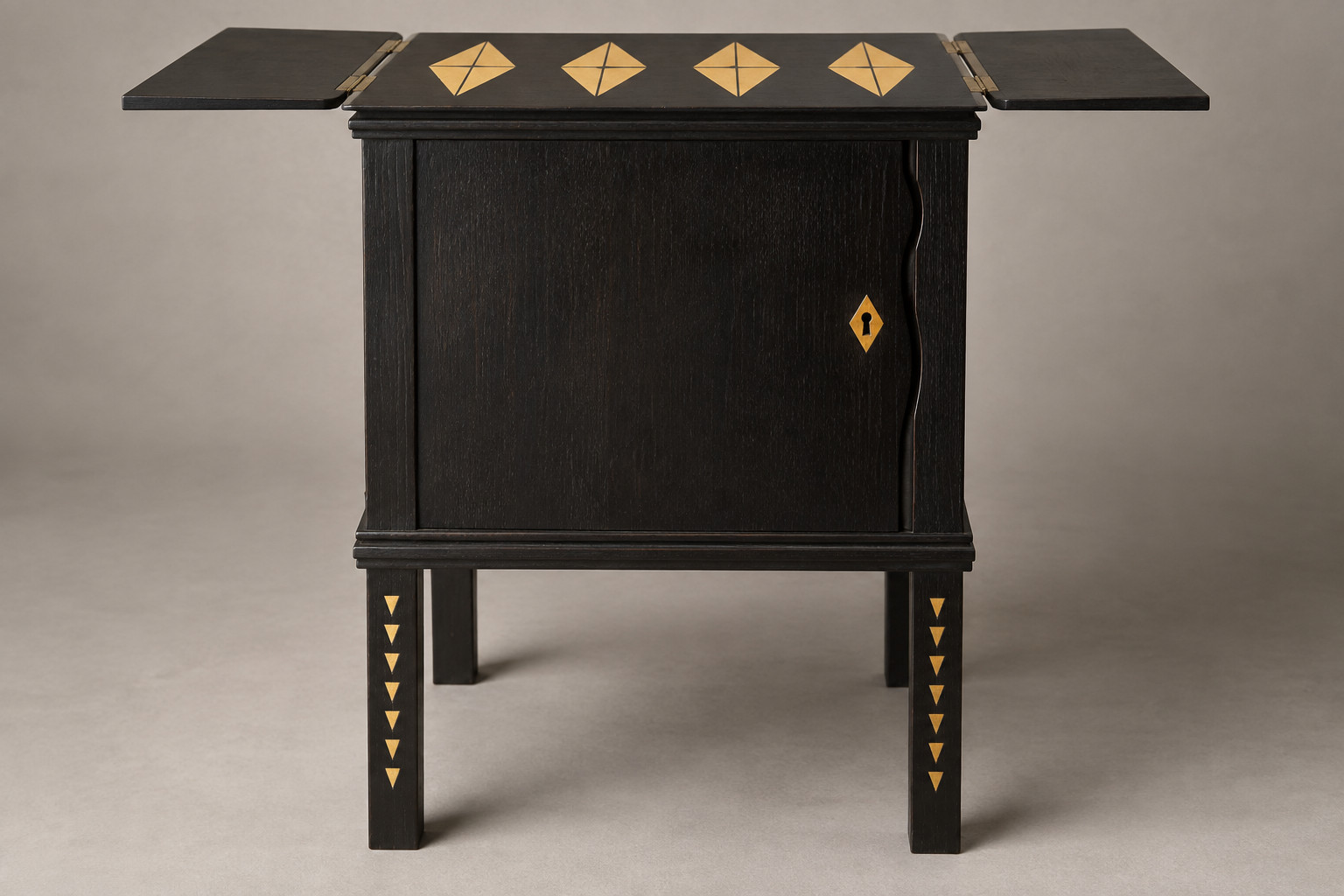
Yellow lozenges cross the smoker’s cabinet’s top; triangles mark its legs. The dark wood makes each shape conspicuous. These are pieces of material inserted into the surface, so the colour has a physical edge and thickness.1
Charles Rennie Mackintosh designed the cabinet for W. J. Bassett-Lowke’s house at 78 Derngate in 1916. The archive describes ebonised wood, a cedar lining and correspondence concerning Erinoid, a British casein plastic.2
Casein is a protein from milk. Turned into plastic, it could take a very different job: a crisp yellow accent in dark wooden furniture. An early plastic supplies the small detail that catches your eye.
Two yellows with different histories
The V&A’s conservators found that appearance alone could not identify every piece of inlay. Brenda Keneghan used infrared spectroscopy to distinguish the materials: original inserts were casein, while earlier replacements were acrylic, or PMMA, familiar as Perspex.3
A replacement could match the colour without being the same substance. That matters when an ageing surface needs treatment: neighbouring yellow shapes may respond differently because they are made from different plastics.
The analysis also changes how we see the pattern. It contains the original design and decisions made by later repairers, fitted closely enough together to look like one continuous scheme.
Keeping a diamond’s curve
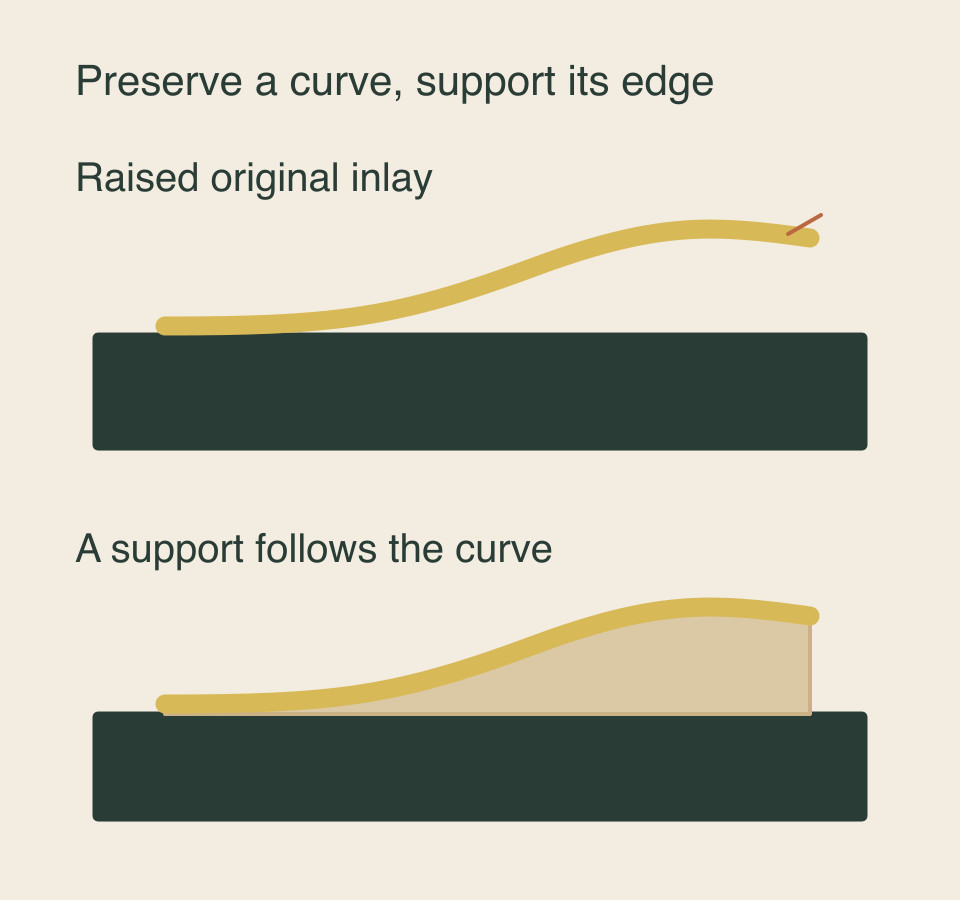
Some original inlay had curled, leaving vulnerable corners raised above the cabinet. Restoring the sharp pattern to a perfectly flat surface might seem an obvious goal. It would also mean forcing fragile material back into shape.
Shayne Lang’s 1996 conservation account describes another answer. Loose diamonds on one side of the top received shaped balsa supports beneath them. The supports followed the existing curve and helped protect the original pieces.3
A tiny change in height thus became worth preserving. The diagram below shows the principle: fill the space beneath the curve, so the exposed inlay has support.
The result asks something of the viewer too. A slightly uneven diamond may contain more of Mackintosh’s original material than a flawless replacement beside it. Here, keeping the cabinet meant allowing part of it to remain less than perfectly flat.