Design story

Clay: furniture that keeps the maker’s touch

Clay furniture keeps something that a polished finish often removes: the maker’s touch. Its irregular surface makes the act of modelling part of the finished object’s appeal.

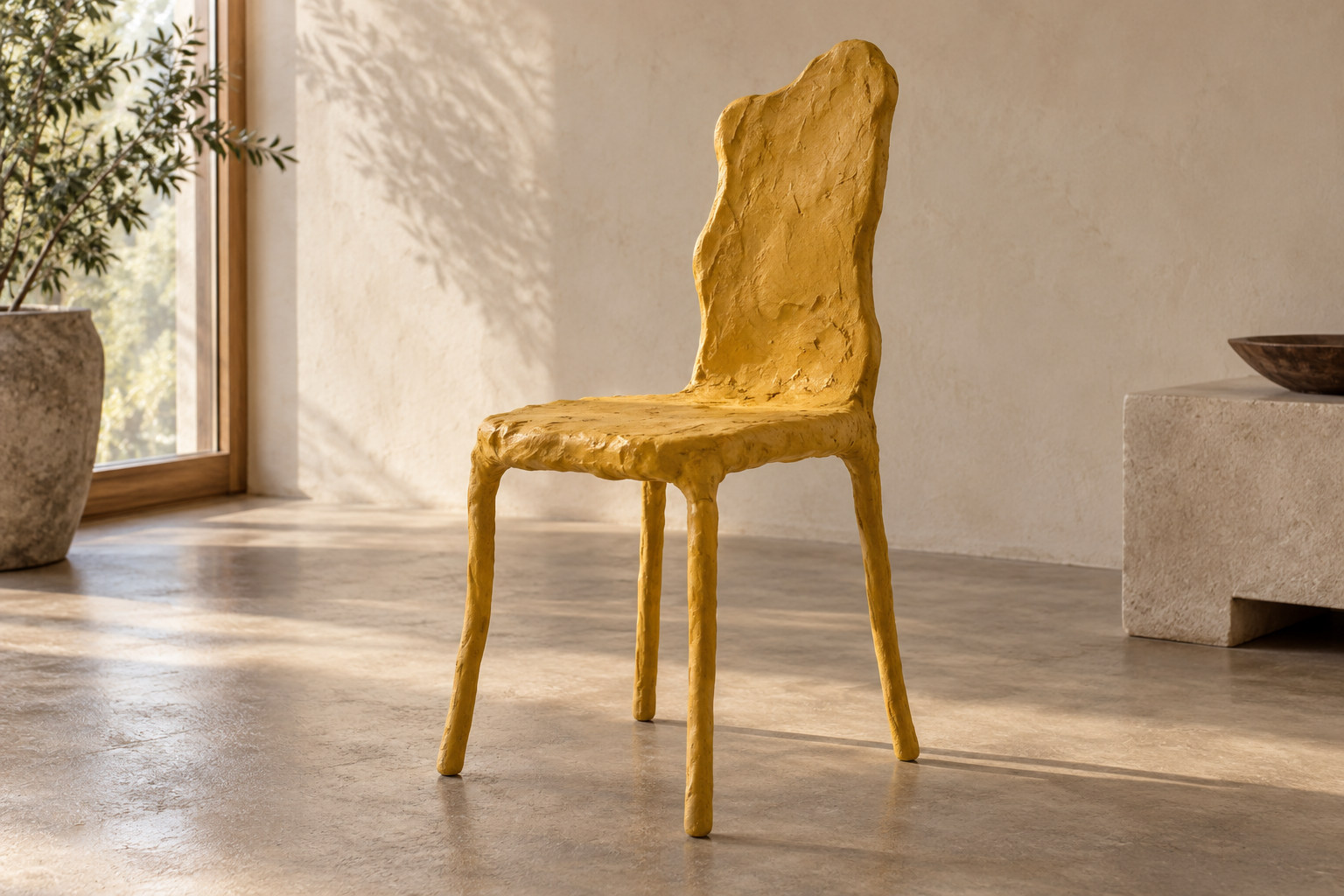
A brightly coloured hand-modelled chair with uneven surfaces and slender irregular supports.
PatinaHall editorial reconstruction. It is not a documentary photograph. The modelled surface illustrates the synthetic-clay family’s handmade character. This is not fired pottery, a bronze edition, a documented individual chair or a structural assessment.
On this page
Key facts & takeaways

At a glance

Subject
Clay furniture
Entry
Design story
Last reviewed
23 October 2026

Three things to remember

  1. Clay Furniture emerged in 2006.
  2. The documented process combines metal and synthetic clay.
  3. Hand modelling gives individual pieces visible differences.

The hand does not disappear

Furniture is often finished until its maker’s small hesitations vanish. Maarten Baas’s Clay family takes pleasure in keeping the evidence of modelling visible. The studio describes industrial clay shaped over a steel frame, with handprints and irregular surfaces remaining part of the result.1

This is furniture with the appearance of something still being discovered. A slightly wandering outline can make a chair or lamp feel less remote than an immaculate model. The useful object and the expressive gesture occupy the same space; the surface lets the viewer imagine the hand moving around it.

A skeleton beneath the modelling

The word clay can suggest pottery, but this family is not furniture fired in a kiln. Montreal’s museum records a floor fan from Clay Furniture, dated 2006, with synthetic clay and metal among its materials and Baas & den Herder as producer.2

The hidden support matters to the visible effect. A metal skeleton carries a modelled covering, allowing the exterior to retain an improvised character. The surface can look tentative while the object follows an organised making process. Neither the photograph nor that playful appearance establishes how an unreviewed piece will perform in use.
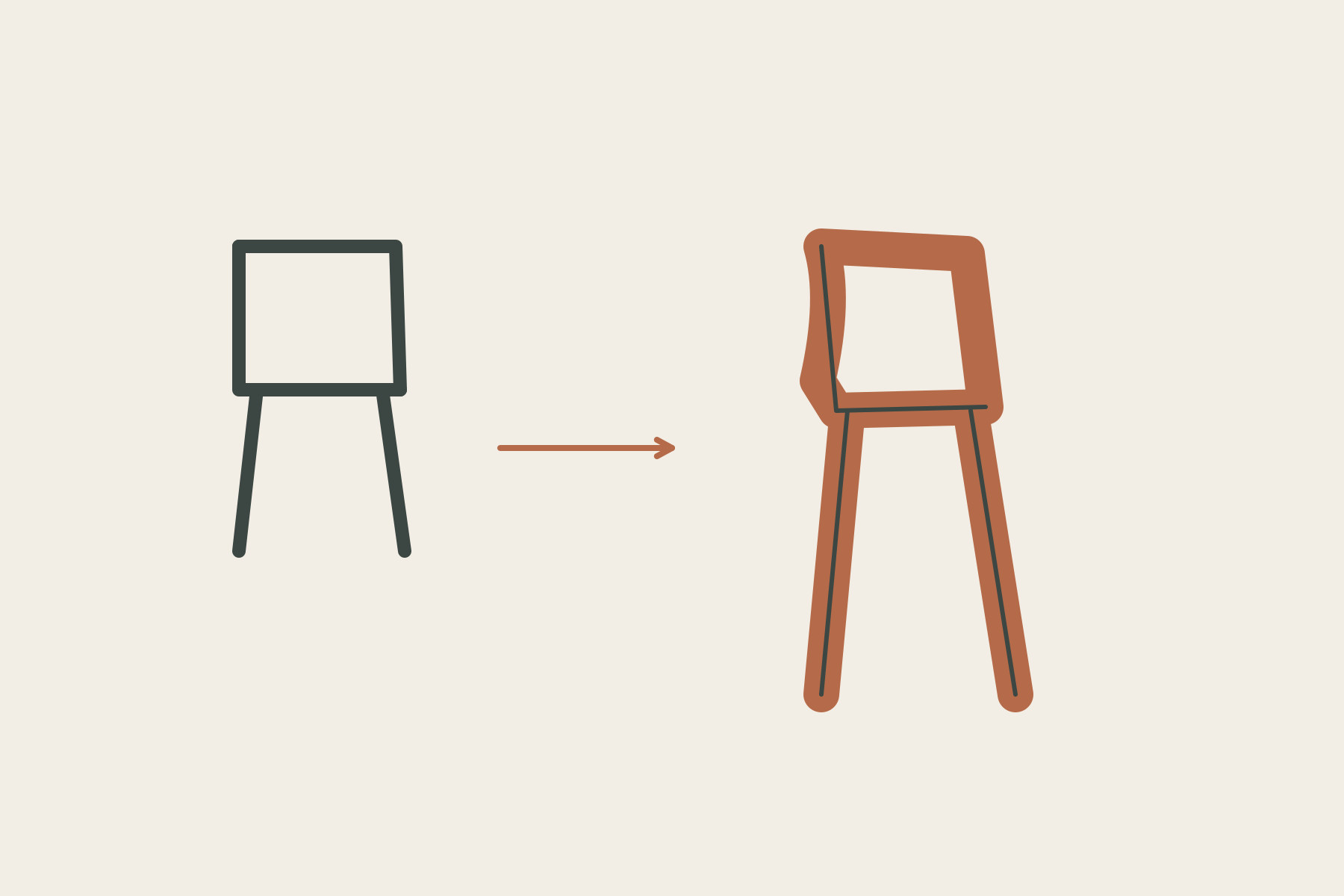
A thin chair skeleton is shown beside an irregular thick coloured covering around a fine supporting line.
Original PatinaHall schematic, not to scale. A simplified support is compared with a modelled covering. The drawing explains the distinction between skeleton and surface, not the exact internal frame or a method for reproducing a Clay object.

Repetition leaves room for a person

The Groninger Museum’s acquisition account places Clay Furniture in a museum collection while describing its hand modelling.3 A family resemblance can therefore coexist with differences from piece to piece. The process does not need every small mark to become identical.

Baas’s later material versions have their own production histories. For the synthetic-clay work, the memorable idea is already on the surface: finishing an object does not always require making it look untouched. The marks of making can become the part that makes you want to look again.

Research notesEvidence, connections and limits

Clay is a project family including chairs and fans, not fired ceramic furniture. Museum records identify particular pieces and makers. Later bronze editions are separate, and a playful outline is not a certificate of structural safety.

Evidence map

Connected subjects and evidence

Reviewed connections

  • Clay furnituredesigned byMaarten Baasdocumented

    The cited record explicitly identifies this designer for the repeatable design or coherent project family.

    Reviewed 23 October 2026 by PatinaHall editorial.
  • Clay furnituremanufactured byBaas & den Herderdocumented

    This production relationship is scoped to the source record. Later manufacture, current specifications and the date of the original design remain distinct.

    Reviewed 23 October 2026 by PatinaHall editorial.
    • Source 2Floor Fan, from Clay Furniture, 2006, 2007.601

Research trail

Sources and further reading

  1. Clay, project familyMaarten BaasAccessed 23 October 2026
  2. Floor Fan, from Clay Furniture, 2006, 2007.601Montreal Museum of Fine ArtsAccessed 23 October 2026
  3. Annual report 2007: Clay Furniture acquisition and hand modellingGroninger MuseumAccessed 23 October 2026

Last reviewed 23 October 2026. Found an error or a stronger primary source? Contact PatinaHall.