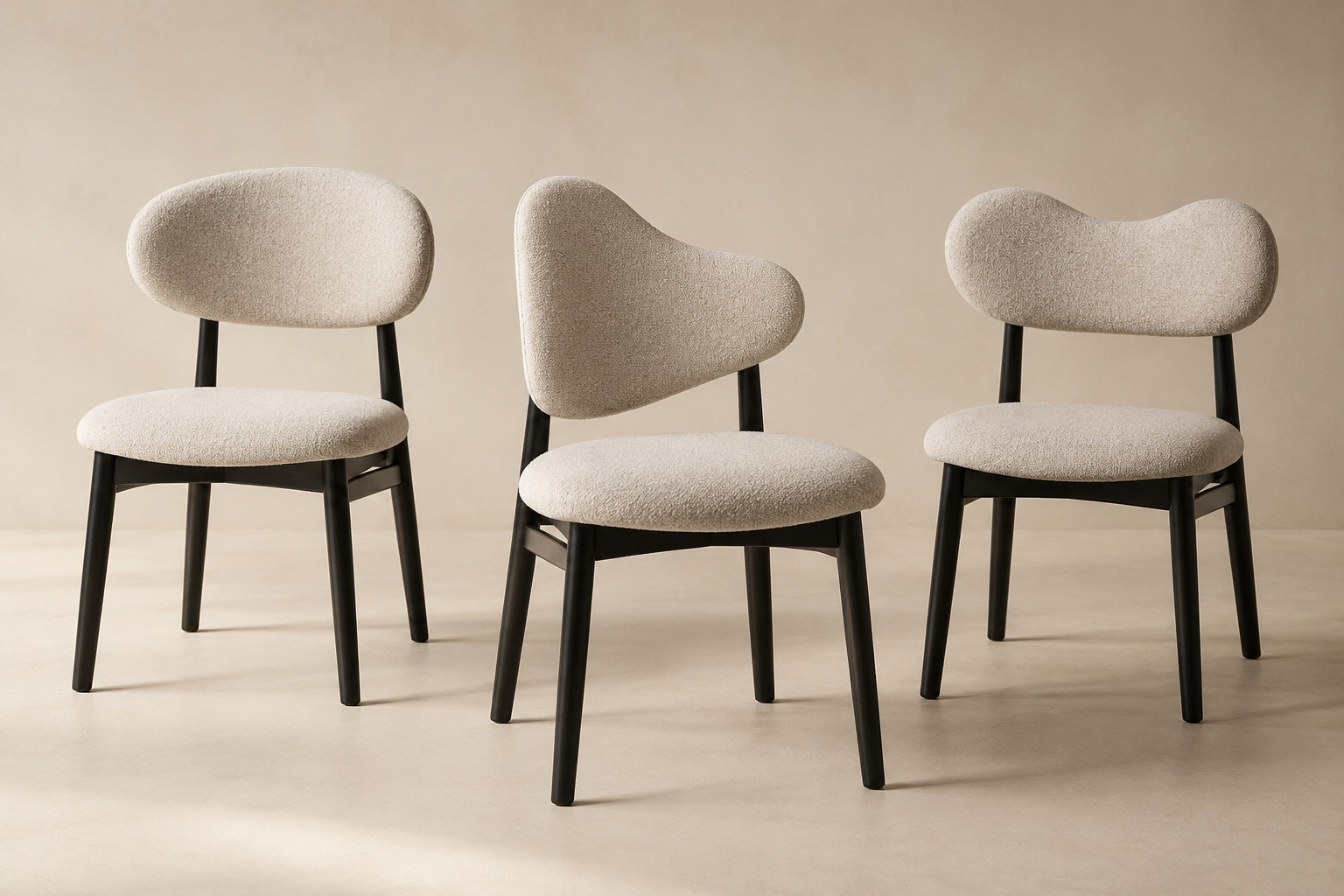
One series, eight backs
Chair 101 gives a roomful of chairs something to talk about before anyone sits down. Maarten Baas designed eight different backrest shapes for Lensvelt. The upholstered product identifies them A–H: a defined set of variations within one series.2
The back is a useful place for difference. Around a table, it is the part that rises above the seat and announces each chair to the room. Change its outline and the whole group begins to look less uniform, even when the chairs share a frame and upholstery.
Lensvelt compares the shapes to a child's drawing. The attraction is their looseness of outline, preserved in furniture intended to be made as a series.1
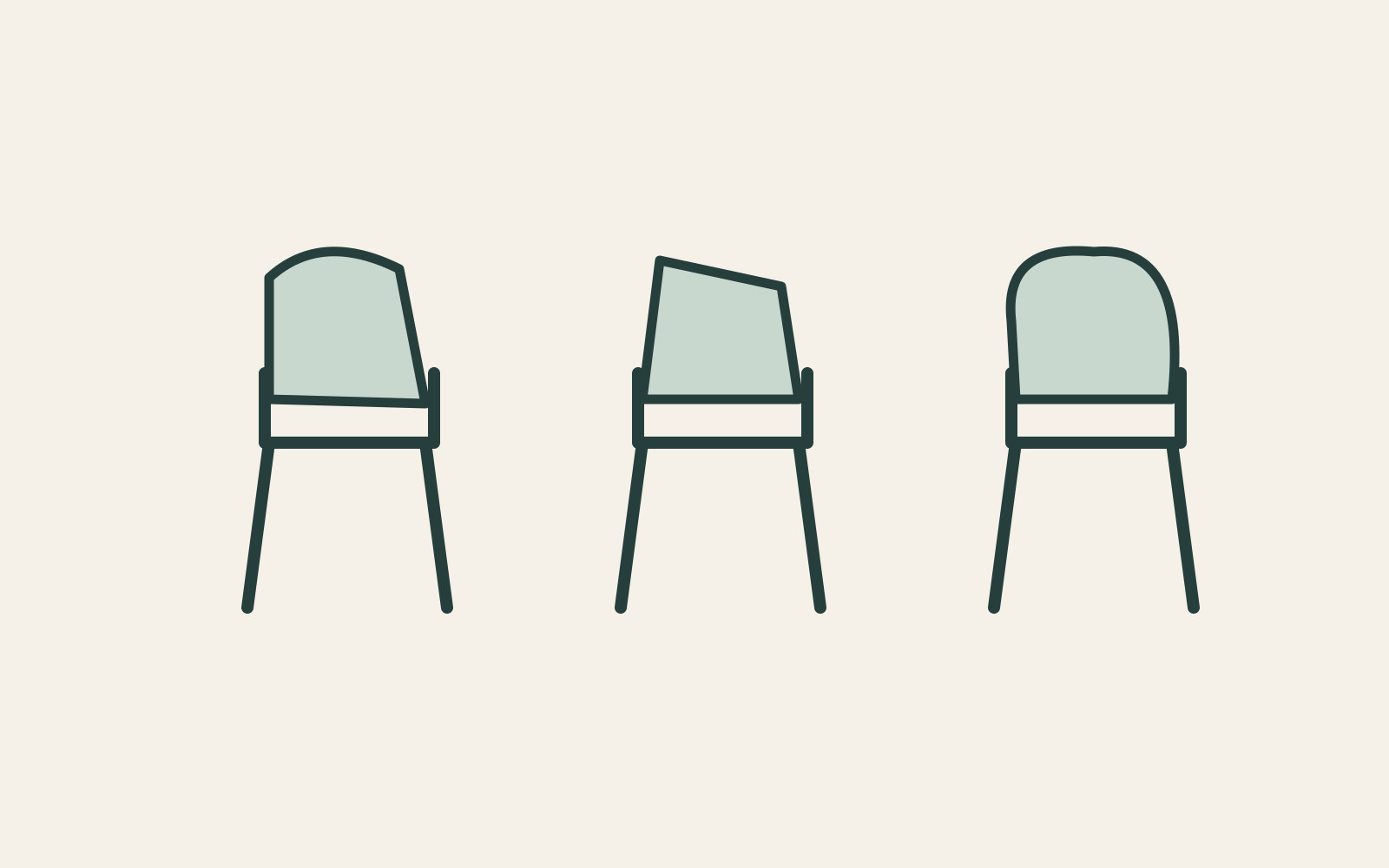
A roomful of character
Put varied backs beside one another and comparison becomes part of looking. One outline can seem more upright, another more expansive. These are impressions a viewer brings to shapes, rather than personalities assigned by the manufacturer.
Colour can add another layer, but the silhouette already carries the idea. A group in one colour can still contain differences; the room need not depend on every chair having a contrasting fabric.
That makes the design particularly legible at the scale of a table. The repeated frame gathers the chairs into a family, while the backs keep the eye moving from one member to the next.
A presentation asking for attention
Lensvelt identifies the 2017 Milan installation May I have your attention, please? as the launch of Chair 101. The title suits a design that gives an apparently ordinary chair a conspicuous set of outlines.3
The best way to understand Chair 101 is therefore to look at several together. One chair gives a shape; a row reveals the idea. The familiar scene of chairs around a table becomes a small gathering of different outlines.