A familiar chair, an unfamiliar length
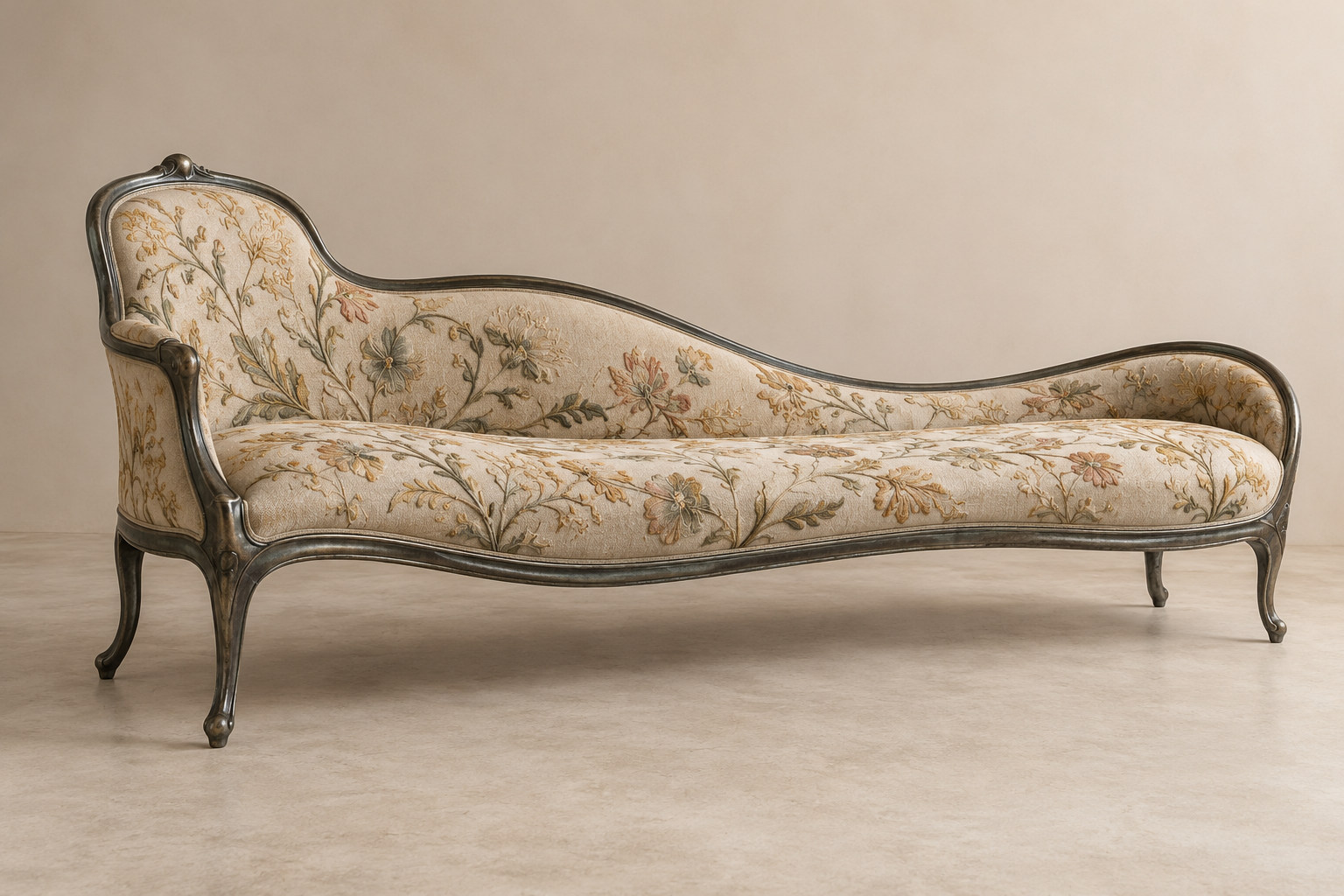
Lathe VIII makes recognition do the work. The V&A describes a love seat that appears to stretch a single nineteenth-century chair into two. The familiar chair remains the point of reference, while its apparent extension changes the scale of the whole object.2
That is a particularly accessible kind of distortion. A viewer does not need to know the model's history before noticing that something has happened to an ordinary seating outline.
The studio's Lathe VIII record lists grey-patinated bronze and embroidered fabric, with the year 2008. The combination gives an apparently stretched form a material presence: metal and upholstery turn the visual proposition into furniture.1
A friend's image-editing trick
Brajkovic's account of the wider Lathe idea begins with a moment between students. In the 2003 section of his timeline, he recalls his friend Jori Spaa showing him a single-pixel-row function while he was studying at Design Academy Eindhoven. He connected that image-editing possibility with the idea of making a chair.3
The recollection concerns Lathe I and the origin of the series. It supplies a human route into the experiment: a tool becomes interesting because someone shows another person what it can do.
For a furniture-curious viewer, that account suggests a useful question. What happens when an operation associated with a flat image becomes a way of imagining an object with volume?
Enough familiarity to share the joke
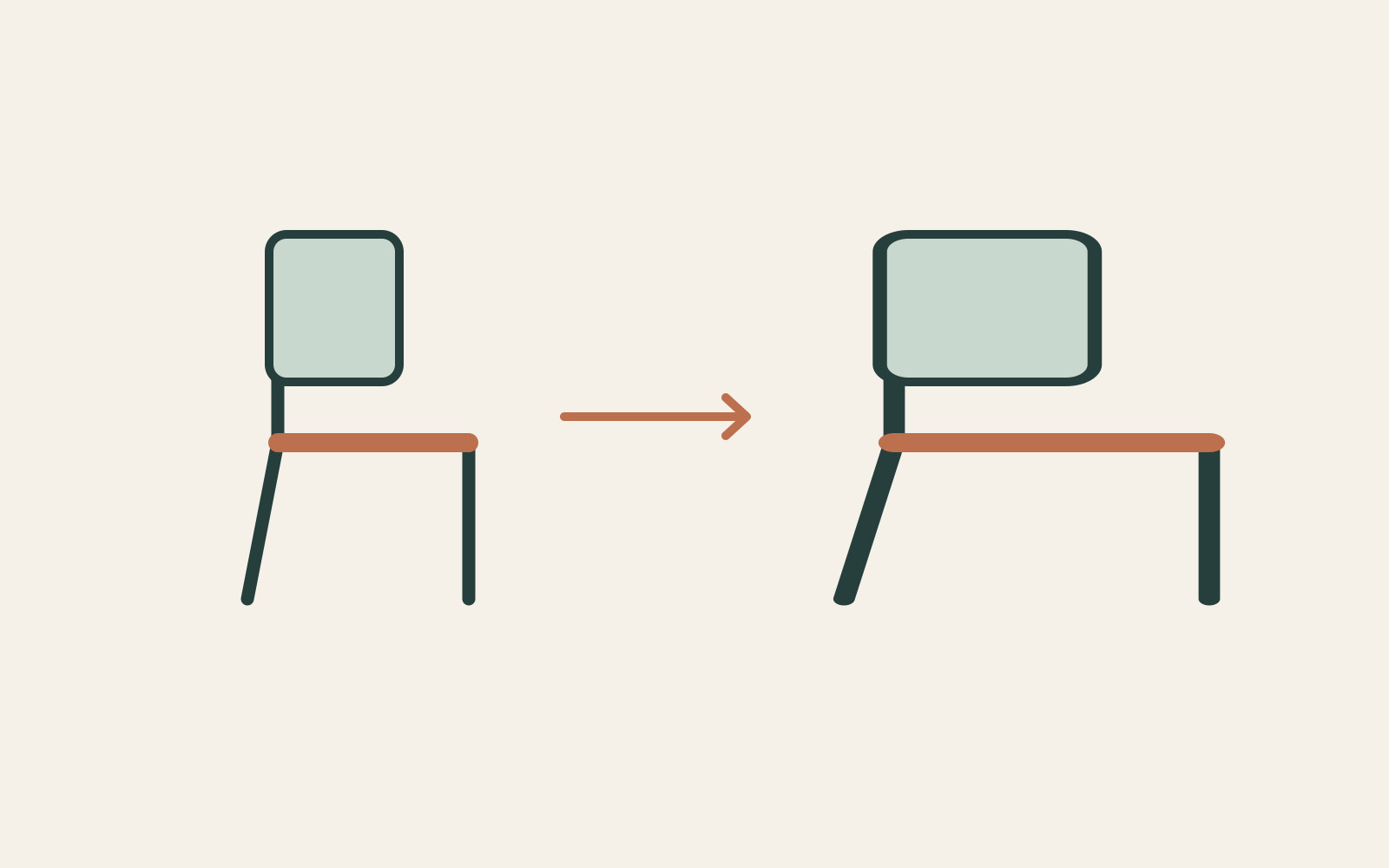
VIII gives that larger experiment a particularly sociable outline. The V&A's description moves from one chair to a love seat, so the apparent distortion also suggests a change in how people might gather around the object.2
The effect relies on keeping enough of the starting form for recognition. If every clue disappeared, the viewer would lose the sense of a chair being extended. The familiar outline is what makes the alteration legible.
Look at it as a transformed image made spatial: a remembered chair shape, a surprising length, bronze and embroidered fabric. The original recognition stays beside the new form, inviting the eye to move back and forth between them.