The glamorous part was never hidden
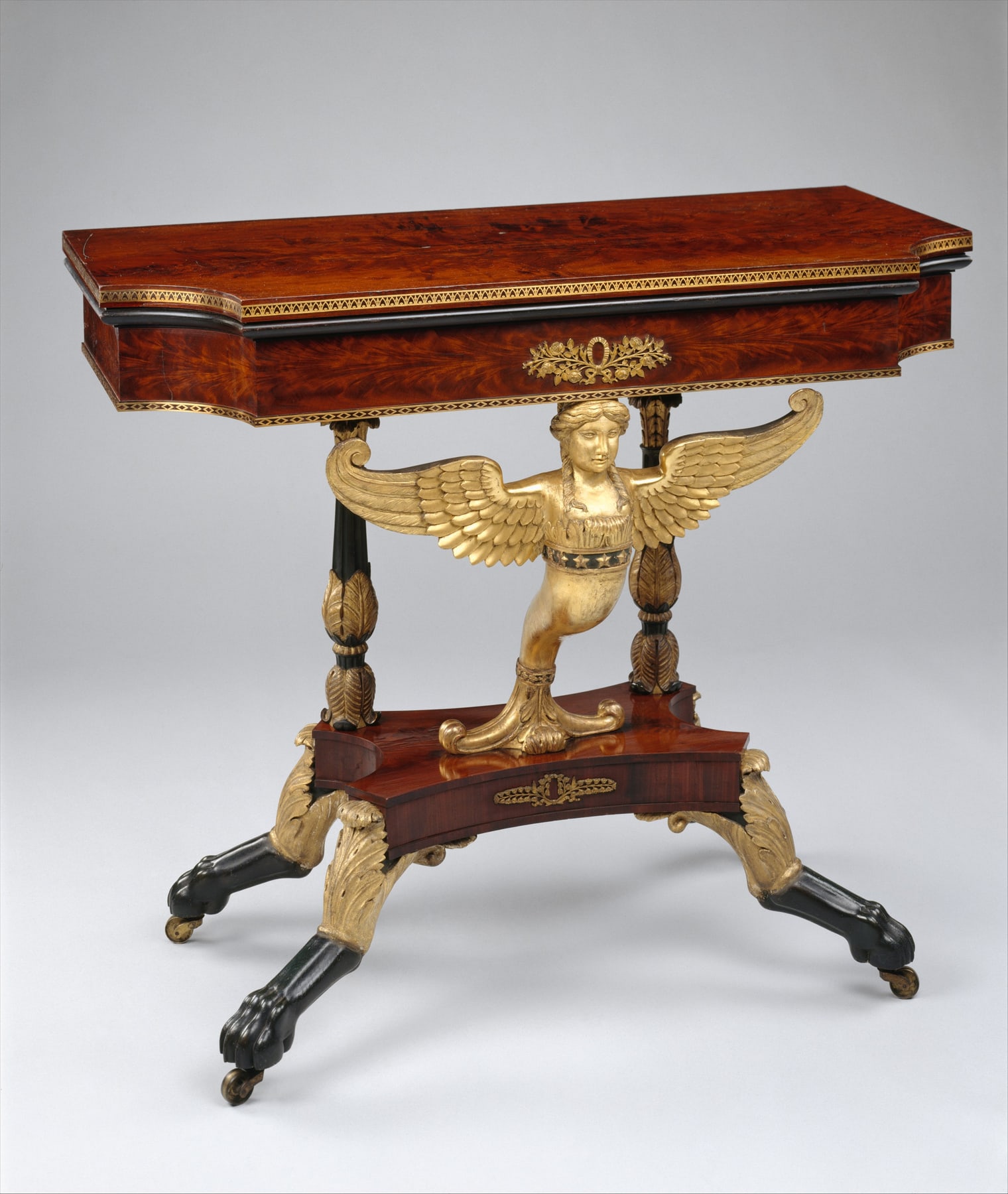
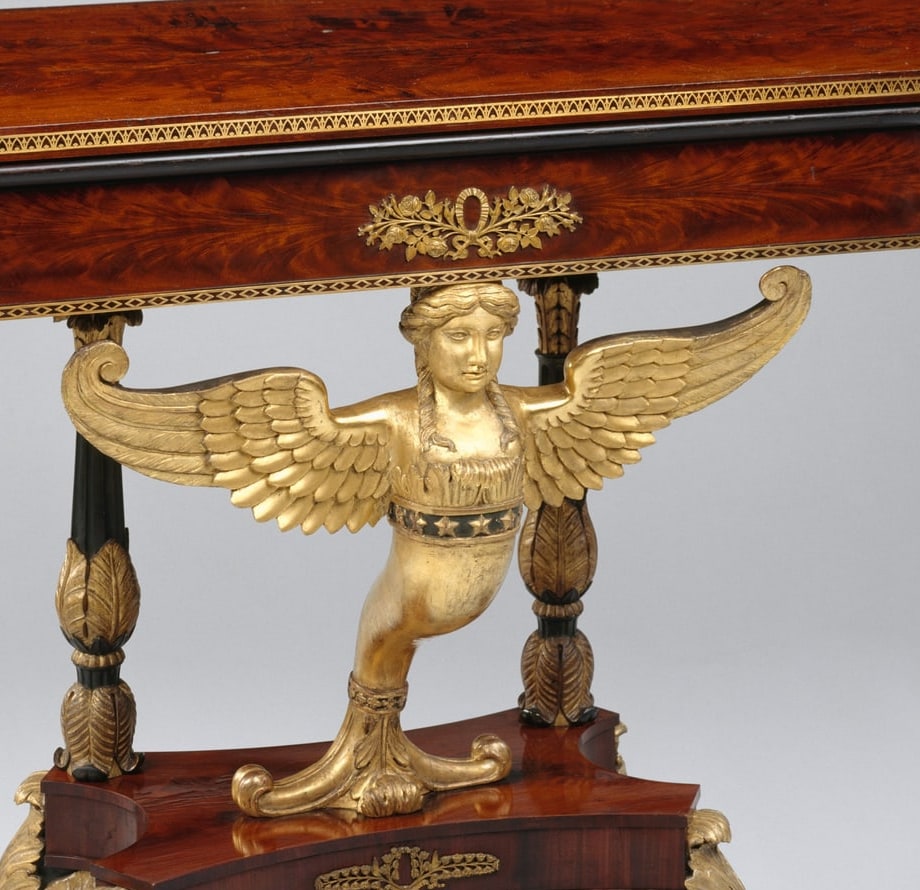
The eye goes first to the gilded figure supporting the tabletop. It gives the furniture a bodily centre: a head and torso occupy the place where a conventional table might have a cluster of plain legs. The dark curved support beneath makes the gilt surface especially conspicuous.
Look above the figure, however, and the thin layered edge of the top suggests another task. This sculptural object also had to become a playing surface. The showpiece and the working table occupy the same small footprint.
A turn prepares the playing surface
The Met describes the action as a ninety-degree rotation followed by the unfolding of the top. The folded state keeps the table shallow; opening it makes more surface available without requiring the central support to change position.2
That is a useful way to read the proportions. The central figure is not simply placed beneath a permanently broad slab. It carries a top whose relationship to the room changes. A seam at the edge can therefore tell a different story from the carving below it.
Conservation supplied the missing date
After a period of attic storage, the table had loosened joints. Museum conservation in 1995 involved removing the nut from the iron pivot beneath the top. That work exposed a French inscription with New York, 1 May 1817 and the initials HL.2
The distinction between seeing the table and reading that record matters. Nothing in the present overall photograph allows a viewer to discover the inscription independently. The date comes from a documented examination of a normally concealed surface.
A family object enters a museum
The table belonged to Stephen Van Rensselaer IV and descended through the family before entering the Met in 1995. Its present accession number, 1995.377.1, anchors the story to this particular table.1
That object history gives the dramatic exterior a quieter counterpart. Furniture can preserve evidence in places that ordinary use leaves unseen. Here the joint between the movable top and the support held a more precise historical statement than the ornament offered to everyone in the room.
Return to the detail photograph with that in mind. The visible edge explains where movement begins; the museum’s account explains what examination beneath it revealed. Together they let the mechanical and documentary stories meet without confusing one kind of evidence with the other.