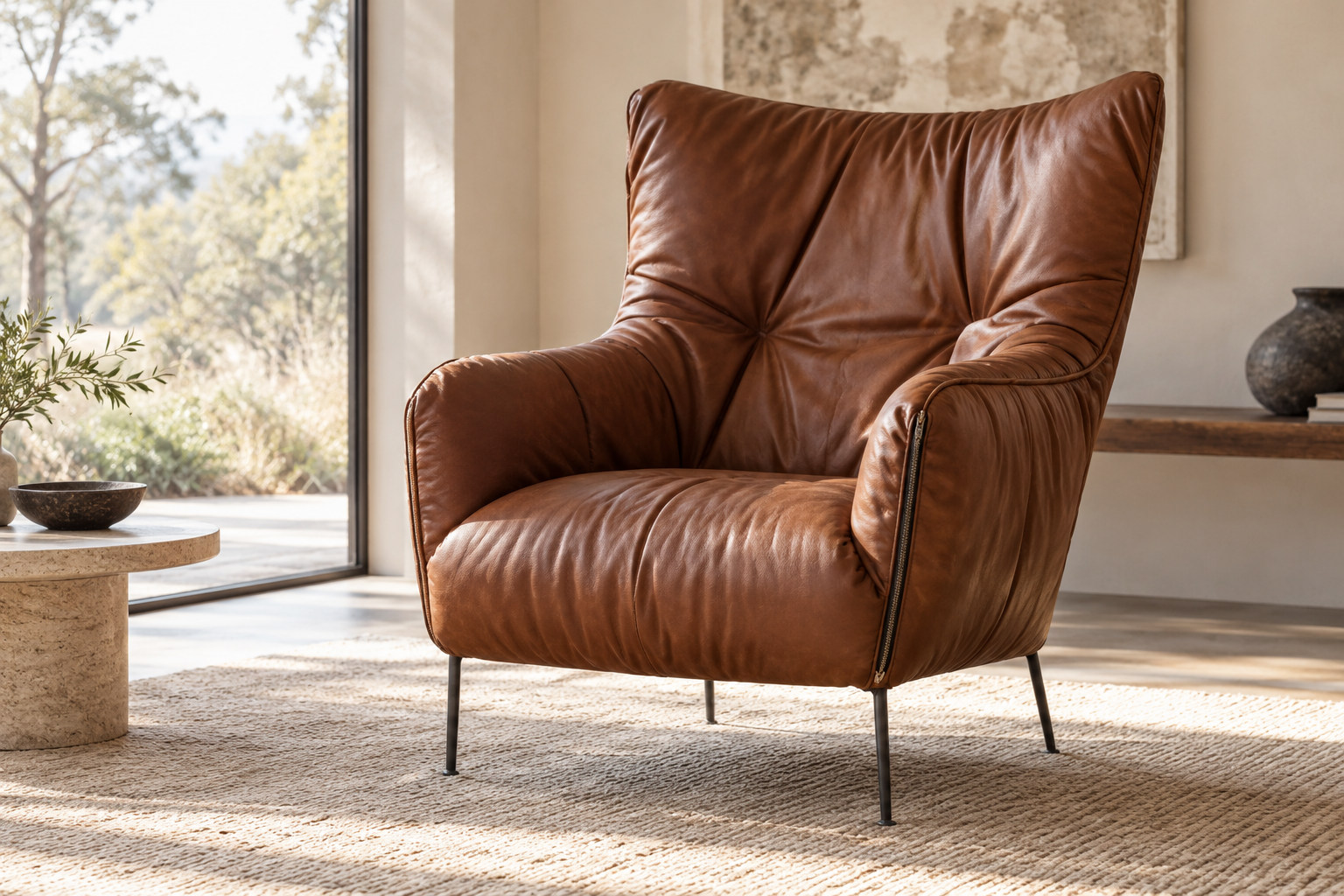
Turn a catching shape towards a person
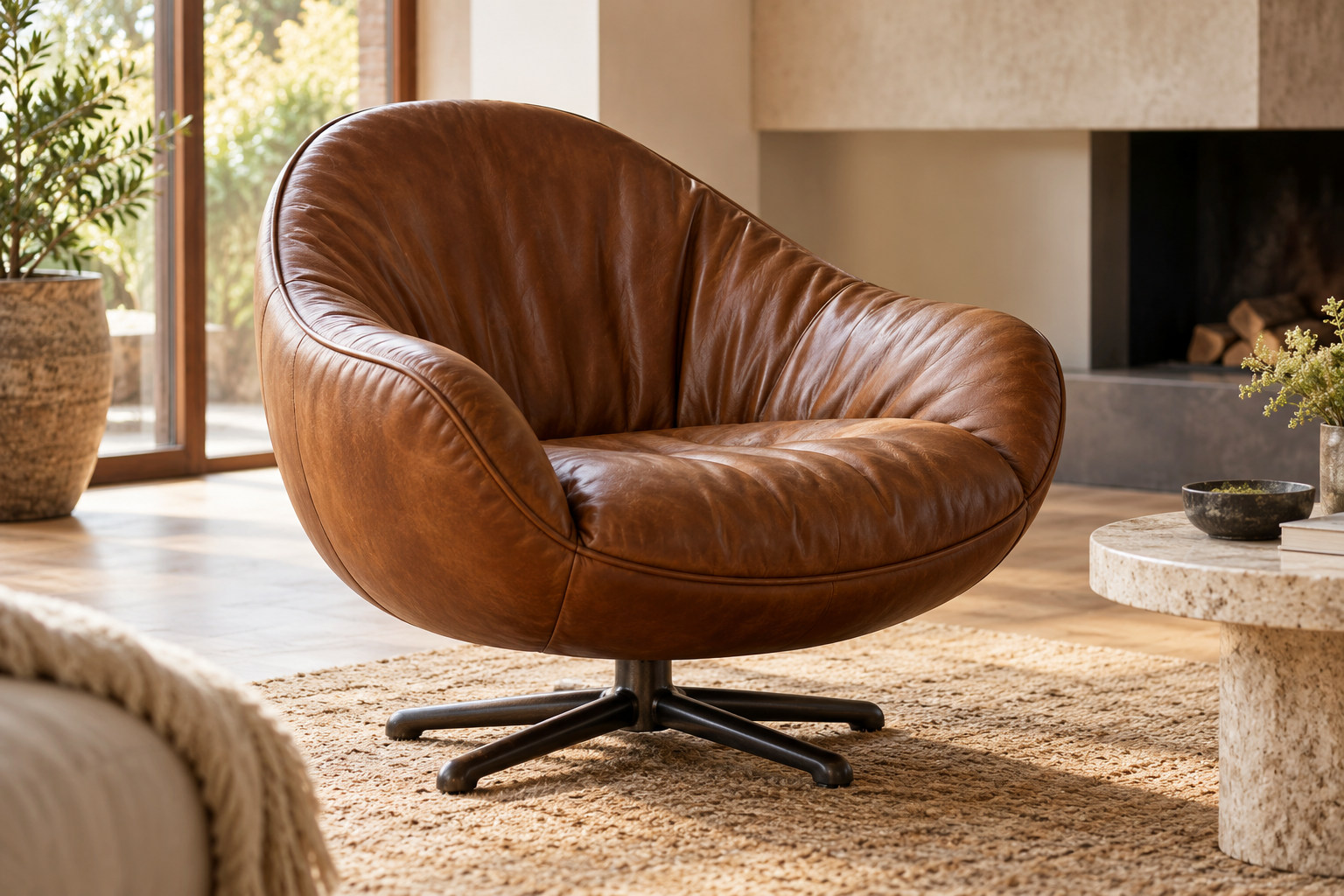
LABEL describes the Hidde armchair as inspired by a baseball glove and named after Gerard van den Berg’s eldest grandson.1 The first reference explains a physical idea; the second gives the chair a family connection.
The cup is the important part to notice. The back and sides gather around the seat rather than presenting a set of sharply separate planes. Seen from the front, the opening is broad; seen from the side, the body turns upwards around it. The sporting reference becomes a way to understand a volume.
Let the cover have some freedom
The technical sheet describes a tubular metal frame, moulded foam and a cover system that produces folds and creases, especially in a hollow-backed model such as Hidde.2 Those folds belong to the producer’s account of the appearance, rather than necessarily being an accident to hide.
That detail changes how the surface is read. The chair can have a defined underlying form while its cover retains a looser character. Structure and visible ease do different jobs.
A domestic rather than literal reference
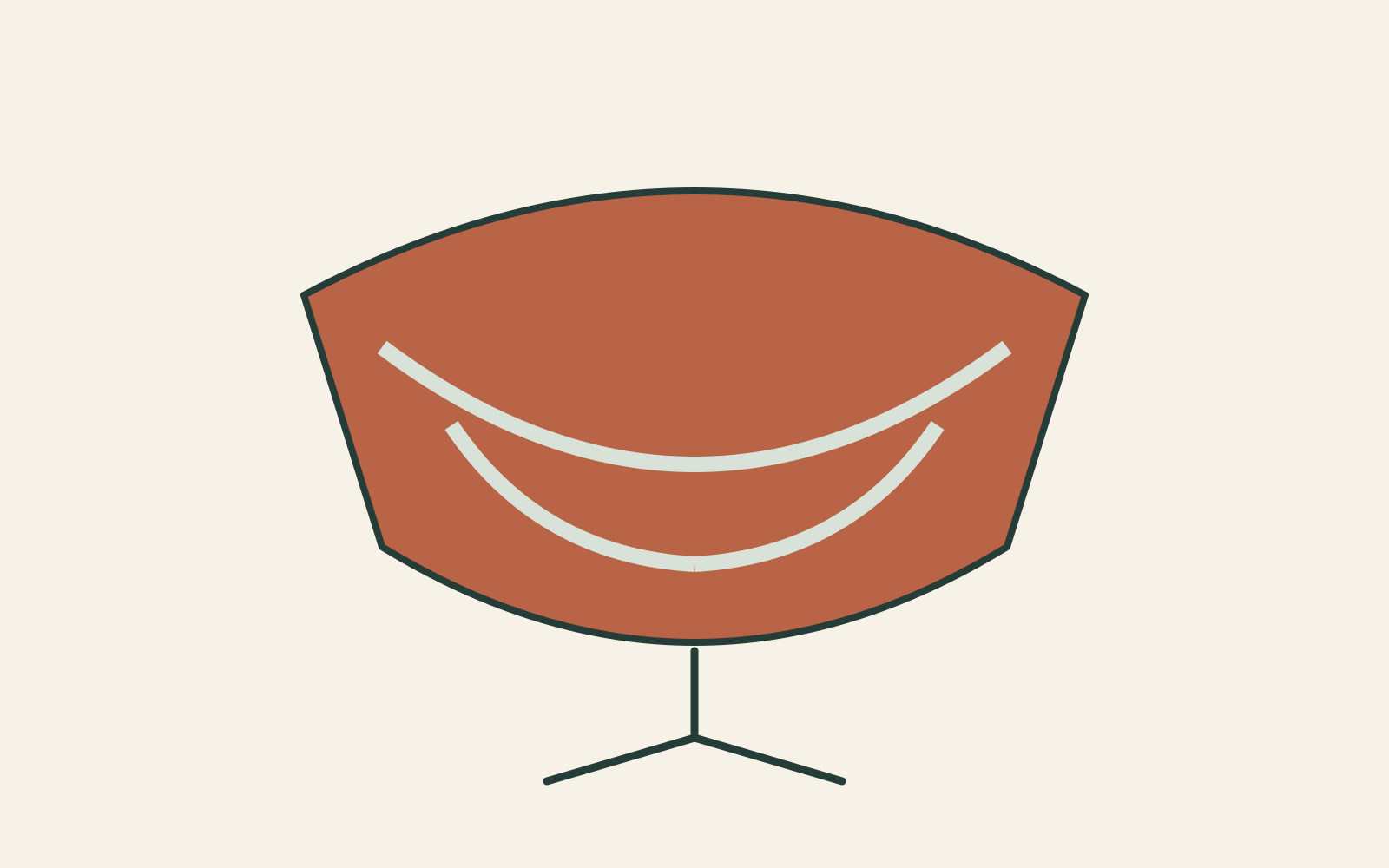
Hidde does not need stitching that imitates every detail of sports equipment for the connection to work. The encompassing shape carries the idea at the scale of furniture.
It is a good example of a reference doing useful design work. Once the glove has directed attention to the cup, the eye returns to the chair itself: its open front, curved back and surface gathered around a place to sit.