Design story

Meltingpot: yesterday’s experiments set the table

A workshop’s colour tests and prototypes can become a second palette. Meltingpot turns those earlier experiments into a solid table with a pattern that continues into its thickness.

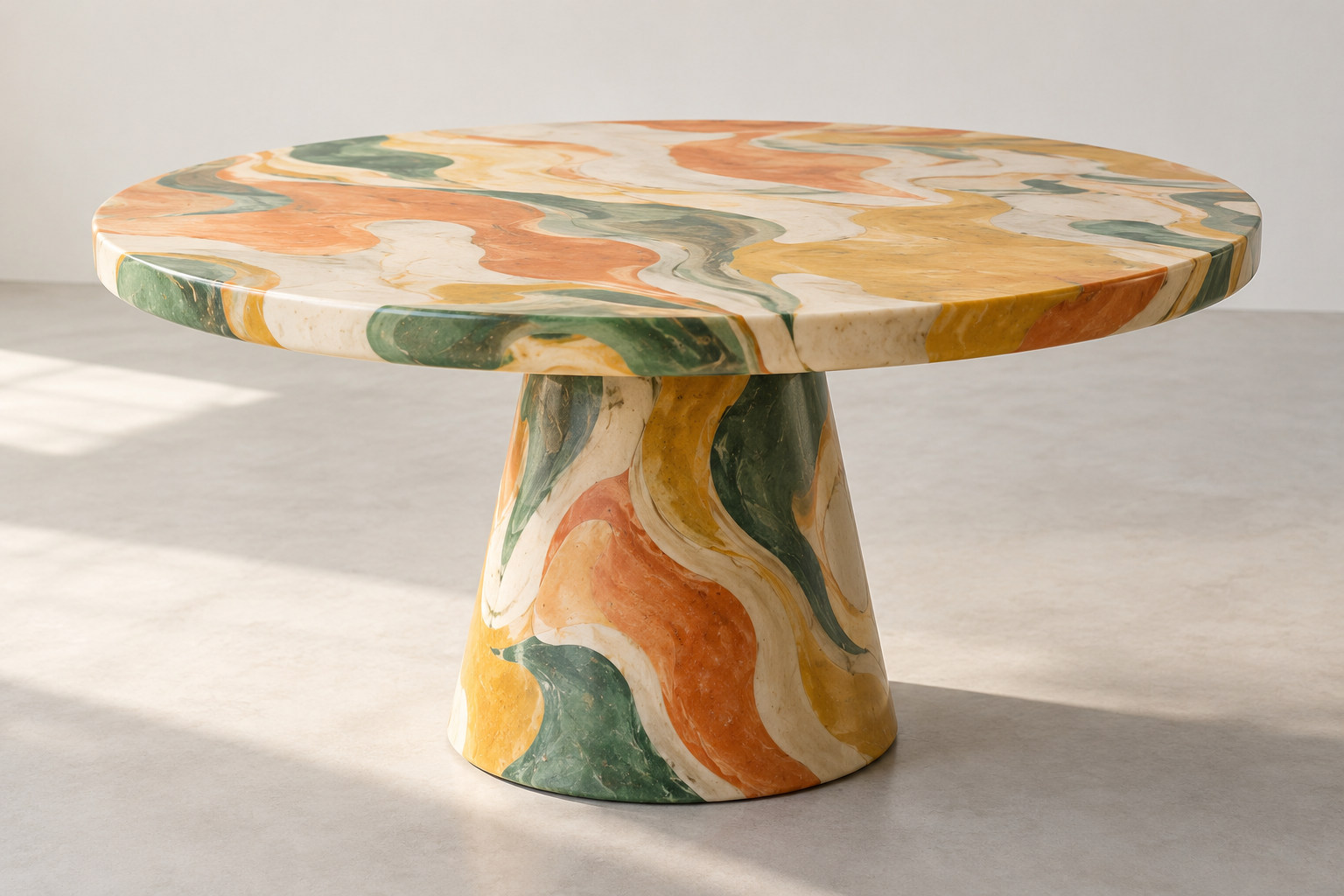
A round thick-topped table shows broad coloured swirls continuing over its edge and a solid supporting base.
PatinaHall editorial reconstruction. It is not a documentary photograph. An imagined composition explains colour within solid reprocessed plastic. Its pattern and inputs are illustrative and do not reproduce a specific Kooij table or verify a material batch.
On this page
Key facts & takeaways

At a glance

Subject
Meltingpot table
Entry
Design story
Last reviewed
23 October 2026

Three things to remember

  1. Kooij describes prototypes and colour tests as the table’s input.
  2. The pattern continues through the solid material.
  3. Each composition retains differences from its available inputs.

The workshop has a second palette

A workshop accumulates experiments: colour tests, prototypes and pieces that taught the maker something without becoming the final product. Kooij’s account of Meltingpot describes bringing such plastic material together and pressing it into a new solid form.3 The table makes those earlier trials available for another use.

The result is also a way of composing colour. Different inputs meet in patches and flows, so the surface can be read as a record of materials brought together. Yesterday’s unfinished ideas get a shared place at the table.

The pattern belongs to the thickness

Kooij’s round-table account describes the material as solid and the colour as continuing through it.3 The pattern is therefore not simply an image printed on top of an unrelated core. Looking towards an edge or underneath changes the view without leaving the same material story.

This gives the table a different relationship with its surface. Colour is not only a final choice applied after making; it is affected by what goes into the process and how those inputs meet. A controlled furniture form can contain a composition that is particular to its available material. Repetition of the process leaves room for visible differences.
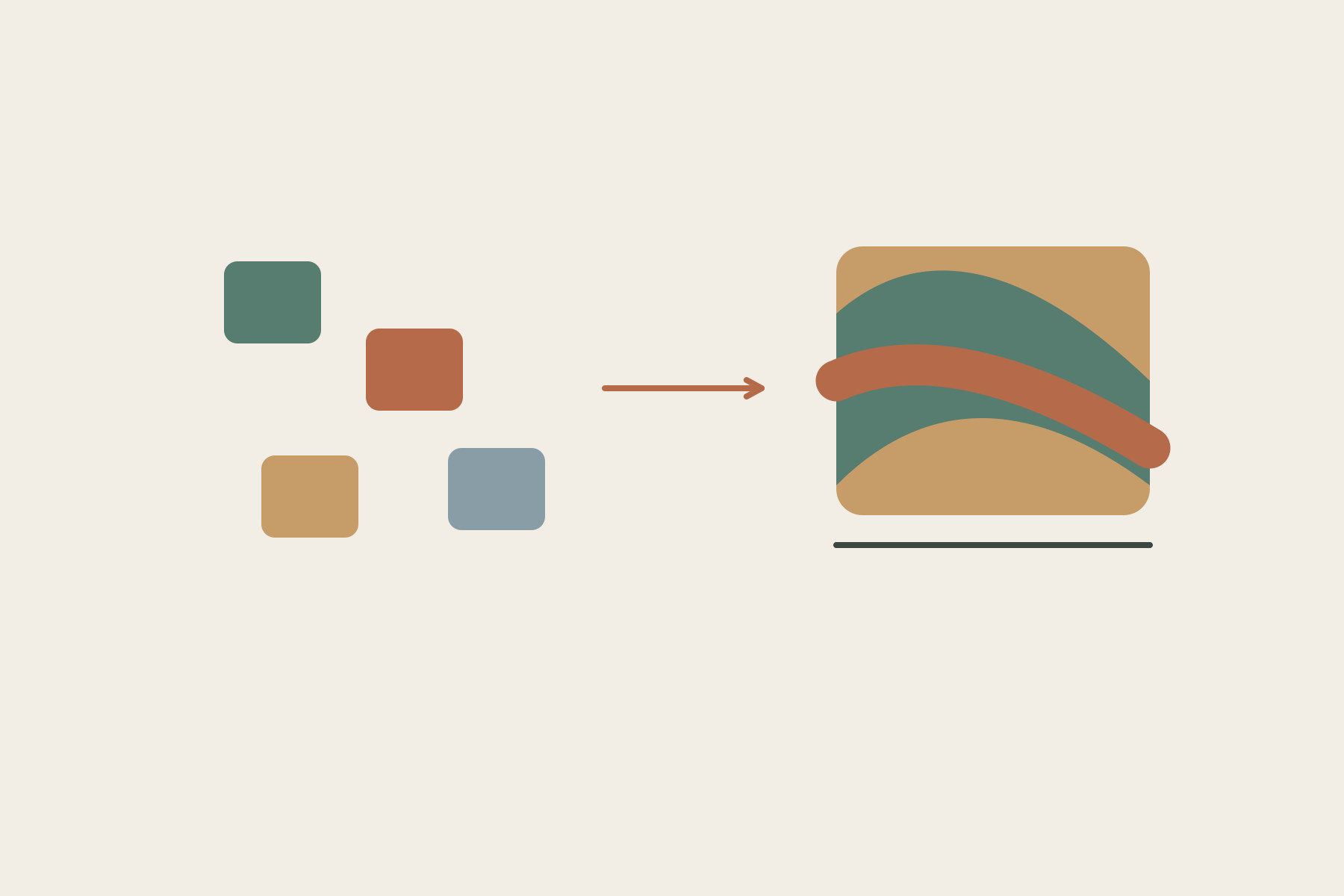
Separate coloured fragments point towards a thick block whose broad colour bands meet its edge.
Original PatinaHall schematic, not to scale. Different input fragments meet in one solid coloured body, with a visible edge. Pattern continuity is conceptual; the drawing does not specify a plastic mix, pressing method or actual table composition.

A new object with an untidy beginning

The table collection and round-table specification show how that material becomes a familiar place for everyday activity.21 The orderly outline and the less predictable interior pattern work together: one gives the room a clear object, while the other invites a closer look.

The studio’s pages give differing dates for the family and its development, so no single first year is imposed here. The useful idea is the documented relationship between experimentation and another round of making. A workshop’s rejected shapes do not all need to retain their original shape to remain part of its work.
Research notesEvidence, connections and limits

Kooij’s pages carry differing dates for the family and process development; no single first year is asserted. The discussion follows the documented studio process, without assuming every plastic is interchangeable or calculating a lifecycle benefit.

Evidence map

Connected subjects and evidence

Reviewed connections

  • Meltingpot tabledesigned byDirk Vander Kooijdocumented

    The cited record explicitly identifies this designer for the repeatable design or coherent project family.

    Reviewed 23 October 2026 by PatinaHall editorial.
    • Source 11, Meltingpot Round 5P, designer and material
  • Meltingpot tableuses materialReprocessed studio plasticdocumented

    Kooij’s pages carry differing dates for the family and process development; no single first year is asserted. The discussion follows the documented studio process, without assuming every plastic is interchangeable or calculating a lifecycle benefit.

    Reviewed 23 October 2026 by PatinaHall editorial.
    • Source 11, Meltingpot Round 5P, designer and material

Research trail

Sources and further reading

  1. Meltingpot Round 5P: solid recycled plastic, Dirk Vander KooijKooijAccessed 23 October 2026
  2. Tables: the Meltingpot familyKooijAccessed 23 October 2026
  3. Meltingpot round dining tablesKooijAccessed 23 October 2026

Last reviewed 23 October 2026. Found an error or a stronger primary source? Contact PatinaHall.