Design story

Chubby: the work that remains after printing

Printing a chair does not finish every decision about it. Kooij’s Chubby still involves hands, contrasting surfaces and the joining of parts. The thick plastic body is the beginning of a useful question: what remains to be made after a chair has been printed?

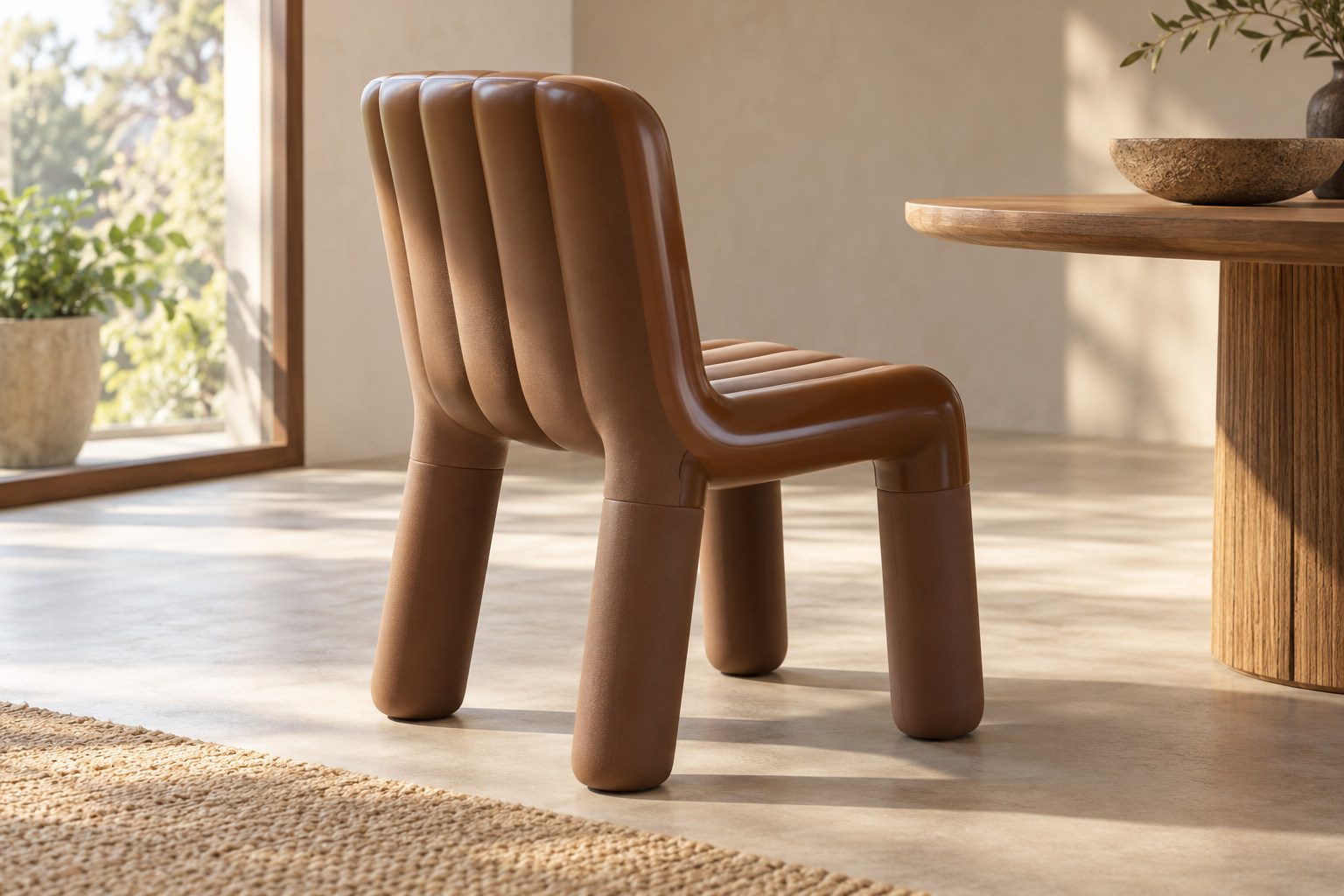
Chunky plastic-chair interpretation with thick bands and contrasting surface highlights.
PatinaHall editorial reconstruction. It is not a documentary photograph. The printed body is the starting point for looking at finish and assembly as further parts of making.
On this page
Key facts & takeaways

At a glance

Subject
Chubby chair
Entry
Design story
Last reviewed
26 October 2026

Three things to remember

  1. The studio describes handwork as part of the printed chair’s making.
  2. The front and rear have contrasting finishes.
  3. The current delivery format separates the upper body from the leg module.

After the robot has stopped

The printed outline is an obvious place to begin looking at Chubby. Kooij’s own making account adds something less obvious: human work remains important even though the chair is printed.1

That detail changes the story. Robotic extrusion provides the body, but a usable piece of furniture also has surfaces, colour, components and a route into someone’s room. A production method does not make those other questions disappear.

The studio identifies recycled plastic and pigment and describes the technique as robot extrusion together with handcraft. The linked specification also lists steel fixtures and felt. These are useful reminders that the finished chair is an organised object, rather than only a deposited line.12

The front and back have different voices

The product account describes a glossier front and a softer matt finish on the back. Turning around the chair can therefore change how light meets the surface, even before its outline changes very much.1

One surface catches a distinct highlight; another can make the same colour seem quieter. These are differences in how a material is presented to the eye and the hand. They make finishing part of the design’s character.

Kooij also describes adding pigment during extrusion and the variation that results between chairs. A shared colour name need not produce an entirely uniform surface. The process can leave differences within the family.1
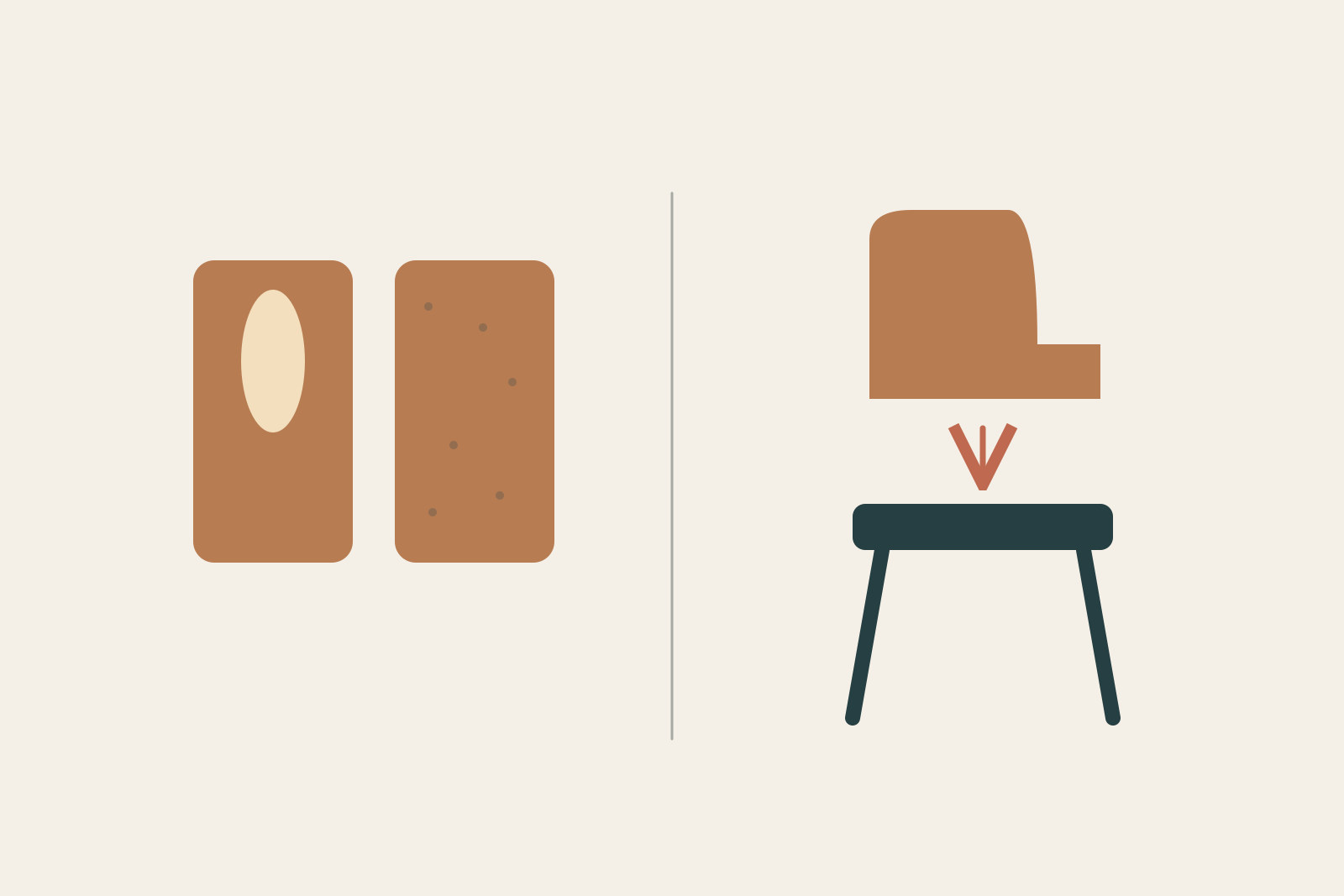
Finish swatches compare a glossier front and matt rear at left; two separated modules explain current assembly at right.
Finish swatches compare a glossier front and matt rear at left; two separated modules explain current assembly at right. Original PatinaHall schematic, not to scale.

A printed chair can arrive in parts

The current FAQ says Chubby is delivered as an upper part and a lower leg part, assembled with four hex bolts. That is a concrete distinction between a printed design and a chair delivered as one seamless object.1

Assembly adds a different kind of work to extrusion. Components have to meet, and the furniture has to travel before someone uses it. The visible printed body cannot, by itself, tell the whole story of that journey.

This does not make every old example’s construction identical to today’s. It gives the current studio account a precise scope, while leaving earlier object histories open to their own documentation.

The hand remains in the account

The studio webpage gives 2012 and the specification gives 2013. Keeping that disagreement explicit avoids borrowing certainty from a familiar design name.12

The more useful certainty here concerns the breadth of making. Chubby brings extrusion, finishing, colour and assembly into the same chair. The robot has colleagues, and looking at the surfaces is one way to notice their work.
Research notesEvidence, connections and limits

The studio webpage and linked specification disagree between 2012 and 2013, so no exact design year is asserted. Current finishing and delivery descriptions are not assumed to describe every historical Chubby example.

Evidence map

Connected subjects and evidence

Reviewed connections

  • Chubby chairdesigned byDirk Vander Kooijdocumented

    Kooij credits Dirk van der Kooij with Chubby and describes robotic extrusion together with handwork. The webpage gives 2012, while the linked specification gives 2013. The conflict remains unresolved and no exact design-date claim is added.

    Reviewed 26 October 2026 by PatinaHall editorial.
    • Source 1Work or object record and accompanying maker account: Chubby chair. Chubby; date fields, finishing account and current two-part delivery FAQ
  • Chubby chairuses techniqueThick plastic extrusion in Chubbydocumented

    The studio describes contrasting glossy front and matt rear surfaces, handwork and variable pigment in Chubby. Its current FAQ says the chair ships in two parts joined with four hex bolts. Printing therefore does not establish that the delivered chair is one seamless piece; the story addresses work after printing rather than repeating the Endless narrative.

    Reviewed 26 October 2026 by PatinaHall editorial.
    • Source 1Work or object record and accompanying maker account: Chubby chair. Chubby; date fields, finishing account and current two-part delivery FAQ

Research trail

Sources and further reading

  1. ChubbyKooijAccessed 26 October 2026
  2. Chubby Chair: specification file April 2025KooijAccessed 26 October 2026

Last reviewed 26 October 2026. Found an error or a stronger primary source? Contact PatinaHall.