The cord has two lives
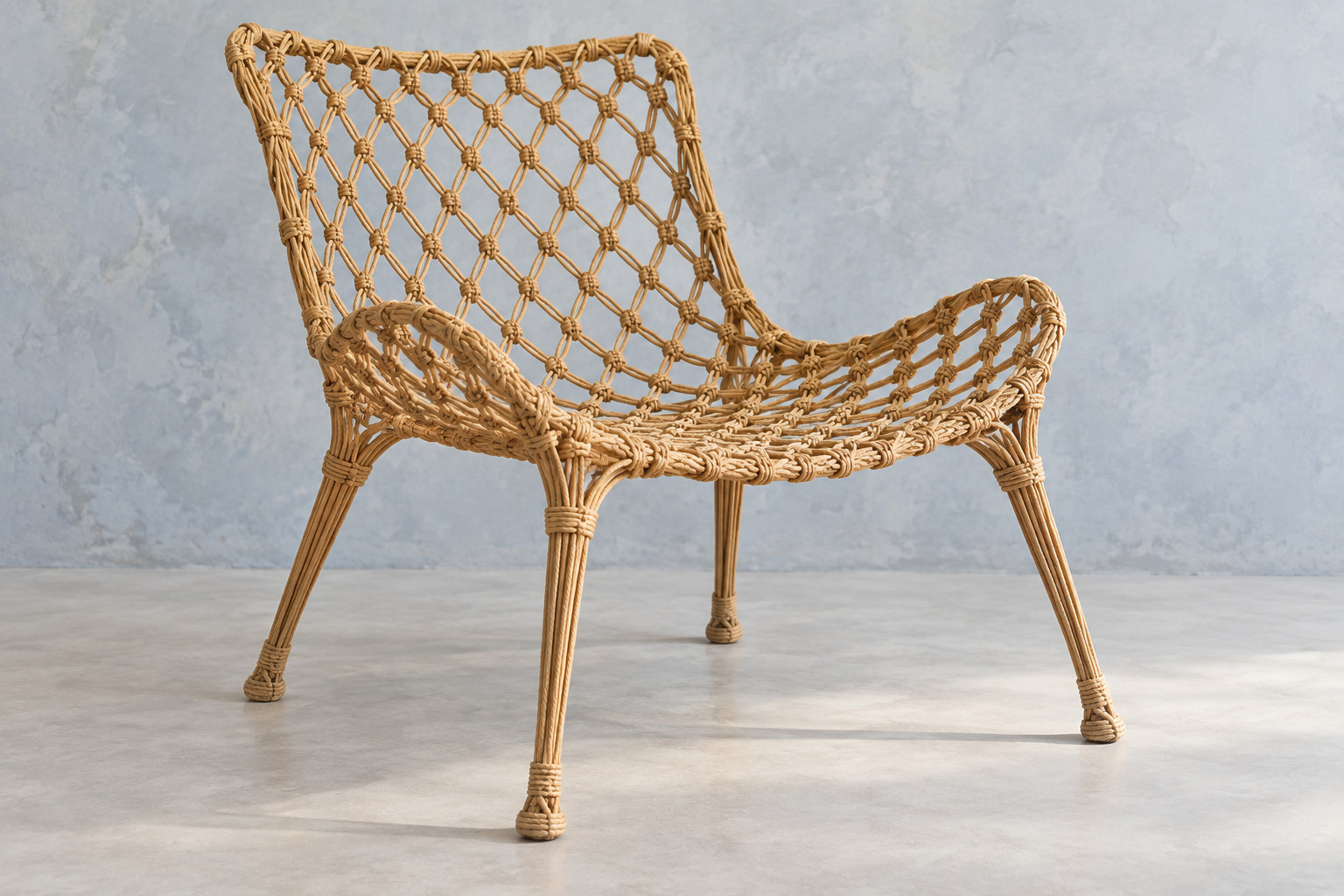
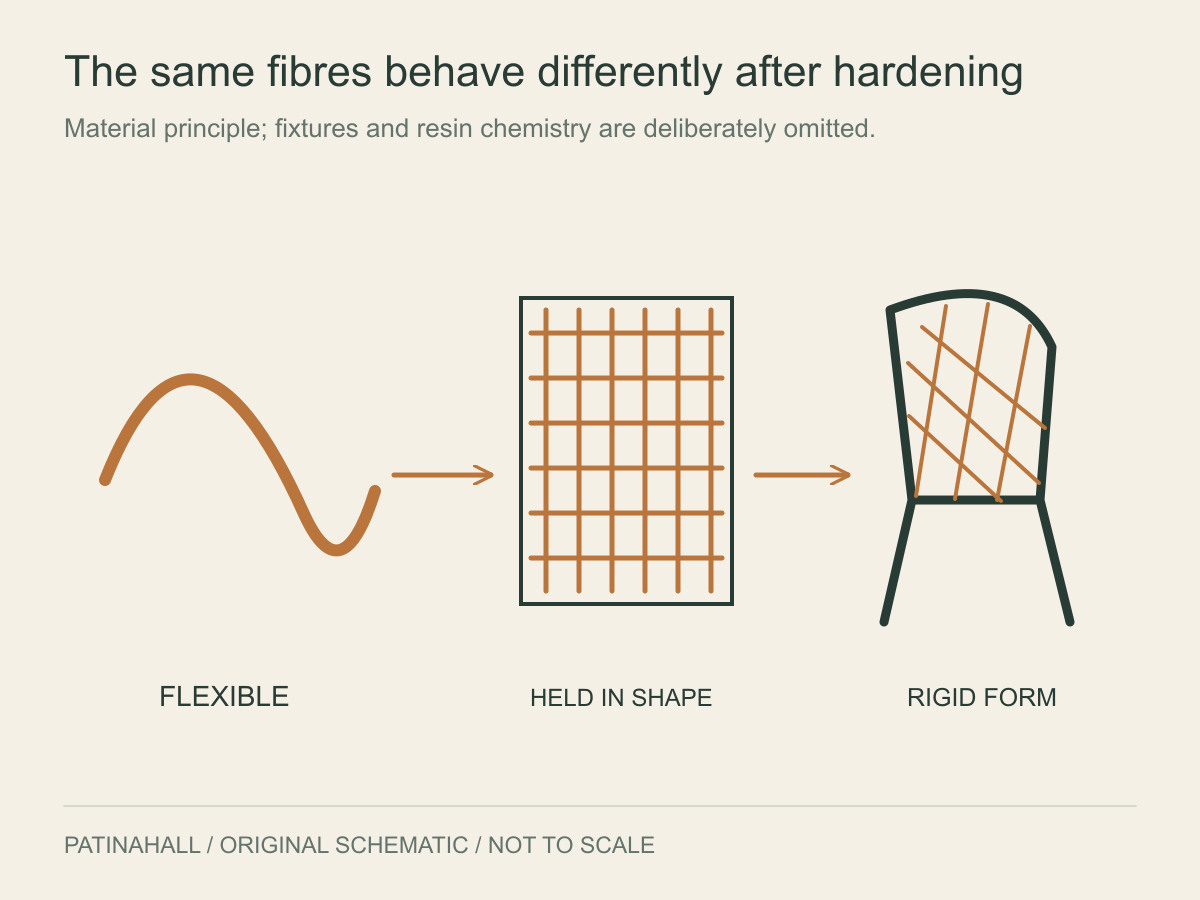
A length of cord bends easily in the hand. Arrange many lengths in a knotted net and they can span an opening, but the network still wants to move. The Knotted Chair introduces another stage: resin hardens around the fibres and fixes the assembled form.
MoMA describes a carbon-fibre core wrapped in aramid, hand-knotted and treated with epoxy. The familiar appearance of macramé meets materials associated with engineering research.1
The surprise depends on both being visible. Hide the net beneath upholstery and much of the idea disappears. Leave it open and the eye can follow the strands, wondering how such apparently pliable material remains in place.
Handwork inside a materials experiment
The project developed through the Dry Tech collaboration involving Droog and the aviation faculty at Delft University of Technology. MoMA’s 1996 exhibition documentation places the chair within that experimental context.3
Wanders’s studio describes the use of gravity while the knotted structure was held in shape and hardened. The process allowed a hanging, yielding material to contribute to a form that would later support itself.2
The knot is therefore doing more than decorating a frame. It determines how strands meet across the surface. The resin changes how that network behaves after the shaping stage.
This is a productive meeting of scales. A person can make a knot with their fingers, while the properties of the fibres and resin belong to a much wider field of material development. Neither part needs to disappear for the other to look advanced.
A chair with several dates attached
MoMA’s collection dates the design to 1995. The studio uses 1996, and the Montréal Museum of Fine Arts dates its Cappellini-produced example to that year. Contemporary exhibition notation also distinguishes stages within 1995–96.143
These records are more useful when read together than when forced into one universal date. A design can move through experiment, exhibition and manufacture before every catalogue settles on the same shorthand.
The changing context matters as well. A prototype demonstrates a possibility. A manufactured example has to preserve that possibility as an object that can be made again.
The empty spaces carry the argument
Look through the chair instead of looking only at its outline. The holes leave the material available for inspection. The seat and back seem to be drawn out of strands rather than built as solid planes.
That openness gives the design its particular tension. The eye remembers how a net behaves in the hand and has to reconcile that memory with a chair standing on the floor.
The object does not conceal the contradiction. It lets the knots remain visible, so that a simple act of making becomes the clue to an unfamiliar result.