A desk that could leave with its owner
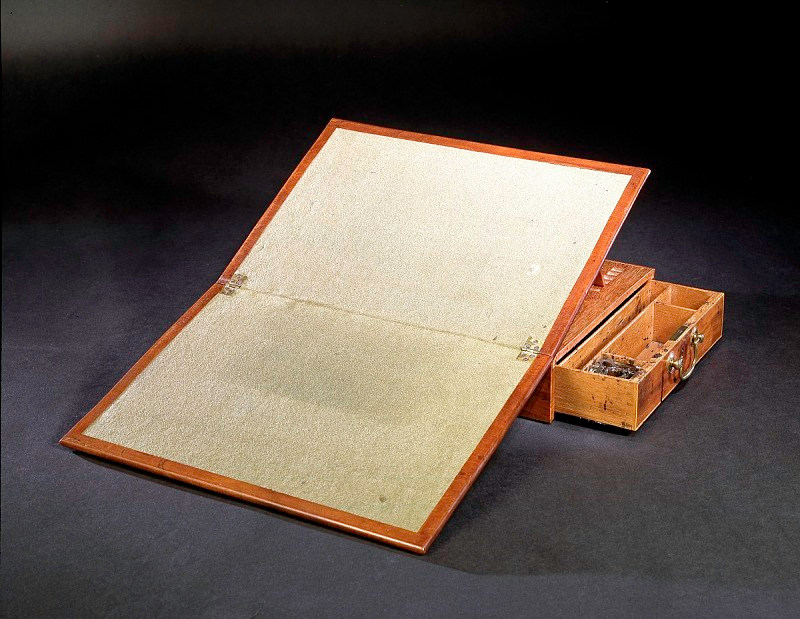
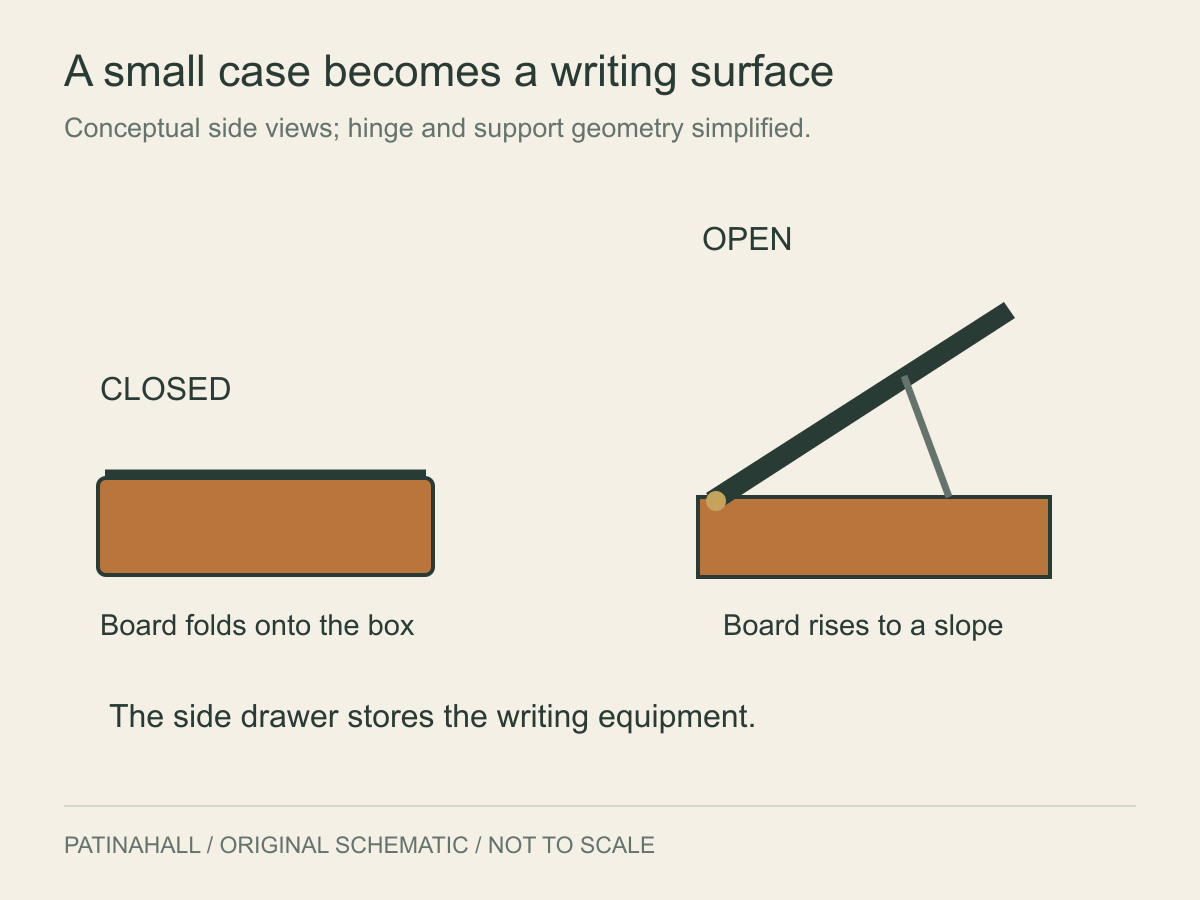
Closed, the Smithsonian’s small mahogany writing desk is roughly 37 centimetres wide and just over eight centimetres deep. It belongs to the scale of luggage and tabletop possessions. Open it and a hinged board becomes a sloping writing surface, while a locking drawer provides storage for papers and writing equipment.1
The photograph shows the pale baize-covered surface and the compact arrangement of the side compartment. The glass inkwell has a defined place; the board lifts away from the shallow wooden box. It is easy to imagine the sequence of getting ready to write, although the photograph records the surviving object rather than a recreated eighteenth-century scene.5
Thomas Jefferson designed the desk. Benjamin Randolph made it in Philadelphia, with the museum dating its manufacture to 1775–1776. Keeping both names in view matters: the person using a famous object and the craftsperson who made it are often remembered very differently.1
The first draft, not the finished monument
Jefferson used the desk while drafting the Declaration of Independence in June 1776. The National Museum of American History presents it as a working object within the process of declaring independence: a place where a document was composed before it became a national symbol.2
A small desk makes revision imaginable. There is room for a sheet, a hand and the next line. The scale brings the act of writing closer than a monumental inscription can. It also helps keep different events separate: composing a draft is not the same event as Congress adopting the text or delegates signing the final parchment.
The hinges and compartments give that work an everyday sequence: open the box, raise the board, take out the equipment, put it away afterwards. A portable desk had to contain the interruptions as well as the writing. Its usefulness continued after the famous draft was finished.
The wedding present that survived a shipwreck
Almost fifty years later, the desk took on another role. In 1825 Jefferson intended to give his granddaughter Eleanora Randolph Coolidge a different desk as a wedding present. That gift was lost at sea. He sent the old portable writing desk instead, with a letter dated 14 November explaining its history.3
The replacement was therefore both personal and deliberately historical. Jefferson recognised that an ordinary working possession could acquire value through the writing associated with it. The family later gave the desk to the United States in 1880.3
That sequence changes the way the object reads. It began as equipment, became a family gift and entered a public collection with its importance already described. Its afterlife was helped along by a label of sorts written by its former owner.
A symbol with an unresolved contradiction
The Smithsonian has also placed the desk within an exhibition about slavery at Monticello, alongside the histories of enslaved families. Jefferson’s authorship of a declaration of equality and his participation in enslavement belong to the same historical account.4
The object cannot reconcile that contradiction. Keeping it visible, however, prevents the desk from becoming only a polished emblem detached from the world in which it was used.
Its smallness remains striking. A hinged board, a drawer and a portable box carried a piece of everyday work into an extraordinarily long public life. Looking closely restores the tool inside the symbol, and Randolph’s workmanship alongside the better-known name.
