Design story

POÄNG: a wooden frame that gives a little

POÄNG’s familiar movement begins in its wooden frame. The seat is carried by a bent support that gives slightly under the sitter, while the cushion remains a separate, changeable part of the chair.

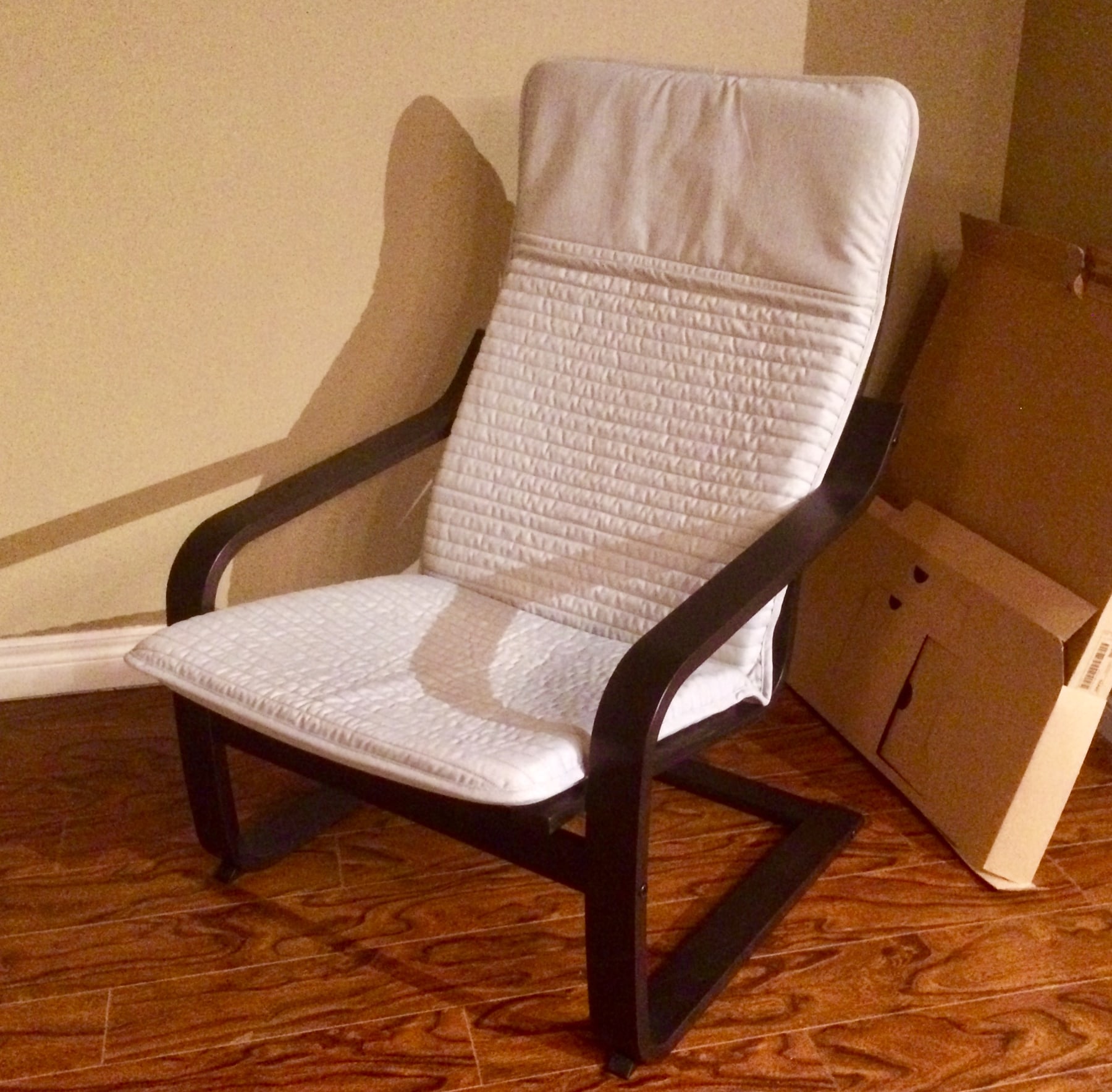
A POÄNG armchair with a dark curved wooden frame and beige cushion, its open side revealing the cantilever support.
A POÄNG in Knisa Beige. The side opening makes the path from the floor runners to the seat and back easy to follow. Paulo O, CC BY 2.0. Resized; metadata removed. Source: POÄNG in “Knisa Beige” (45144076894).
On this page
Key facts & takeaways

At a glance

Subject
IKEA POEM and POÄNG chairs
Entry
Design story
Last reviewed
6 September 2026

Three things to remember

  1. POEM is the earlier name in the POÄNG family story.
  2. The bent frame contributes movement; the cushion supplies a different kind of softness.
  3. Changes in names, cushions and later variants belong to the history rather than one frozen specification.

The softness starts before the cushion

Sit beside a POÄNG and its profile tells much of the story. The wooden support travels down from the seat, curves towards the floor and returns beneath it. The back of the seat is not held up by an ordinary pair of rear legs. The frame participates in the chair’s movement.

In IKEA Museum’s portrait, Noboru Nakamura describes the U-shaped cantilever and the resilience of moulded plywood. A chair can therefore feel yielding even before thick upholstery enters the picture. The cushion softens contact with the body; the frame supplies another, quite different response.2
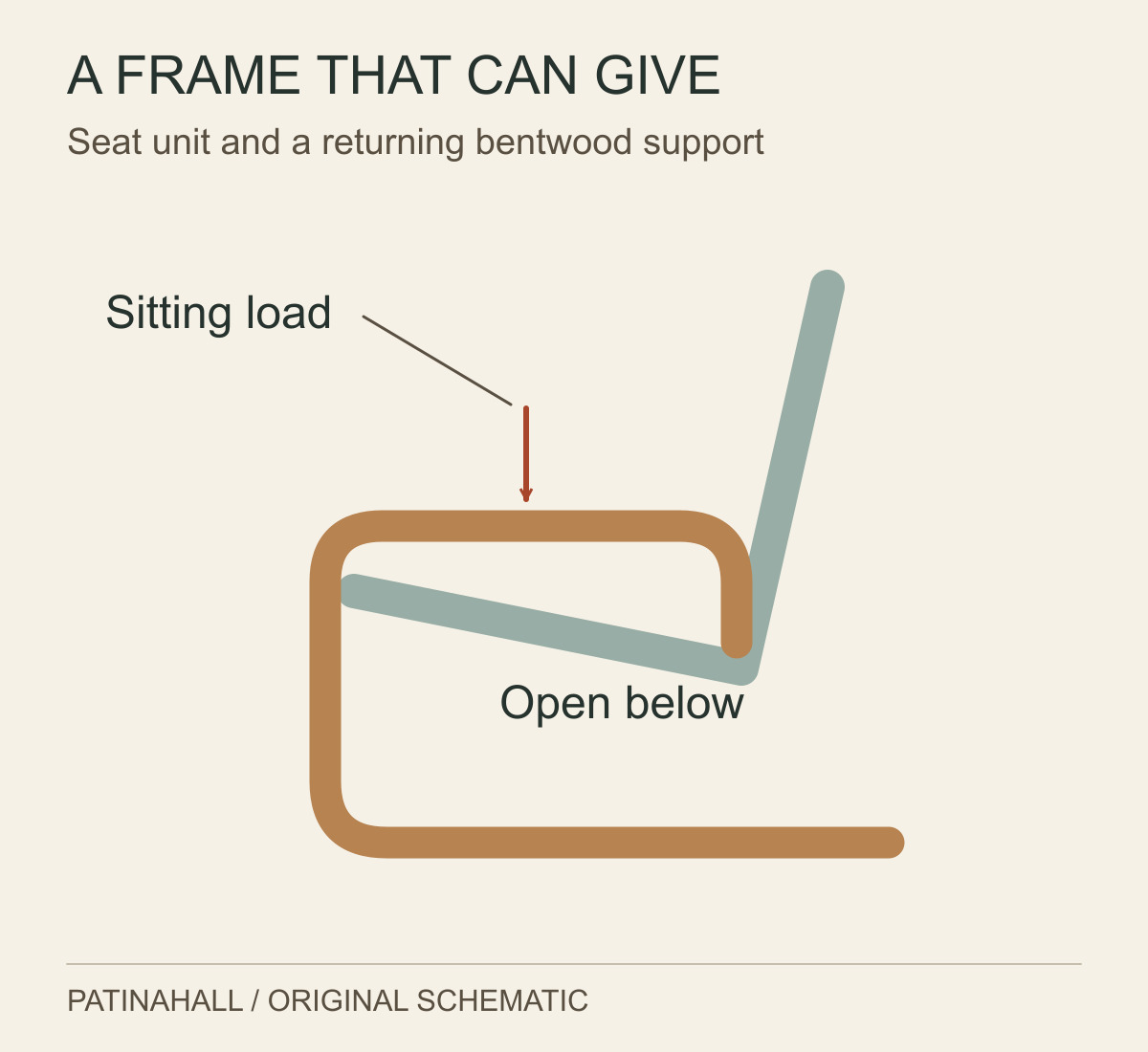
A simplified side profile shows a curved wooden support returning along the floor beneath a padded seat, with an arrow for the sitting load.
POÄNG’s bent support contributes resilience beneath the cushion. This single-side abstraction omits cross-members and does not predict movement or load capacity. Original PatinaHall schematic, not to scale.

Before POÄNG there was POEM

The chair began as POEM in 1976. Nakamura had worked with Lars Engman on the project, drawing on an interest in Scandinavian furniture and ways of making a comfortable chair with relatively little material. The museum places the familiar 1977 catalogue cover in the catalogue released during 1976.1

Its account also supplies a wonderfully practical detail: frames, cushions and seat units came from different factories, and the chair reached customers in three parcels. The object people experienced as one armchair was organised as separate parts long before it occupied a sitting room.1

That distinction is visible in the finished design. The soft surface does not hide the whole structure. You can follow the wooden edge around the cushion and understand that each belongs to a different part of the assembly.

The wooden spring

The current birch-veneer frame uses layer-glued bent birch, which IKEA describes as resilient. Building up thin wood layers allows a curved structural member to have a shape that would be very different to cut from a straight plank.3

The long return along the floor matters to the visual reading. It makes the chair seem to reach forward and then fold back beneath itself. Seen from the side, there is open space where a conventional rear leg might have been. The effect is light without requiring the sitter to balance on an apparently fragile point.

Separating the cushion also changes the appearance of ownership. Fabric colour and texture can dominate the front view, while the wooden profile remains recognisable from the side. Two chairs can share the frame’s essential idea and still feel different in the same room.
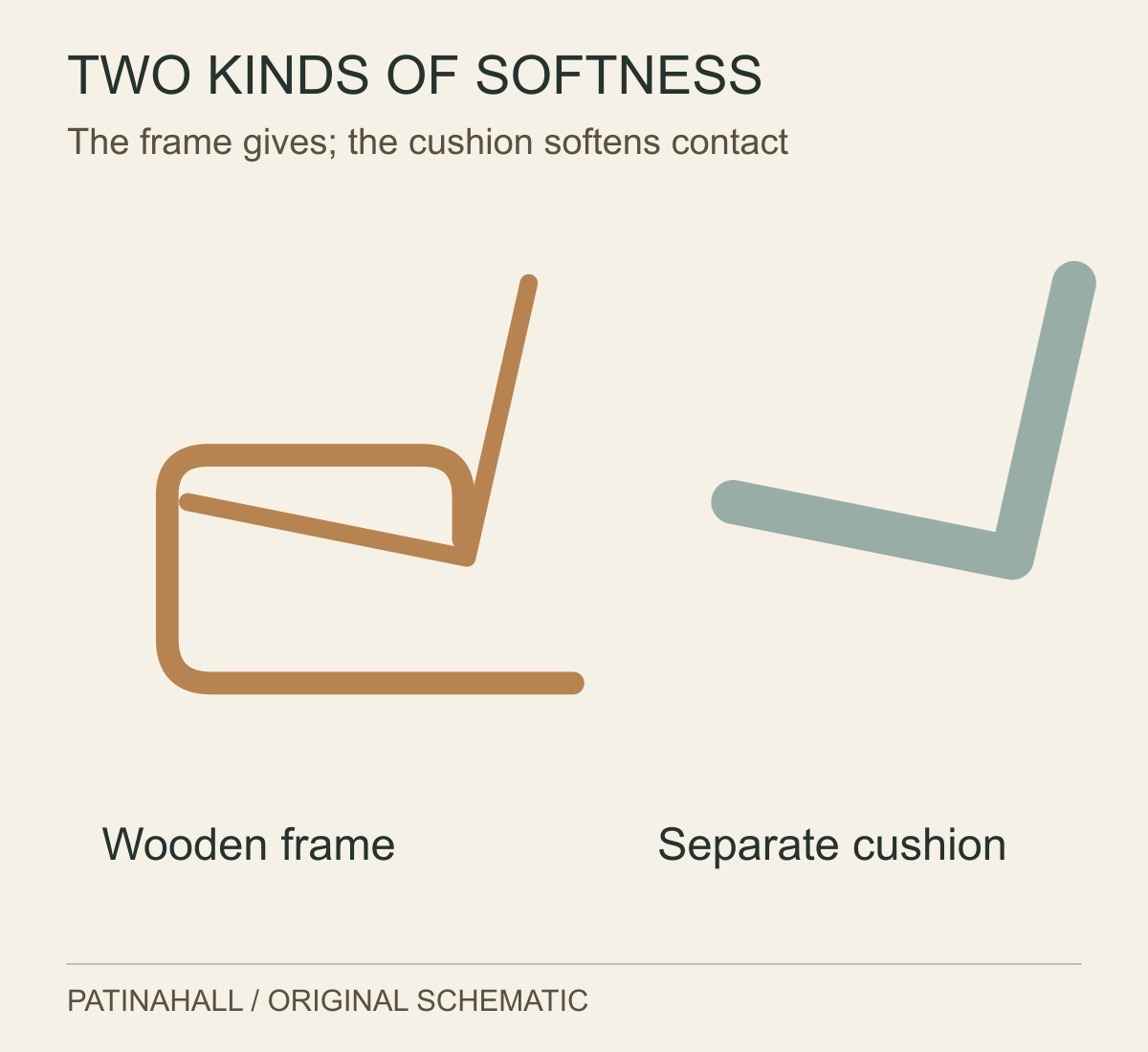
A wooden support is separated from a curved blue cushion shape to distinguish structural resilience from padding at the body.
The frame and cushion perform separate jobs. The exploded view is conceptual and does not show fasteners, cover patterns or interchangeable parts. Original PatinaHall schematic, not to scale.

A familiar name with a changing body

The museum dates the modernised POÄNG name to 1991. Nakamura’s later work also included a lower-backed version, eventually introduced in IKEA’s Nytillverkad collection. The family continued to change rather than treating the first version as untouchable.12

The lasting attraction is easy to bring back to the object. Look past the fabric and follow the curve of the support. A surprisingly large part of the chair’s identity is contained in that one travelling line: down, around and back under the person it carries.

Research notesEvidence, connections and limits

The museum’s product story and Nakamura portrait establish the design account; the current frame page describes bent birch construction. The diagrams explain a principle, not measured deflection, repair methods or the age and compatibility of individual frames.

Evidence map

Connected subjects and evidence

Reviewed connections

  • IKEA POEM and POÄNG chairsdesigned byNoboru Nakamuradocumented

    IKEA Museum documents Noboru Nakamura in the designed by role for IKEA POEM and POÄNG chairs. This relation describes the design family, not the origin of an individual secondhand object.

    Reviewed 6 September 2026 by PatinaHall editorial.
    • Source 1Design, material or production account; scope described in the evidence note
  • IKEA POEM and POÄNG chairsmanufactured byIKEAdocumented

    IKEA Museum documents IKEA in the manufactured by role for IKEA POEM and POÄNG chairs. This relation describes the design family, not the origin of an individual secondhand object.

    Reviewed 6 September 2026 by PatinaHall editorial.
    • Source 1Design, material or production account; scope described in the evidence note

Research trail

Sources and further reading

  1. POEM armchair: museum product storyIKEA MuseumAccessed 6 September 2026
  2. Noboru Nakamura: designer portraitIKEA MuseumAccessed 6 September 2026
  3. POÄNG armchair frame, birch veneerIKEAAccessed 6 September 2026
  4. POÄNG in “Knisa Beige” (45144076894).jpgWikimedia CommonsAccessed 6 September 2026

Last reviewed 6 September 2026. Found an error or a stronger primary source? Contact PatinaHall.