.jpg)
A leaf beside the sofa
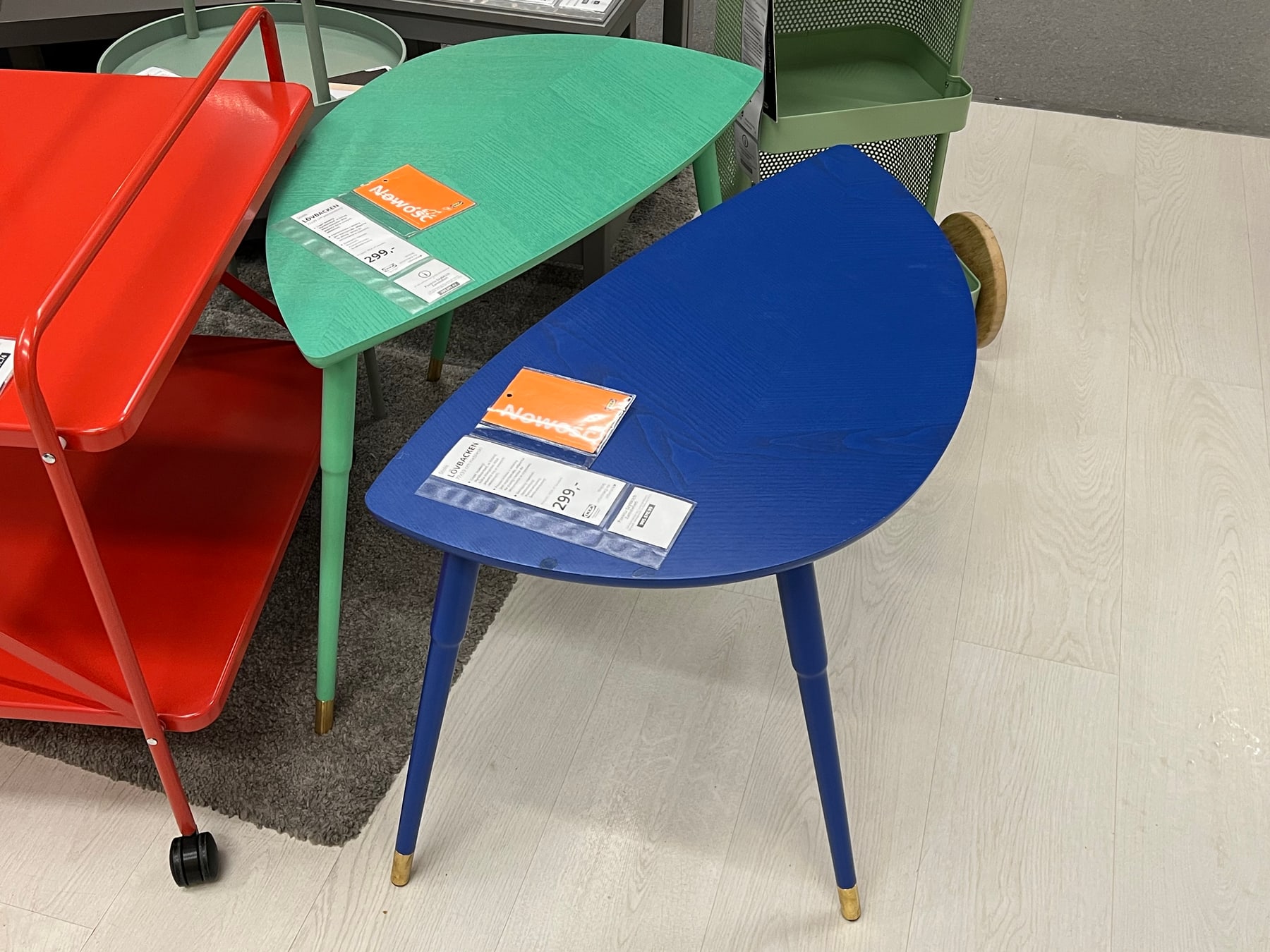
A small side table spends much of its life in the gaps: beside an armchair, between two seats, or just beyond the reach of a coffee cup. LÖVET’s leaf-like top gives that supporting role an unusually distinct outline. A narrow end points into the room; the fuller end offers somewhere to put things.
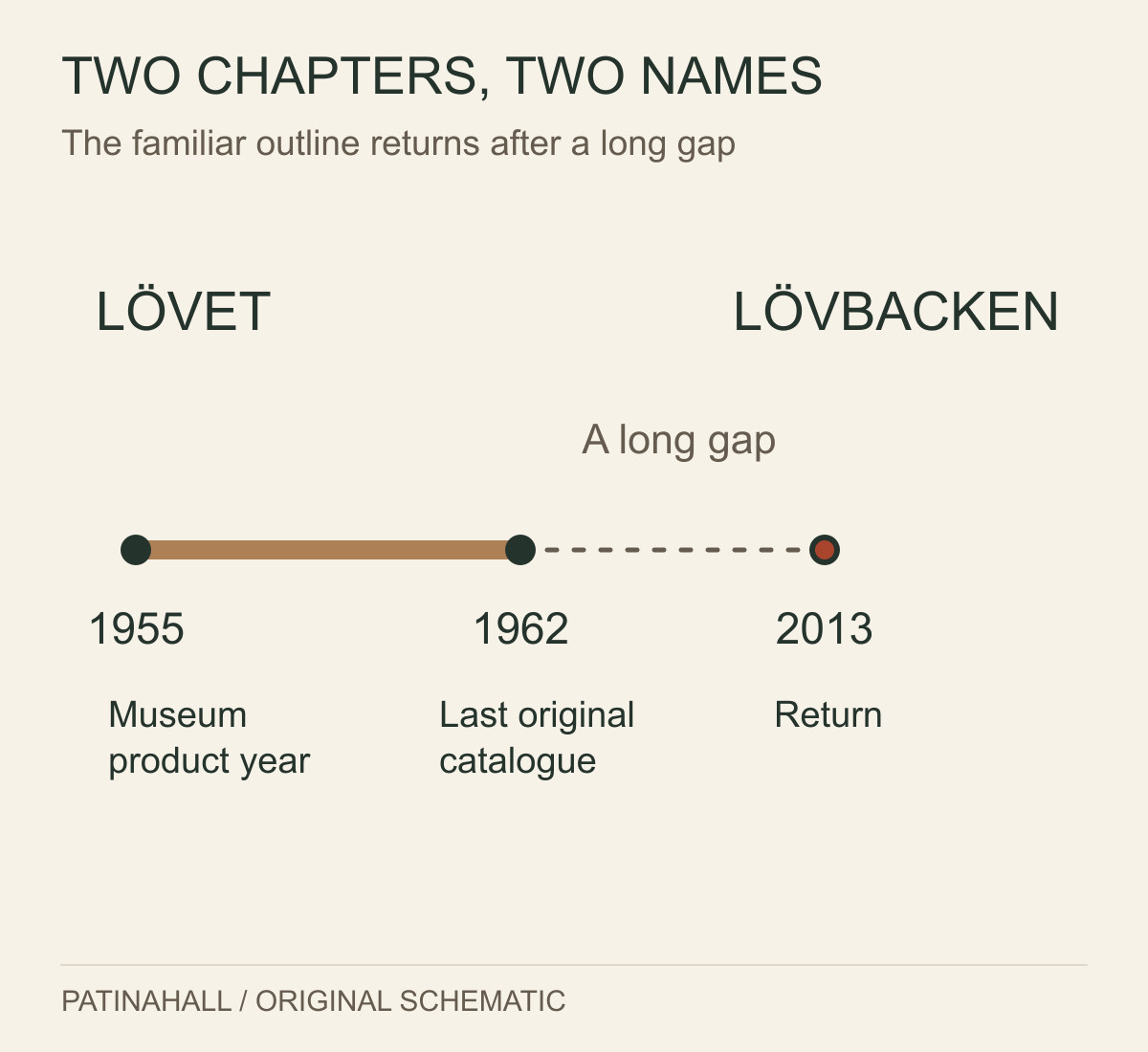
IKEA Museum records LÖVET as a 1955 design, appearing in the 1956 catalogue. The original combined a jacaranda top with brass-covered feet. Its catalogue life ended in 1962.1
Those dates explain only the first chapter. The familiar LÖVBACKEN seen in more recent homes belongs to a later return of the idea.
The return began with an old table
In 2013, an IKEA development team revisited the design. According to the museum, the original drawings could not be found. An actual table in the company’s historical collection became the reference: the team checked its outline and weight and used its legs to prepare the new version. Jacaranda gave way to other timber, and the name became LÖVBACKEN.1
It is an appealing reversal of the usual furniture story. A drawing normally tells a workshop what to make. Here, a surviving piece helped the workshop recover information that the drawing would have held.
Reissuing a modest object still involves decisions. Which curves make it recognisable? How much of its character lives in the grain, the edge or the contrast between dark legs and bright tips? A small table gives those choices very little room to hide.
Three legs and a light footprint
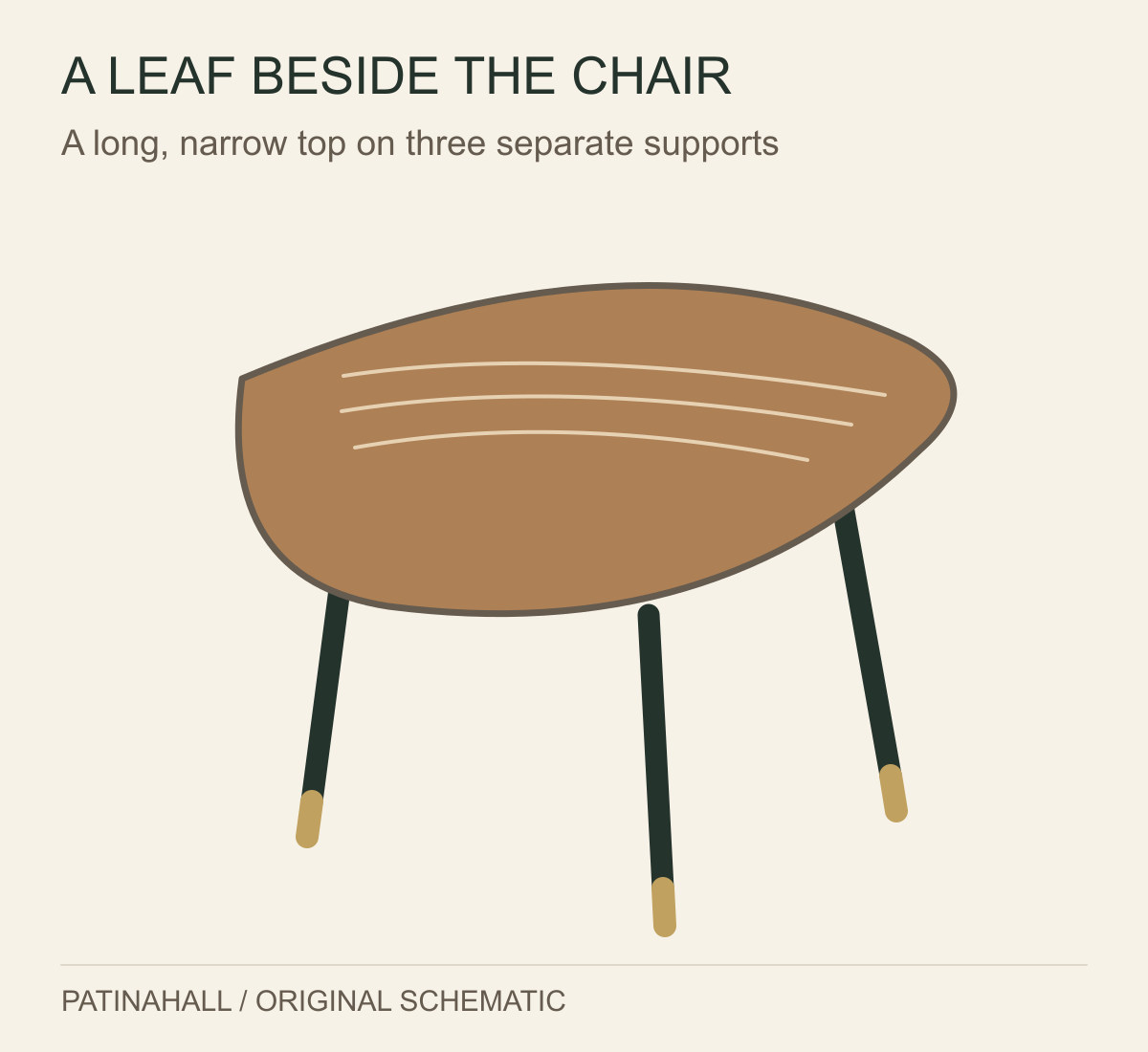
The current LÖVBACKEN listing retains the three-legged form and brass-coloured feet. At 77 by 39 centimetres across the top, the reviewed version occupies a long, relatively narrow patch of floor. Its materials schedule describes a veneered board top and solid beech legs.2
Look at how the supports relate to the top. The three feet make individual points of contact, leaving open space between them. The tapering outline keeps the table from reading as a small rectangular desk. It is a useful example of furniture gaining personality through proportions and spacing rather than applied decoration.
More than a flatpack legend
LÖVET also sits inside a frequently simplified IKEA origin story. The museum makes a helpful correction: the DELFI, KÖKSA and RIGA tables were already offered for self-assembly in the 1953 catalogue.1
The table needs no claim to have invented flatpack furniture to remain interesting. Its stronger story is continuity across an interruption: a recognisable domestic shape recovered from an old example, made again under changed material conditions, and returned to the unceremonious job of keeping something beside a chair. A recent LÖVBACKEN can participate in that history while being a recent table.