Design story

LACK: the little table with a door inside it

LACK looks like a solid little block standing on four square legs. Its lightness tells another story: the tabletop uses a construction idea associated with doors, putting material around an interior core.

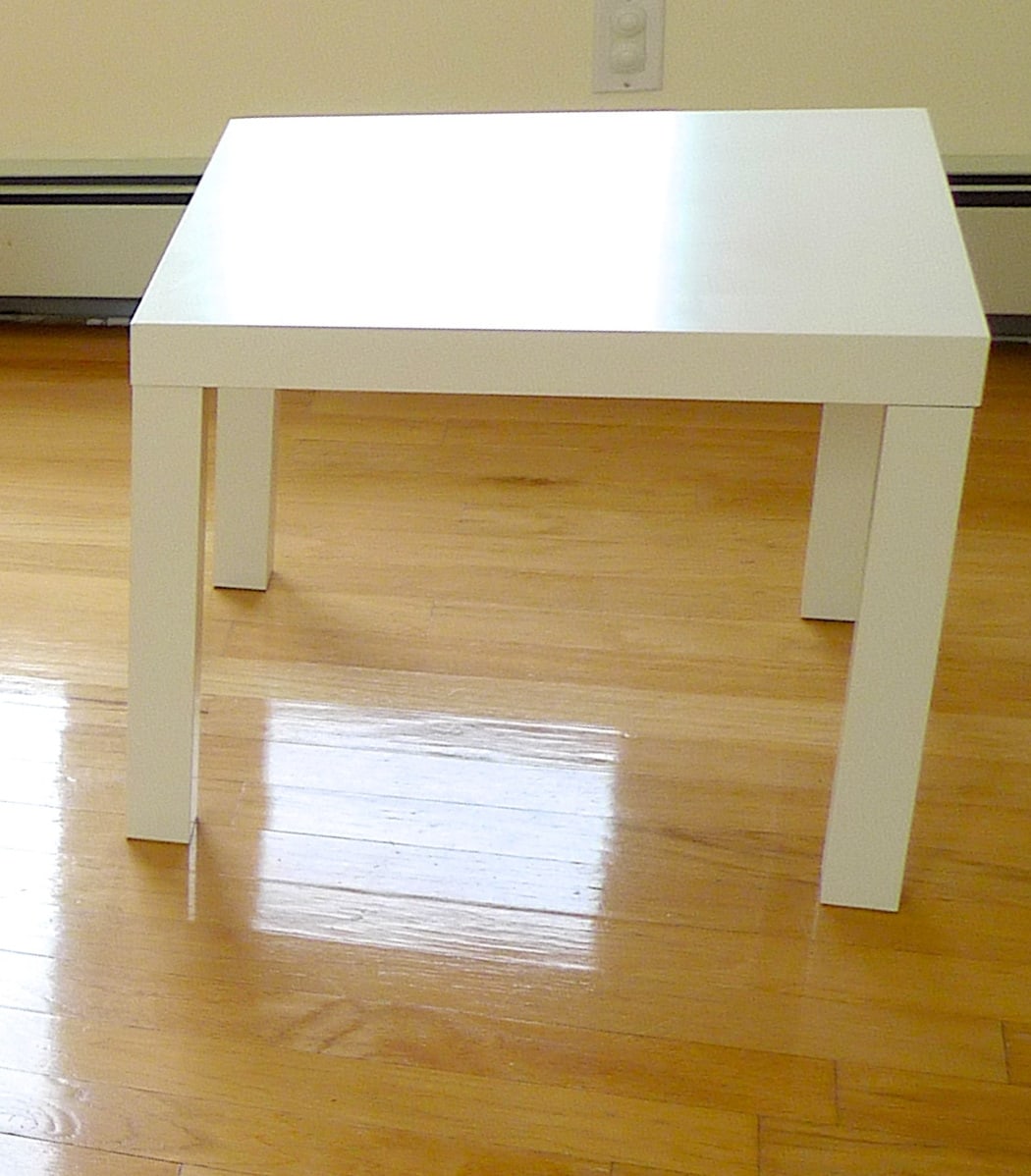
A white square LACK side table with four thick rectangular legs beneath a similarly thick top.
LACK’s broad top and square legs look substantial; the diagram below explains the lighter construction hidden by that outline. Juhan Sonin, CC BY 3.0. JPEG re-encoded; metadata removed. Source: IKEA Lack.
On this page
Key facts & takeaways

At a glance

Subject
IKEA LACK side table
Entry
Design story
Last reviewed
6 September 2026

Three things to remember

  1. The thick outline does not mean the tabletop is a solid block of timber.
  2. LACK’s development connected furniture design with experience from door manufacture.
  3. A historical construction idea and a current material specification describe different stages of the product.

A surprisingly light square

LACK is almost a child’s drawing of a table: one square on four straight legs. The top has enough thickness to read as a substantial slab, yet the object is conspicuously easy to imagine moving around a room. Its visual bulk and material mass are doing different things.

That difference is central to the design. IKEA Museum describes an early particleboard prototype that was too heavy, followed by a change to board-on-frame construction using experience from interior-door manufacture. The solution was to reconsider what needed to be inside the apparent volume.1
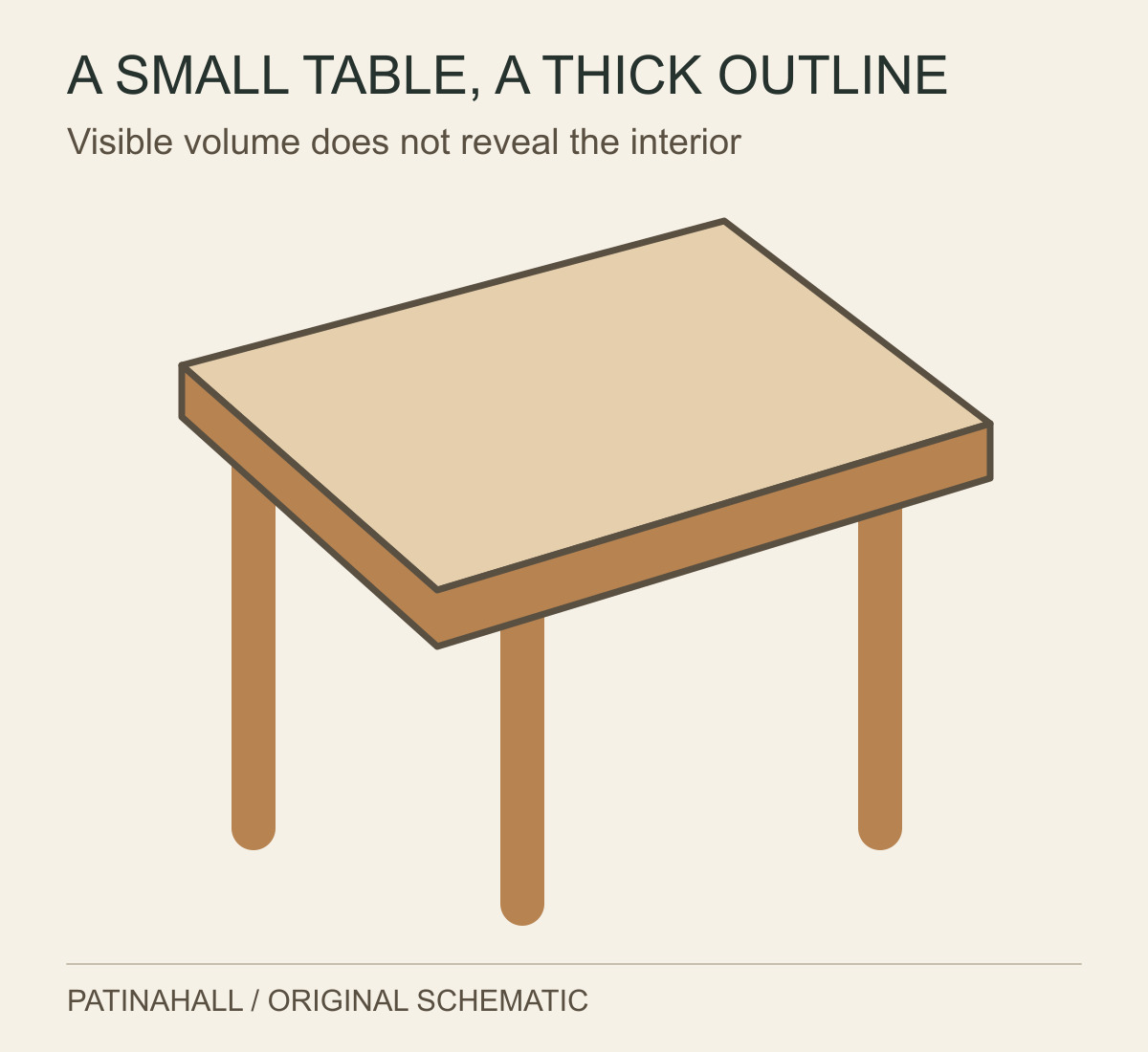
An oblique schematic of a square side table emphasises its thick top and straight square legs.
LACK’s plain square outline suggests a substantial volume; the drawing isolates that appearance and omits exact joints and the fourth, obscured leg. Original PatinaHall schematic, not to scale.

The route from colour to construction

The museum places a product entry on 18 May 1979 and LACK’s catalogue appearance in 1981. Its account begins with product coordinator Vivianne Sjölin’s wish for a small, colourful table and continues through development work by Jan Hellzén and Tomas Paulsson.1

A separate museum history places Sjölin’s work within a wider effort to bring coordinated colours and textiles into IKEA’s rooms. That context helps explain why such a simple table could be useful. It supplied a clear patch of colour and an easily understood shape among busier fabrics and other furnishings.3

The production problem was just as important as the visual one. A compact table intended to be moved and sold in quantity could not be judged only by a pleasing drawing. The weight of the first physical version forced a different answer beneath the same broad outline.

A thick top without a solid block

For today’s white LACK, IKEA lists a tabletop combining particleboard, fibreboard and a honeycomb paper filling, with surface finishes and edging. The interior paper structure occupies space between the surrounding components. The visible depth of the top therefore should not be read as the thickness of a solid wooden board.2

Think of the top as an enclosed volume: outside faces, an edge and a cellular interior. Enclosing that space and filling all of it with dense material are different design decisions. The outer appearance alone cannot tell you which decision the manufacturer has made.

This changes how the table looks once you know it. The plain square is no longer simply a lack of decoration. It is a shape that works with a particular way of making a light panel. What seems visually simple depends on choices the finished surface keeps hidden.
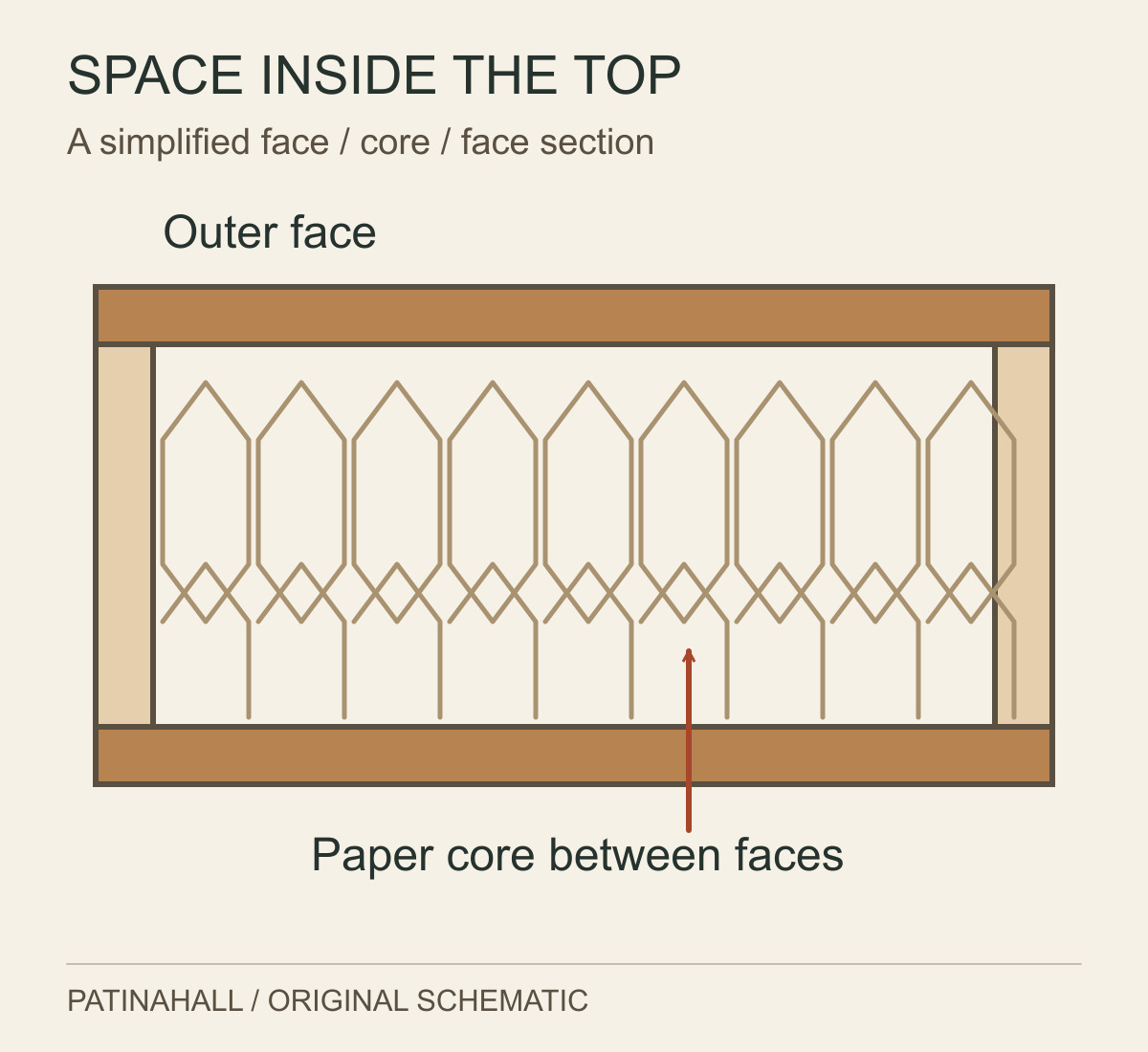
Two outer faces and perimeter edges enclose a conceptual honeycomb paper core, showing how a thick panel need not be a solid block.
A cellular filling occupies the space between surrounding faces in the current LACK top. Layer thicknesses and internal cell geometry are illustrative, not a cutaway of an acquired table. Original PatinaHall schematic, not to scale.

Small enough to follow the activity

A side table earns its place through ordinary changes in a day. It can stand beside a chair, carry a book near a sofa or move closer when somebody needs somewhere to put a cup. These are small tasks, but they give lightness a practical purpose.

LACK’s history makes those unremarkable movements interesting. The useful object is not produced by piling up material until it looks sturdy. Here, experience from making doors helped turn an apparently chunky square into something that could follow the activity of a room.

Research notesEvidence, connections and limits

The museum supplies the development narrative; the current white-table specification documents its material layers. The schematic does not reveal every internal component, specify the legs’ construction or establish load capacity, repairability or suitability for standing on the table.

Evidence map

Connected subjects and evidence

Reviewed connections

  • IKEA LACK side tablemanufactured byIKEAdocumented

    IKEA Museum documents IKEA in the manufactured by role for IKEA LACK side table. This relation describes the design family, not the origin of an individual secondhand object.

    Reviewed 6 September 2026 by PatinaHall editorial.
    • Source 1Design, material or production account; scope described in the evidence note
  • IKEA LACK side tableuses techniqueBoard-on-frame constructiondocumented

    IKEA Museum documents Board-on-frame construction in this design’s construction. The relation is scoped to the source specification; it does not assign a sole designer or date an individual object.

    Reviewed 6 September 2026 by PatinaHall editorial.
    • Source 1Design, material or production account; scope described in the evidence note

Research trail

Sources and further reading

  1. LACK side table: museum product storyIKEA MuseumAccessed 6 September 2026
  2. LACK side table, white, 55 × 55 cmIKEAAccessed 6 September 2026
  3. Spinning new yarns: product development and textilesIKEA MuseumAccessed 6 September 2026
  4. IKEA Lack.jpgWikimedia CommonsAccessed 6 September 2026

Last reviewed 6 September 2026. Found an error or a stronger primary source? Contact PatinaHall.