
The part that goes in the wash
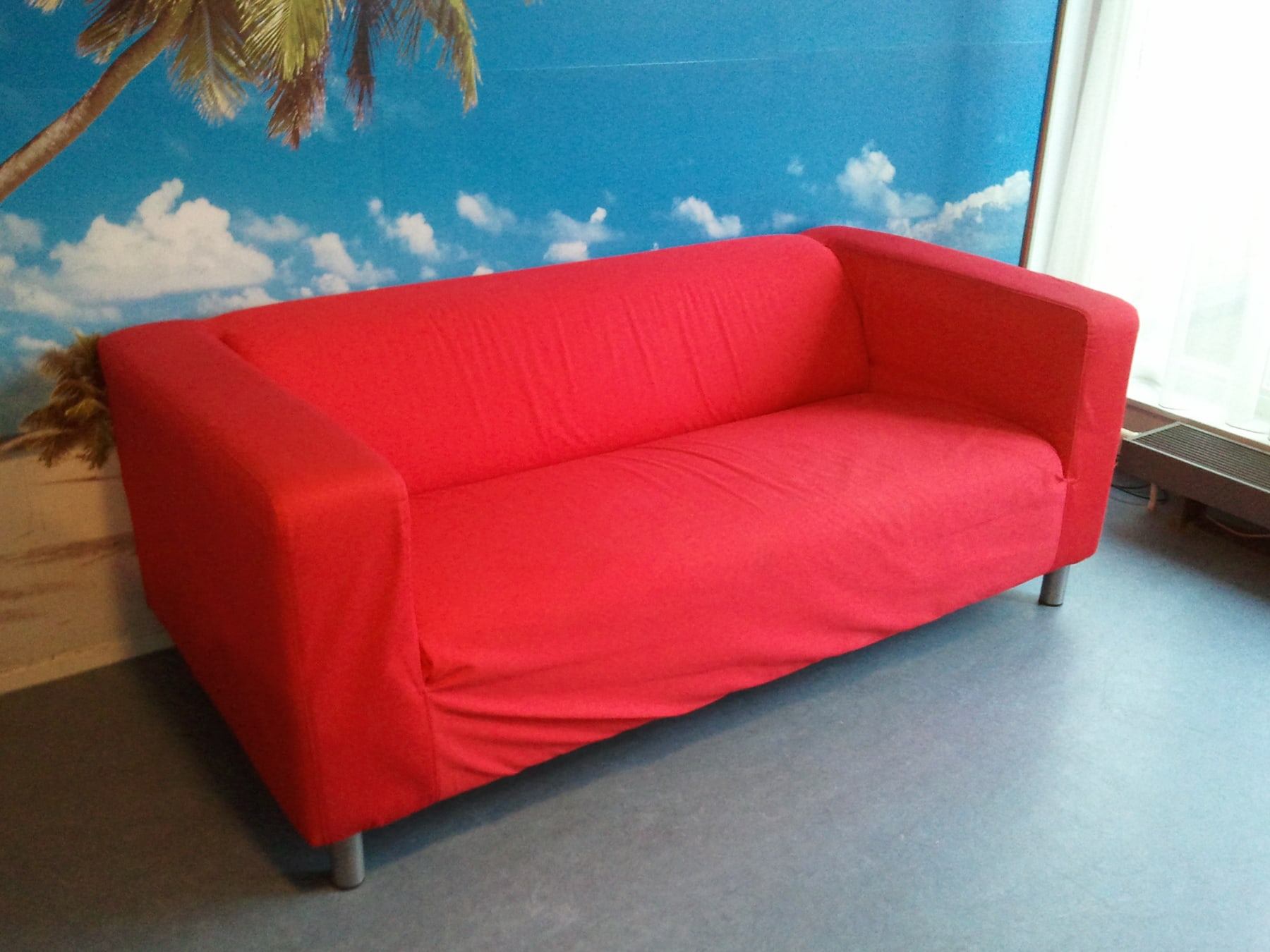
The cleverest part of KLIPPAN may be the part you put in the laundry basket. A sofa has several lives running at once: its supporting frame, its cushioning and the fabric everyone touches. Giving that last layer an independent life changes what happens after a spill, a move or a change of taste.
IKEA Museum dates Noboru Nakamura’s KLIPPAN to 1979, followed by an appearance in the 1980 catalogue. Its development story begins with product developer Lars Engman’s experience of children wearing out expensive sofas. The brief combined a modest price, soft edges and a cover that could come off.1
That is a refreshingly domestic starting point. The design problem begins at the point where a beautiful new sofa meets the people who actually live with it.
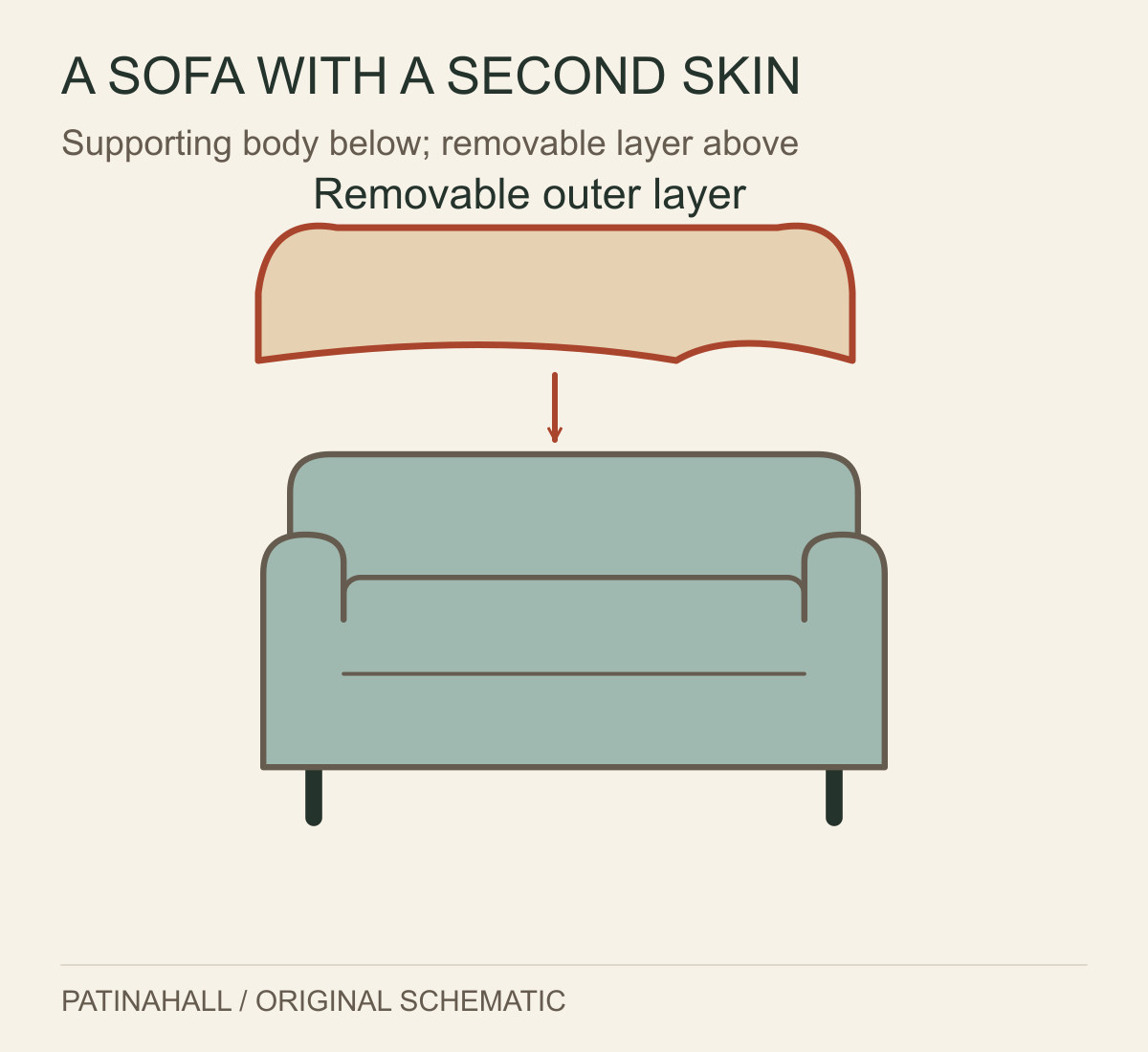
A sofa and its second skin
Nakamura simplified his earlier LAPPMON design. The museum connects KLIPPAN’s dimensions to the width of available fabric rolls and the need for the finished cover to fit a household washing machine. Fabric supply and laundry capacity helped shape the furniture.1
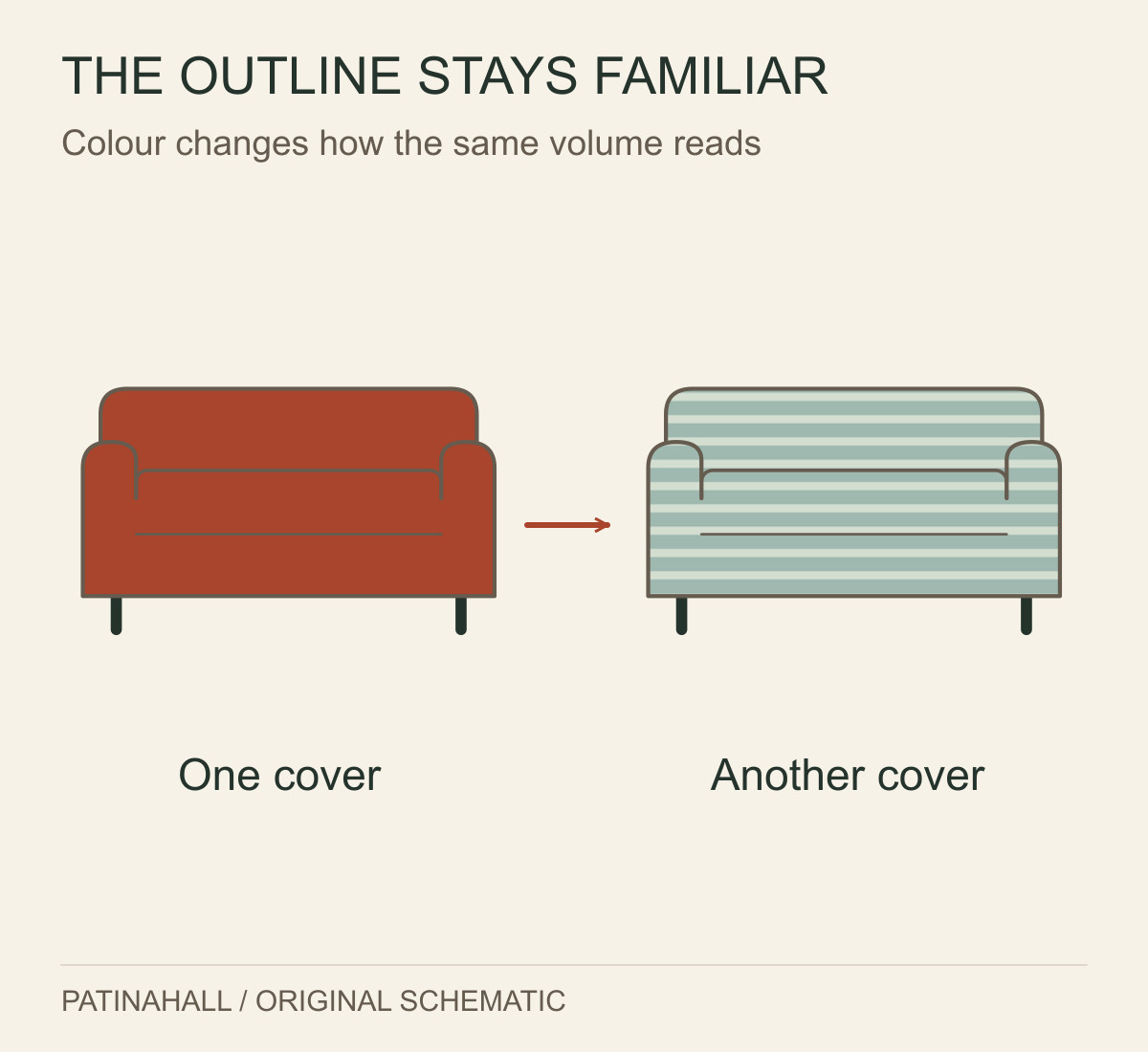
Look at the resulting outline: a broad back, enclosed arms and a seat collected into one compact form. A cover can read as a continuous surface across that shape. Change its colour or pattern and the same volume acquires a different presence in the room.
There is a useful distinction here between a sofa looking tired and all its parts reaching the end of their lives together. A separate skin gives the owner another possible response to the first problem.
The same name, different packages
The 2018 IKEA buying guide shows how the idea continued to develop. Its fabric version came with an unassembled frame, making the package easier to transport; a coated-fabric version arrived assembled. Many covers were sold separately. Even within one guide, KLIPPAN meant more than one combination of frame, surface and packaging.2
That makes the model’s long life more interesting than an unchanged silhouette suggests. A recognisable sofa can accommodate changes in how it is made, carried home and covered. What appears stable from across a room may conceal substantial work on the less photogenic details.
A familiar shape for another household
The current Vissle version still has a removable, machine-washable cover. IKEA also lists its frame materials and metal seat springs, making the distinction between outer fabric and supporting structure quite literal.3
For someone encountering a used KLIPPAN, this is the history worth carrying away. Its simplicity leaves room for the household to supply the colour, pattern and ordinary wear. The sofa’s identity sits in a modest, repeatable shape; the layer closest to daily life was given permission to change.