The line is doing work
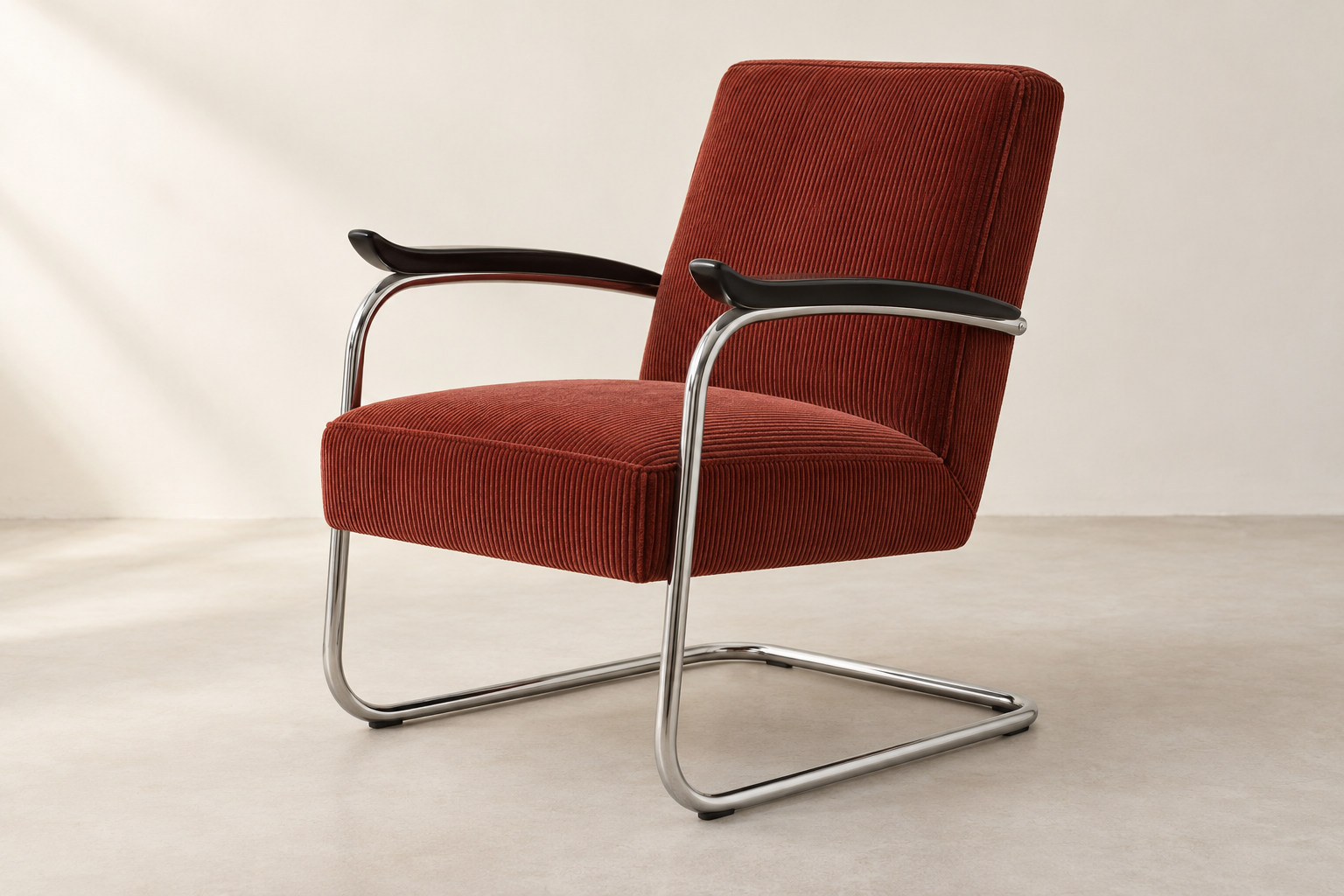
Gispen 412 is recognisable by an open line of metal around substantial upholstered surfaces. Its tubular frame gives the chair an outline and a capacity to yield. The sitter encounters softness in the covering and movement in a support that remains visibly slender.
Museum Boijmans Van Beuningen identifies Willem Hendrik Gispen as the designer of its 1934 example. Its materials include nickel-plated steel tube, corduroy and Bakelite: a combination of metal, textile and moulded plastic rather than one uniform industrial surface.1
A long arm changes the outline
Follow an armrest towards its front. The long dark surface gives the hand a place to settle and extends the line beyond the upholstered seat. Mijn Gelderland draws attention to its raised end, a small expressive departure within an otherwise spare construction.2
The contrast is easy to miss when the whole chair is described only as functional. The arm is a useful component with an identifiable shape. Its length connects the upright back to the lower seat while the dark material distinguishes it from the reflective tubing below.
Movement without a separate rocking base
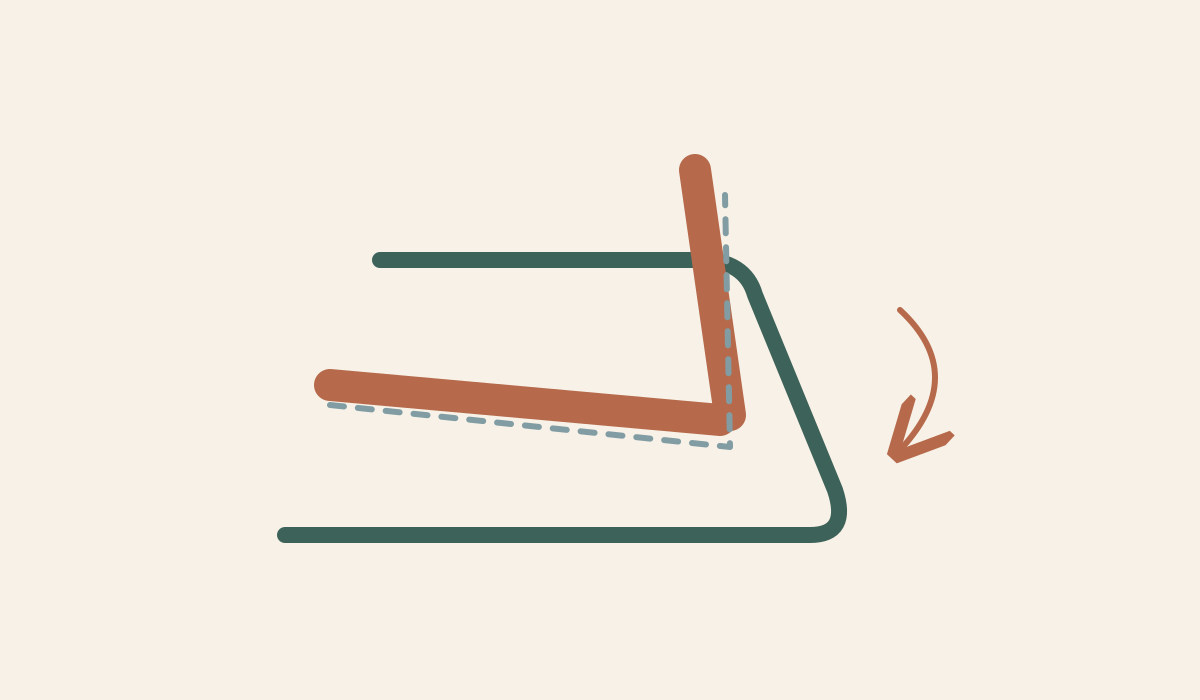
The support's route matters. Instead of presenting four independent upright legs beneath a seat, the tubular construction carries loads through bends and longer runs. The open space is part of how the chair is perceived, while the continuous frame contributes to its response under use.
The later Dutch Originals specification describes a controlled tilting action and lists different armrest options. It is evidence for that manufacturer's version, rather than a universal material list for every chair bearing the model number.3
No drawing of the outline can establish the condition of an old tube or connection. The historical question here is how the arrangement works as a design idea, not whether a particular chair can still carry a particular load.
The factory enters the living room
Mijn Gelderland connects the introduction of the design with Gispen's move to Culemborg in 1934 and the growth of a business producing lighting and tubular furniture in series.2
An industrial process did not remove the need to make a chair convincing in a domestic room. The textile, the long armrests and the open frame each help explain that negotiation. A viewer can recognise comfort without losing sight of the manufactured parts. The chair's particular achievement is visible in the relationship between them.