A surface that also has to stand up
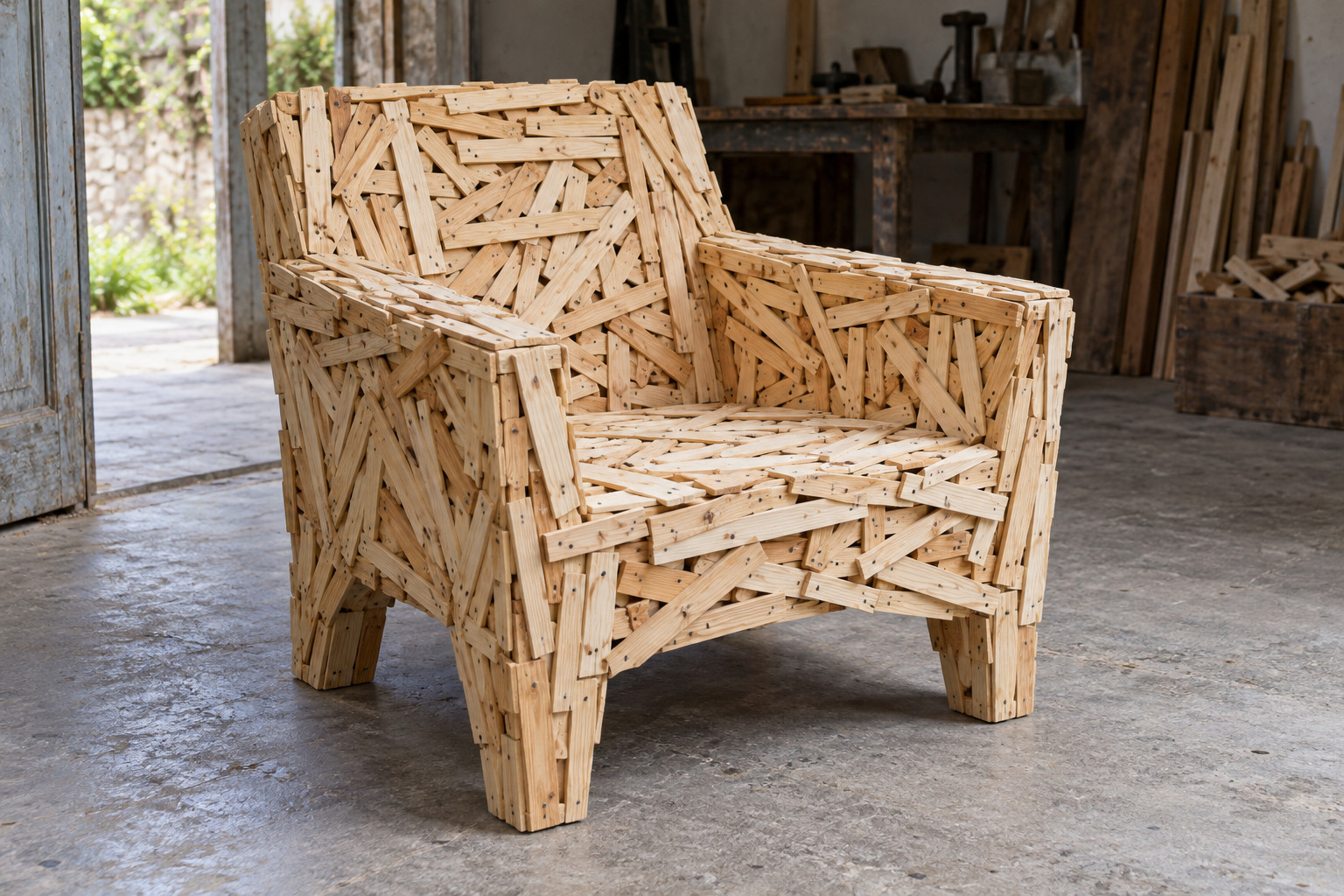
On many chairs, an irregular decorative surface is attached to a more predictable frame. Favela makes that separation difficult. The accumulation of strips is what establishes the legs, seat, arms and back.
The Met records its materials succinctly as wood, nails and glue, and credits both Fernando and Humberto Campana. Looking at the chair through that short list helps redirect attention from its exuberant silhouette to the places where one piece meets another.1
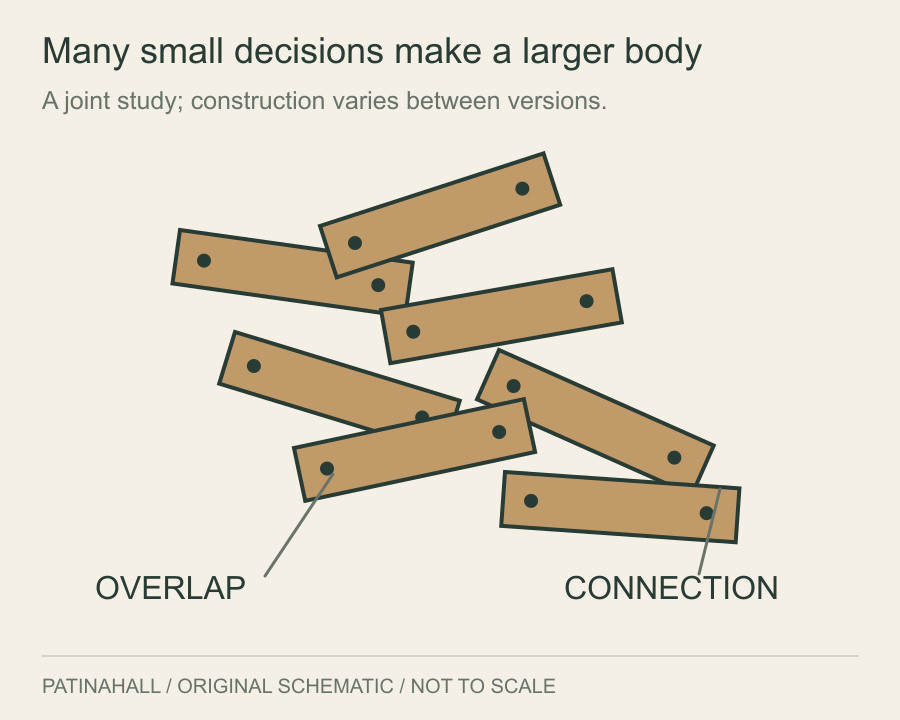
Each overlap adds a connection and changes the local thickness. Enough of those decisions have to add up to an intelligible chair. The parts may vary in direction, but the finished object still needs a seat to remain where a sitter expects it.
Rough is a carefully achieved effect
Edra describes the chair as having no internal structure separate from the wooden strips. Its current account distinguishes pine for indoor use from teak for outdoor versions, with the pieces nailed by hand in varying arrangements.
The maker also says that the work takes about a week. That detail is a useful corrective to the impression that irregularity must mean quick or casual manufacture. A surface can look spontaneous while demanding sustained judgement.2
The maker cannot simply repeat a single neat joint at every point. The changing angles and overlaps need to remain coherent across the object. The chair’s roughness is organised, even when it refuses to look orderly.
The name brings a city into the room
Favela’s name and visual language refer to improvised building in Brazilian urban settlements. The museum context places this reference within the Campana brothers’ design practice and the translation of everyday materials into furniture.3
That reference deserves a little care. A manufactured design object and a dwelling built under economic pressure are different things. Appreciating the chair does not require turning the lives of favela residents into a picturesque story about creativity.
The MFAH essay also distinguishes the angled 1991 originals from the more rectilinear version introduced by Edra in 2003, noting a base layer beneath its small slats. That account and the maker’s current description concern different readings of construction; neither should become an assumption about every example.3
The outline holds the pieces together
Stand back and the object resolves into an armchair. Come closer and the individual strips begin to pull the eye in several directions. The design depends on both readings remaining available.
That is why a smooth imitation of the same outline would miss much of the point. Favela’s character lives in the visible decisions between pieces, and in the effort required to let those decisions appear almost effortless.
The chair invites a second look precisely because its first impression is incomplete. What appears to be a heap turns out to be a worked structure; what appears quickly improvised carries a considerable amount of someone’s time.