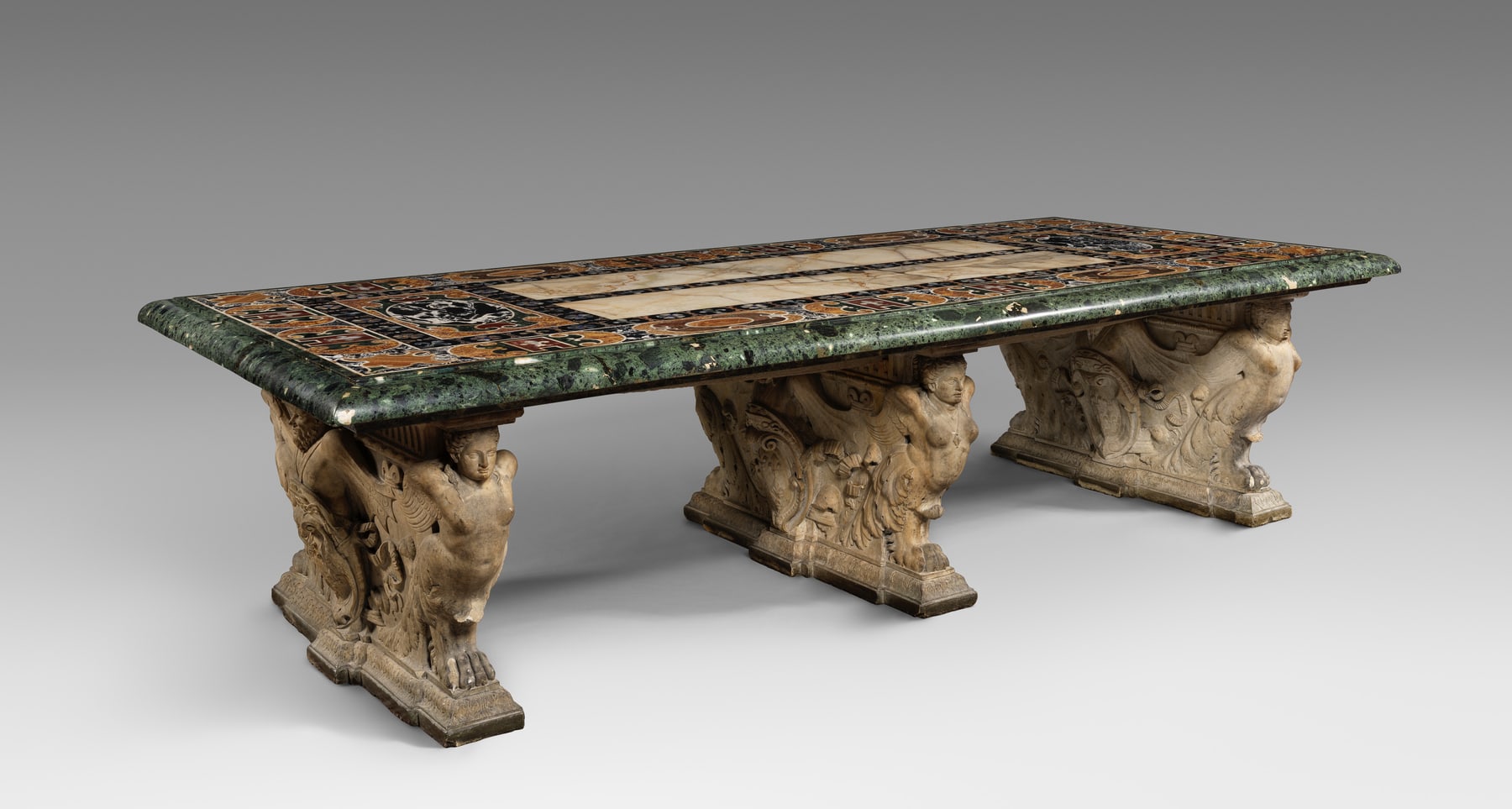
A tabletop becomes an architectural surface
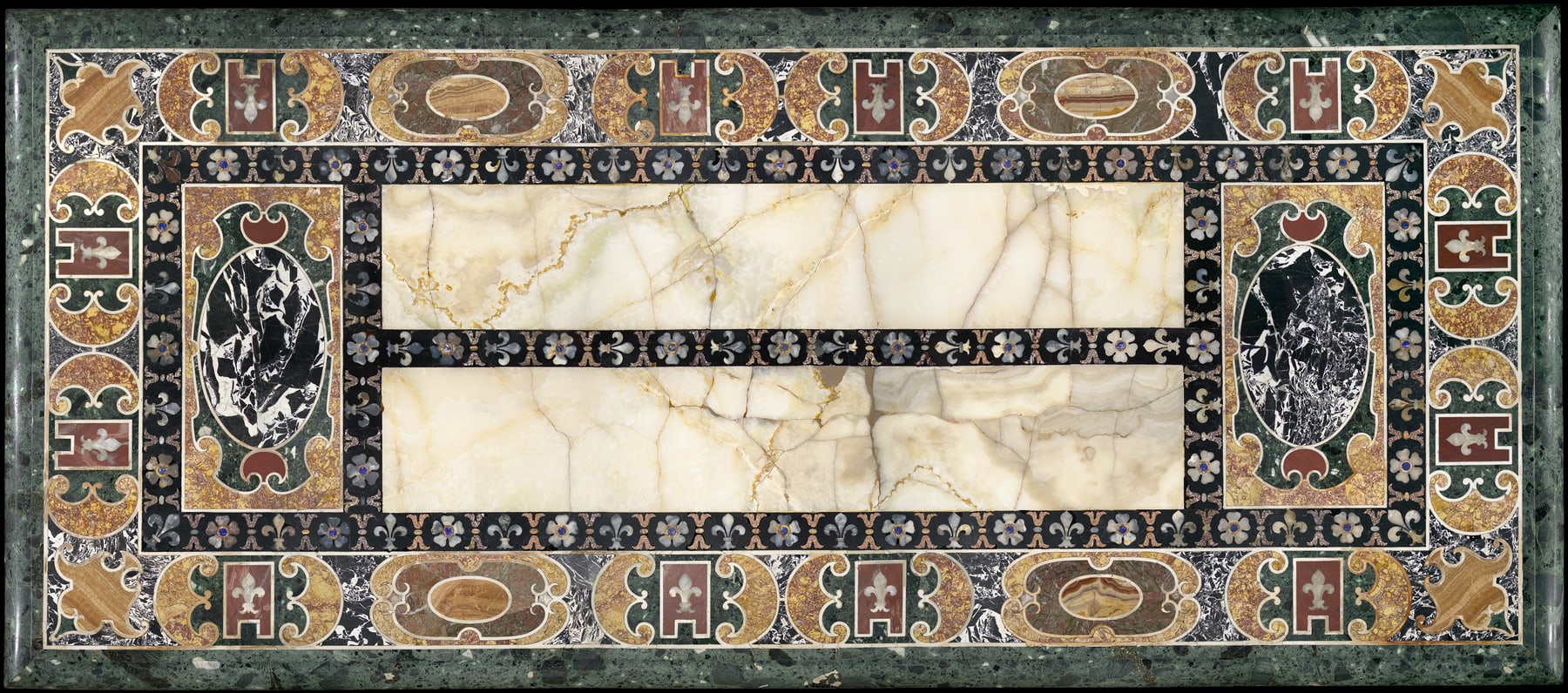
The overhead photograph is essential. Two huge alabaster fields dominate the centre, surrounded by carefully ordered bands and curving coloured-stone motifs. The arrangement gives the naturally irregular stone a deliberately structured setting.
At 379.1 centimetres wide, the table offers a surface closer to an architectural panel than a modest place for everyday objects. The Met dates it to about 1565–73 and connects its design with Jacopo Barozzi da Vignola.1
Natural patterns meet precise borders
The alabaster does not form a repeated painted motif. Its clouds and streaks are already in the material. The surrounding geometry makes those irregularities easier to see: a clear border tells the eye where to pause, compare and return to the centre.
The Met’s exhibition on pietre dure places the Farnese Table within Renaissance Rome’s use of polychrome marble. The wider history includes other stones, centres and techniques; that context should not turn every part of this table into an example of later Florentine hardstone practice.2
The particular effect here comes from scale and contrast. Two broad natural fields hold the centre, while smaller, more controlled shapes create the frame.
Three piers make furniture look permanent
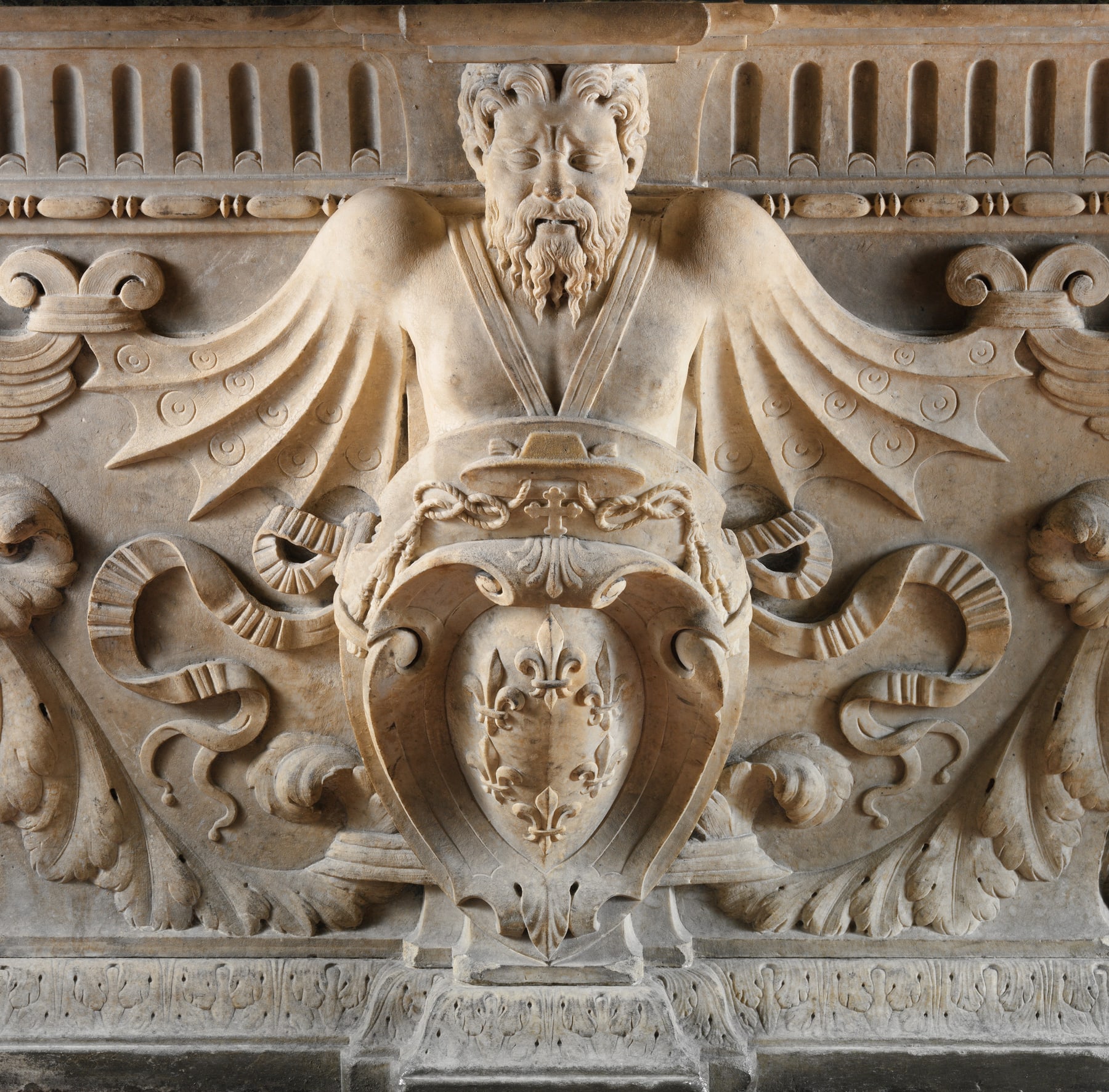
The support photograph changes the emphasis from surface to mass. Carved masks, wings and heraldic elements animate substantial marble piers. The table’s bottom half has its own visual programme, even though the top can dominate a frontal view.
The piers were made under Guglielmo della Porta’s supervision; the tabletop is attributed to Giovanni Mynardo. These distinctions preserve the collaborative character of a commission that can too easily be reduced to one designer’s name.1
Old stone served a new claim
The two large Egyptian alabaster slabs were probably reused from antiquity. Their exact earlier architectural setting remains uncertain.1
For the present viewer, that material history sits beside a visible act of arrangement. Stone with an earlier life is bordered, paired and lifted onto supports bearing a new family’s emblems. The table makes possession and display tangible.
Move through the three photographs in order: the whole object establishes scale, the overhead view explains the surface, and the support detail reveals the carved foundation. Together they show why the table needs to be understood from several directions. Its historical ambition occupies the room, the top and the space below.