The one-piece chair that would not arrive
In the closing stages of the Second World War, the Eames Office returned its attention to furniture. It had gained experience moulding plywood for wartime equipment, but the ambition of a single, deeply shaped plywood shell remained difficult. The Eames Foundation describes repeated efforts to make the complex curves work without splits.2
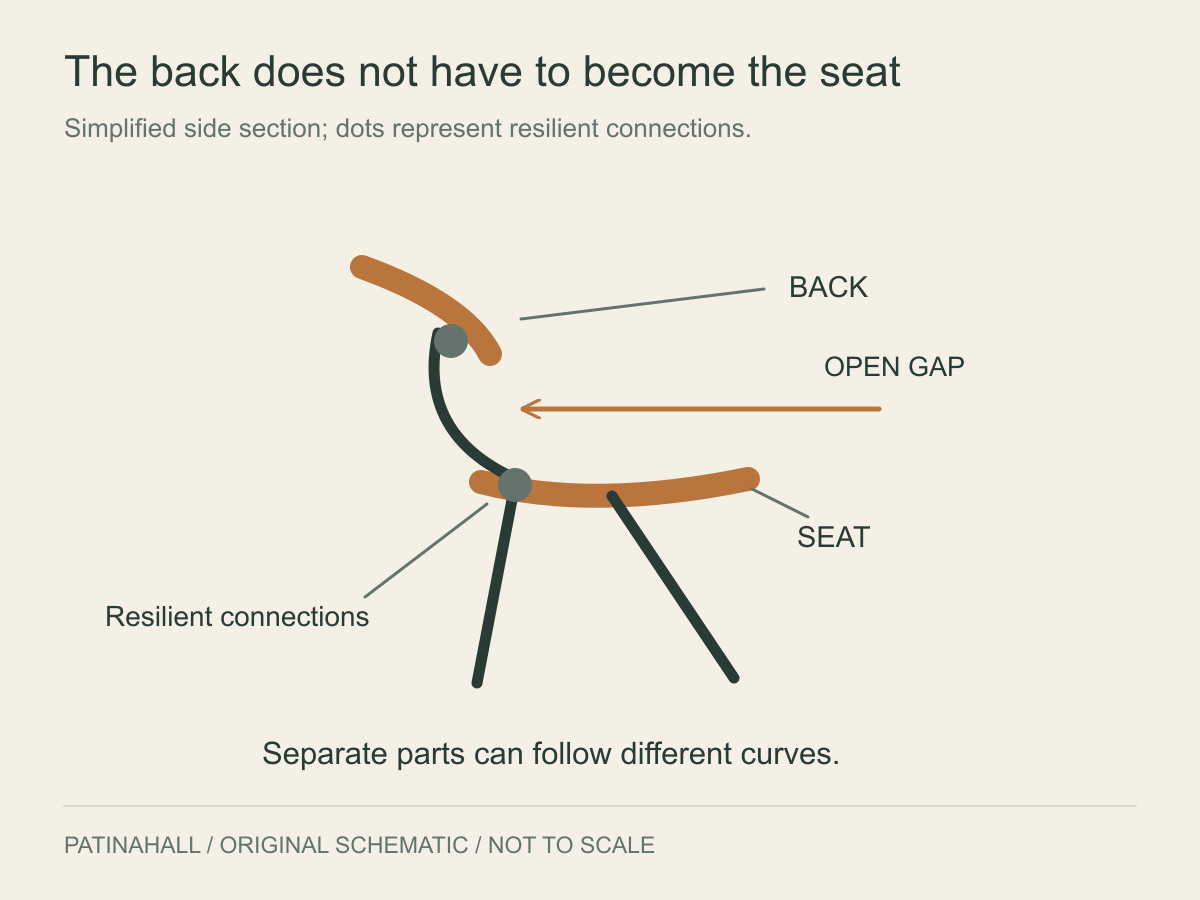
Separating the seat and back changed the problem. Each piece could be formed for a more specific job. The seat could support the sitter from below; the back could meet the torso at a different angle. The difficult transition between them no longer had to be made from one continuous surface.
It is a useful example of a design improving when an ambition is revised. The answer was not to make the stubborn material disappear beneath a finish. The chair made its separate parts visible.
Separate curves, resilient connections
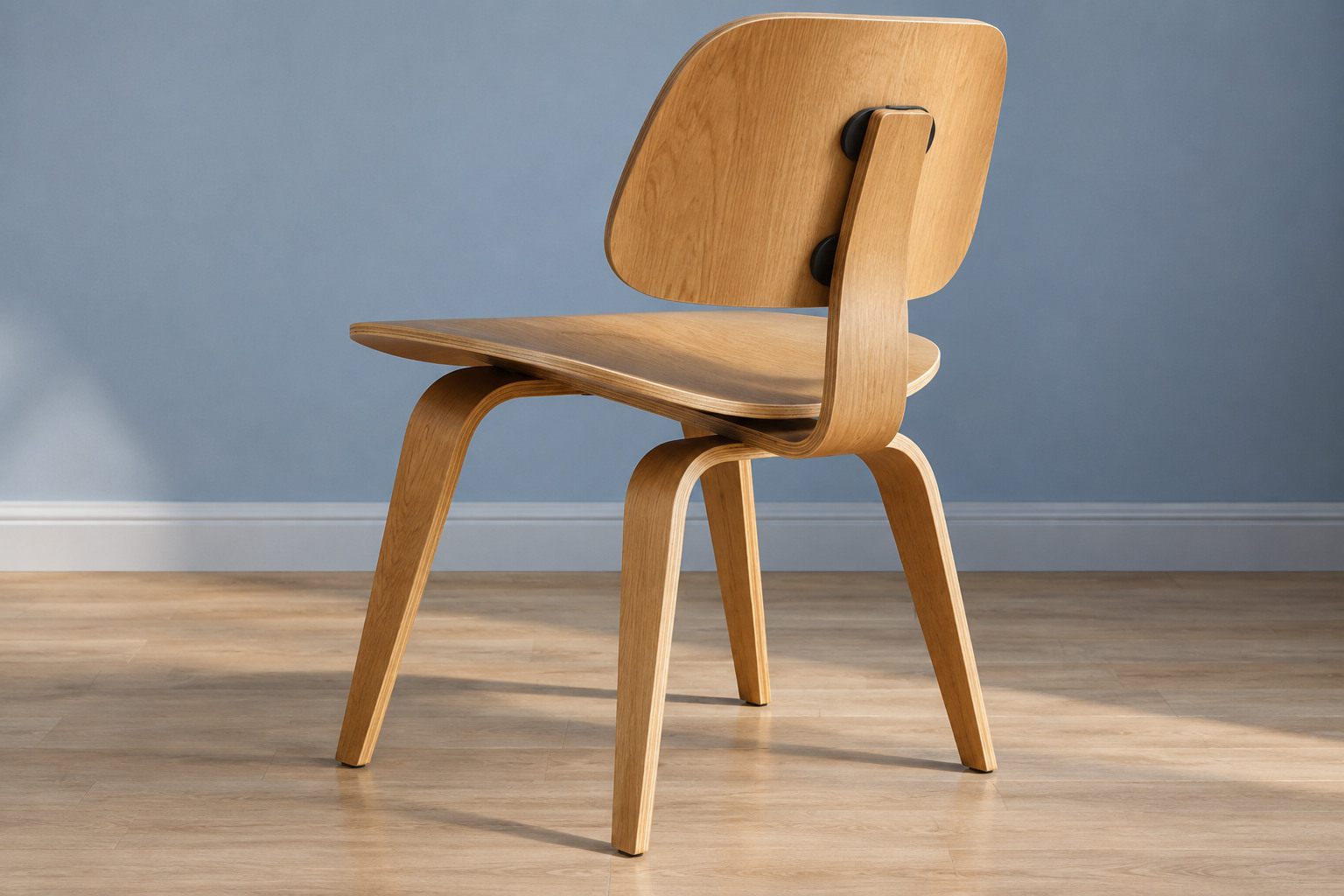
DCW’s back sits above the seat with an open interval between them. A curved wooden spine carries it from behind. Underneath, the wooden base spreads the load towards four feet. The exposed edges allow the eye to distinguish the thin formed surfaces from the parts supporting them.
MoMA records moulded and bent birch plywood with rubber shock mounts. The rubber connections are small, but they belong to the chair’s behaviour. They give the assembly a degree of resilience instead of treating every meeting point as an entirely rigid connection.1
The Eames Office’s account of the related DCM describes the rubber discs within the wider development of the plywood-chair family. Their role was part of the search for a chair that could respond to the body through its connections as well as its shaped surfaces.3
A family resemblance needs a name
The initials help keep related objects apart. DCW is the dining chair with the wooden base. The lower lounge version and the metal-legged dining version share parts of the design thinking, but their stance and use differ.23
That distinction becomes clear at the side. A dining chair brings the sitter into a working relationship with a table. A lounge chair can sit lower and stretch further into the room. The outline that looks like a small variation in a photograph can change where the body settles.
The chronology also has several parts. The development account discusses 1945; public availability and MoMA’s design record point to 1946. A particular chair may have been manufactured later still. These are different moments in the life of a repeatable design.
The gap is part of the answer
When a chair’s silhouette becomes familiar, the eye can stop asking how it came about. DCW rewards returning to the empty space between its two principal surfaces.
That interval lets the wood keep two useful shapes. It also lets us see the structure connecting them. The chair’s most instructive feature may be the place where the designers decided there should be no plywood at all.