Design story

Cirkel Coffee Table: a circle changes direction

A circle is simple to recognise and surprisingly open to change. Daphna Laurens treats it as something to compose, cut and turn. Cirkel Coffee Table 01 belongs to a collection in which the same geometric starting point takes on several furniture roles.

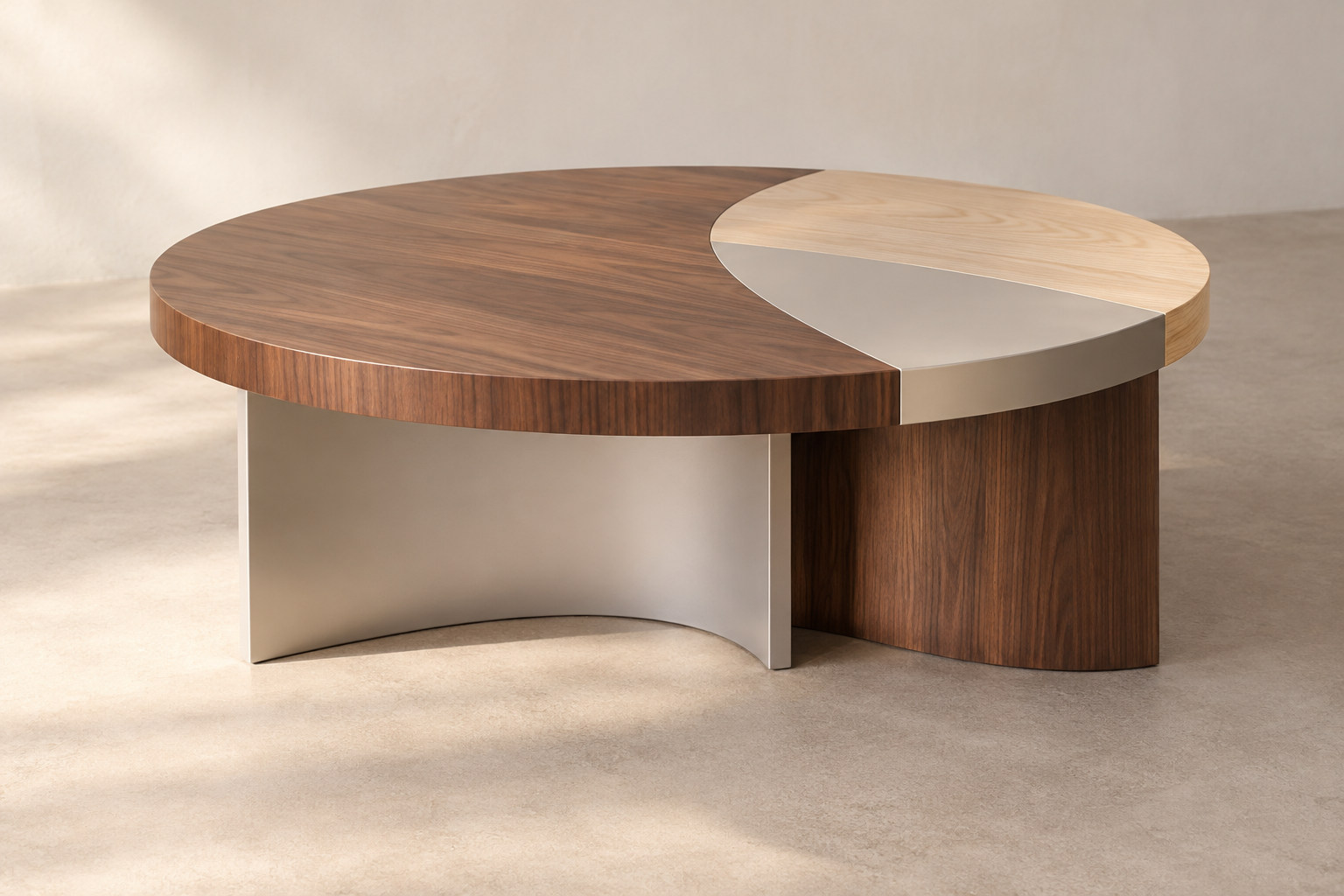
A low circular table combines dark and pale wood-like areas with silver-coloured curved planes.
PatinaHall editorial reconstruction. It is not a documentary photograph. A circle remains readable as surfaces change direction and material. Both dark walnut-like and pale ash-like areas accompany metal-like planes; the arrangement is conceptual rather than exact Coffee Table 01 geometry.
On this page
Key facts & takeaways

At a glance

Subject
Cirkel Coffee Table 01
Entry
Design story
Last reviewed
26 October 2026

Three things to remember

  1. Daphna Laurens is a two-person practice, not one designer.
  2. Coffee Table 01 belongs to a wider circle-based collection.
  3. The table’s recorded veneers include both walnut and ash.

One shape, several possible objects

The Cirkel collection begins with a shared geometric idea. The studio describes composing, cutting and twisting a circle’s surface, adding or removing lines and applying different materials and colours.1

Coffee Table 01 sits within that larger exercise. The named collection also includes wall lights, mirrors and a leaning lamp, giving the circle several different relationships with a room.1

This is what makes the geometry worth following. A circle can be a perimeter, a plane or the starting point for part of a supporting form. Recognition survives while the role changes, allowing related objects to remain visibly connected without becoming identical.

A circle can become more than one plane

Turning attention from a drawn shape to furniture introduces direction. A horizontal surface offers a place for things; a vertical or angled plane changes how the object stands in the room. The same curved outline can suggest a different role as its orientation changes.

The studio’s account of cutting and twisting provides a way to read those transformations. The interest lies in what a simple shape can become when it is treated as material in space rather than only as a line on a page.1

Materials add another distinction. Coffee Table 01 is specified in powder-coated aluminium with walnut and ash veneer. Metal and the two timber veneers can keep separate visual characters within the shared geometric vocabulary.1

The result gives looking a small task: find the circle, then notice how its role changes as the object turns into a usable table.
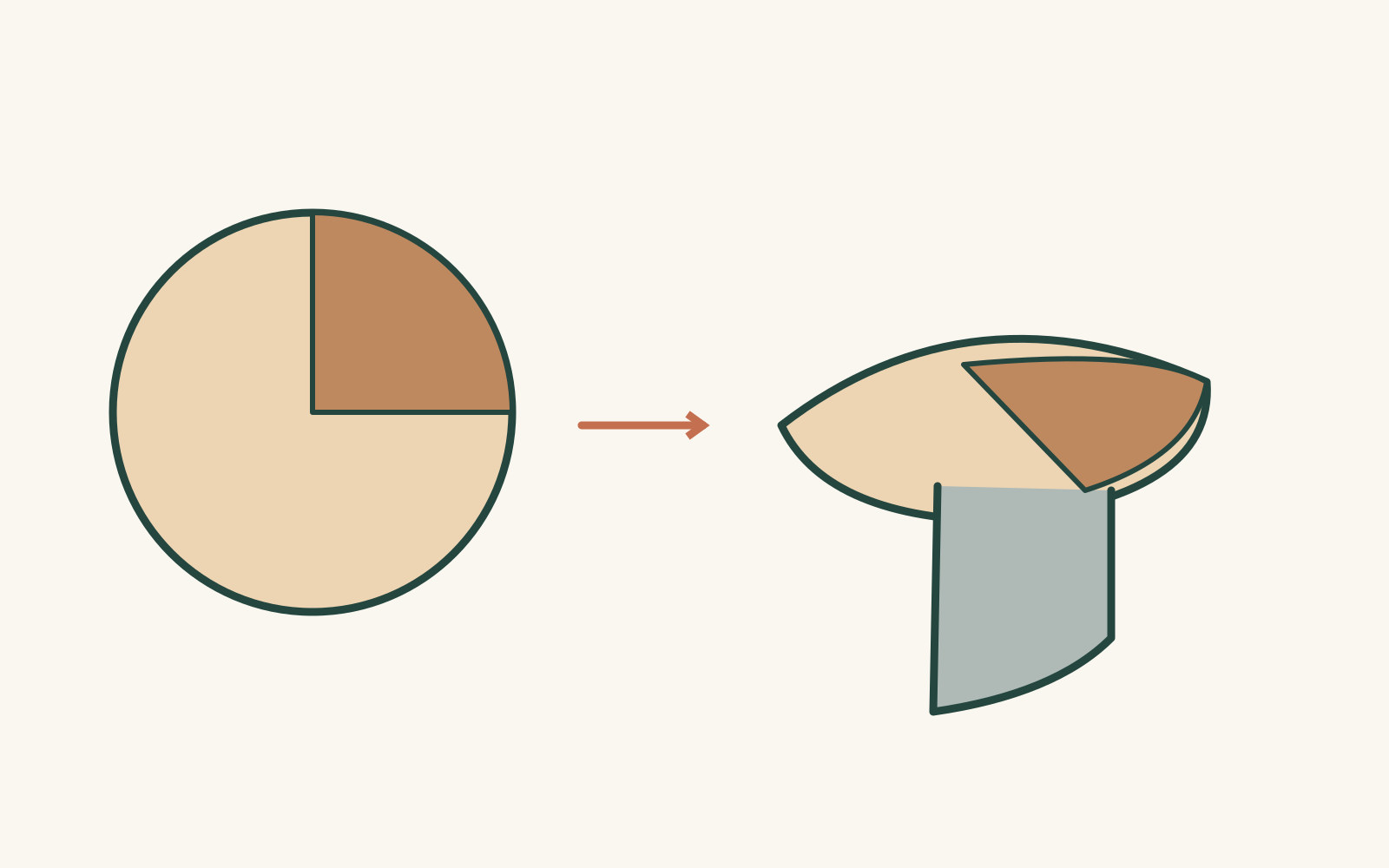
A circle in two wood-like tones points towards a low arrangement of curved planes and a grey support.
Changing a plane’s direction changes its possible role. The colours distinguish two veneers and a metal-like area; the drawing is a geometric interpretation rather than exact Coffee Table 01 parts. Original PatinaHall schematic, not to scale.

Two designers give the shape its possibilities

Nieuwe Instituut identifies the partners of the Eindhoven practice as Daphna Isaacs Burggraaf and Laurens Manders. Their joint studio name should remain attached to that collaboration.2

The Cirkel project was originally edited as gallery pieces by Galerie Gosserez in Paris, placing the experiment within a collection rather than a single isolated drawing.1

That collection makes the starting point especially enjoyable to recognise. Once the circle is visible, it becomes possible to follow the designers’ decisions about direction, material and use. A modest geometric vocabulary has acquired several ways to inhabit a room.

Research notesEvidence, connections and limits

The studio identifies Coffee Table 01, not a desk, and specifies powder-coated aluminium with walnut and ash veneer. The selected record establishes no calendar year. Oak legs described elsewhere on the page belong to a leaning lamp.

Evidence map

Connected subjects and evidence

Reviewed connections

  • Cirkel Coffee Table 01designed byDaphna Isaacs Burggraafdocumented

    The Cirkel collection is credited to the joint studio Daphna Laurens; Nieuwe Instituut identifies Daphna Isaacs Burggraaf and Laurens Manders as the partners.

    Reviewed 26 October 2026 by PatinaHall editorial.
    • Source 1Collection description; Technical information: Coffee table 01
    • Source 2Studio identity and individual names
  • Cirkel Coffee Table 01designed byLaurens Mandersdocumented

    Laurens Manders shares the Daphna Laurens studio identity. The studio names Coffee Table 01, powder-coated aluminium with walnut and ash veneer; the selected record establishes no design year.

    Reviewed 26 October 2026 by PatinaHall editorial.
    • Source 1Collection description; Technical information: Coffee table 01
    • Source 2Studio identity and individual names

Research trail

Sources and further reading

  1. Cirkel CollectionDaphna LaurensAccessed 26 October 2026
  2. Daphna LaurensNieuwe InstituutAccessed 26 October 2026

Last reviewed 26 October 2026. Found an error or a stronger primary source? Contact PatinaHall.