Follow the weight down and back
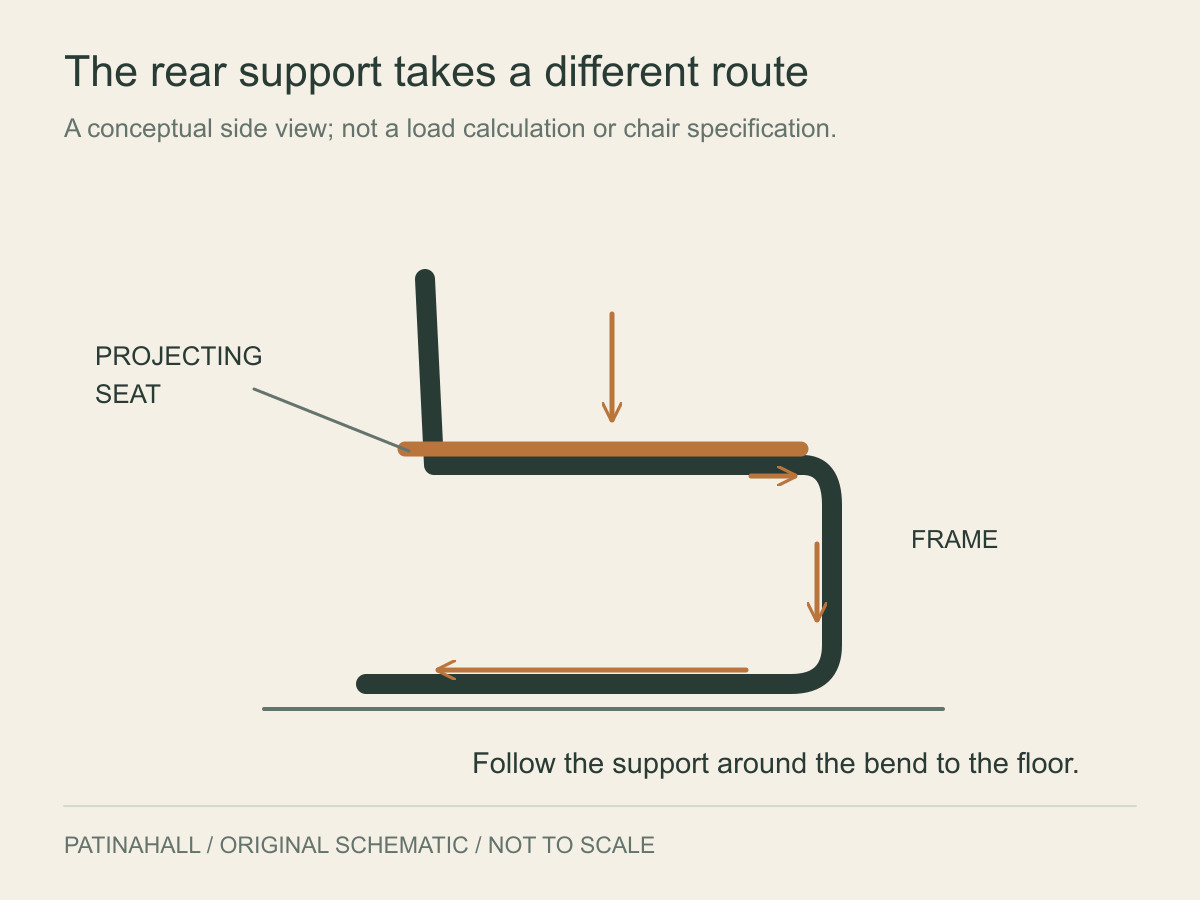
In a four-legged chair, supports can stand beneath the front and rear of the seat. In a cantilever chair, the seat projects from a frame whose route to the floor is less direct. Follow the tubing from the seat towards the front upright, around the lower bend and along the floor.
The base provides a footprint beneath the projecting load, while the frame’s connections and bends hold the arrangement together. What looks like empty space under the seat is part of a deliberately organised structure.
That makes the chair a useful exercise in looking. The unsupported-looking edge is not floating. Its support has taken a different route.
The first pipes were not especially springy
Thonet’s account describes Mart Stam’s 1926 prototype made from gas-pipe sections and connecting pieces. The material was rigid. Later developments explored the resilient behaviour of more continuous curved steel frames, including Mies van der Rohe’s work in 1927.1
The broad silhouette therefore conceals an important difference. Two chairs can both lack rear legs while responding differently when somebody sits down. The material, tube section, joints and length of the curved route all contribute to the result.
Thonet’s S33 history places Stam’s early experiments within this development. Its current product is a manufactured design with its own specifications, rather than a literal assembly of the original gas-pipe components.3
The seat has its own structure
The frame is only part of the chair. A seat and back must span between its supports and meet the body. Different materials can perform that work without making the main steel structure disappear.
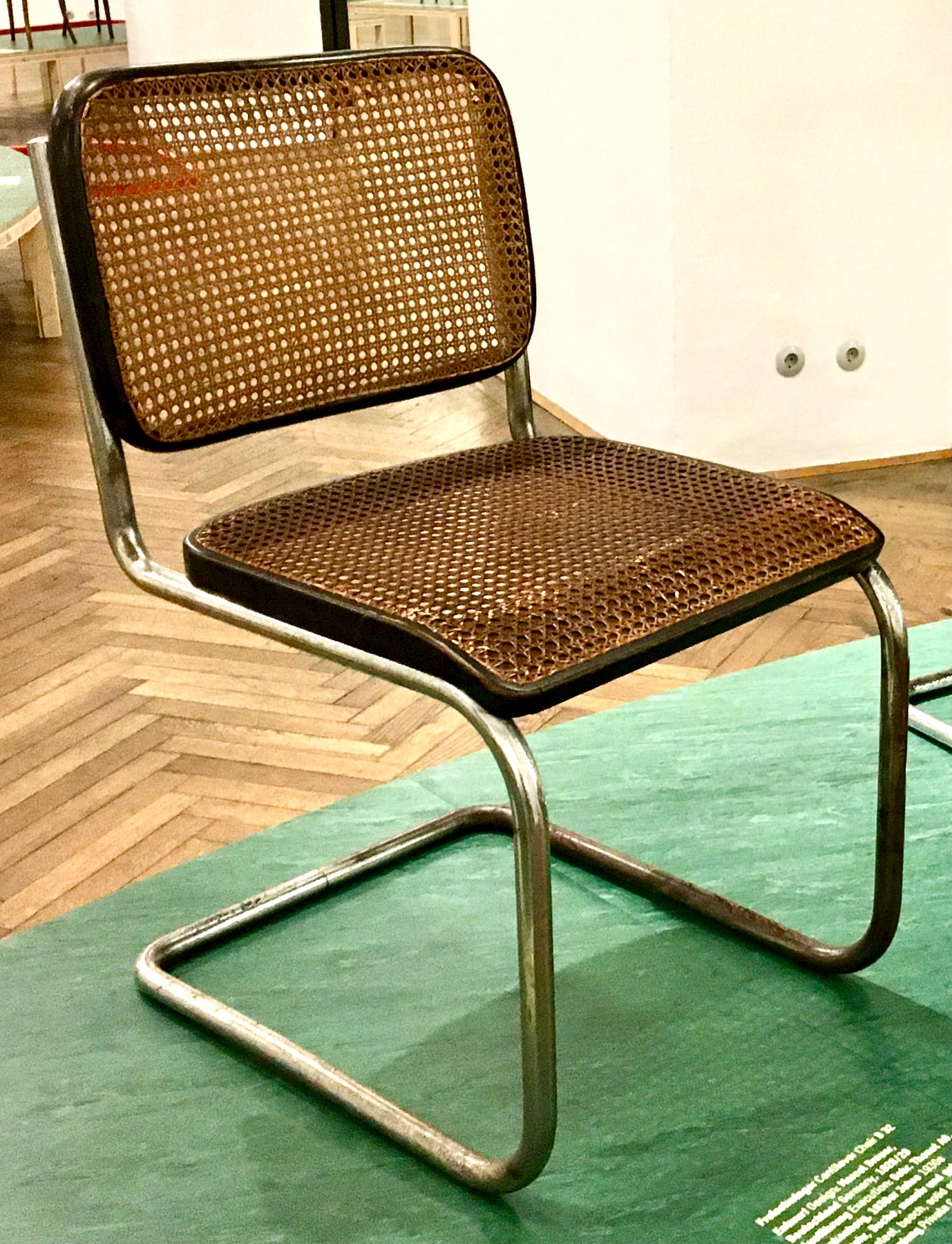
The Design Museum’s account of tubular-steel furniture explains how Breuer’s B32 combined wooden frames and cane with the metal support. The wooden borders give the woven surfaces a defined edge while the steel establishes the chair’s overall route to the floor.2
The opening photograph makes that separation readable. Cane, wood and metal are doing different jobs in the same object. Calling the whole thing a steel chair leaves out much of the way it is actually assembled and occupied.
A resilient frame lets the sitter’s weight produce a controlled change of shape. The movement can be slight, yet it makes the chair feel different from an equally open-looking rigid structure.
That is why the missing legs are only the beginning of the story. The more rewarding question is what replaces their work and how that replacement behaves.
Next time a curved tube disappears beneath a seat, follow it. Its path connects an apparently suspended edge to a stretch of floor. The chair’s lightness is the visible result of that connection, not the absence of one.
